
Nail Kit Set: The Complete Guide to Choosing and Using the Right Nail Care Kit
Beautiful, well-groomed nails do not always require a salon appointment. With the right nail kit set, you can trim, shape, clean, and care for your nails from the comfort of your own home.
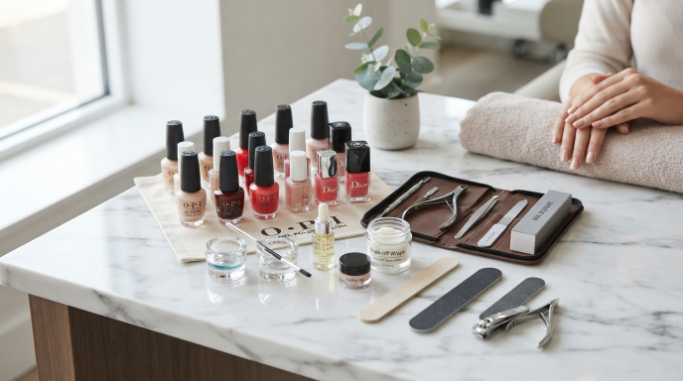
A good nail kit set brings several useful tools together in one place. Depending on the type of kit, it may include nail clippers, scissors, nail files, buffers, cuticle tools, tweezers, brushes, and other manicure accessories. Some larger sets also include products for pedicure, nail art, or gel manicures. (American Academy of Dermatology)
The real advantage, however, is not simply having a large number of tools. The best kit is one that contains the right tools for your routine, is easy to organize, and helps you care for your nails without unnecessary steps.


If you have ever opened a bathroom drawer and found one old nail clipper, a bent file, and a pair of scissors that you cannot remember buying, you already know why a dedicated nail care kit can be useful.
Instead of searching for individual tools every time you need a manicure, everything can stay together in one case.
In this guide, we will look at what a nail kit set includes, which tools actually matter, how to use them step by step, how to choose a quality set, how to keep the tools clean, and whether buying a complete kit is worth it.
What Is a Nail Kit Set?
A nail kit set is a collection of tools and products designed for nail grooming and maintenance.
A basic set might contain only a few essentials, while a larger professional nail kit can contain 10, 15, 20, or more pieces.
Typical tools can include:
- Nail clippers
- Nail scissors
- Nail files
- Nail buffers
- Cuticle pushers
- Cuticle nippers
- Tweezers
- Nail cleaning tools
- Nail brushes
- Toe separators
- Cuticle oil
- Polish-related accessories
The exact contents vary considerably from one kit to another. Current manicure sets range from compact basic kits to comprehensive manicure-and-pedicure collections. (Hasni Surgical)
That is why you should not choose a kit simply because it has the highest number of pieces.
More tools do not automatically mean better value.
A 7-piece kit containing excellent essentials may be much more useful than a 25-piece kit filled with tools you never use.
Why Should You Buy a Nail Kit Set?
One of the biggest benefits of a nail kit set is convenience.
Instead of buying a clipper today, a nail file next month, and cuticle tools later, you can get the essentials together.
A good nail kit can help you:
- Keep your nails neatly trimmed
- Shape uneven edges
- Smooth rough corners
- Maintain your manicure
- Organize your nail tools
- Perform simple nail care at home
- Save time looking for individual tools
- Carry your nail essentials while traveling
The American Academy of Dermatology recommends using appropriate nail clippers or scissors and keeping tools clean, while also advising people to file carefully and avoid cutting the cuticles. (American Academy of Dermatology)
So, the purpose of a nail kit set is not just beauty.
It can make a basic nail-care routine more organized and easier to maintain.
What Should a Nail Kit Set Include?
Before purchasing a kit, it helps to understand what each tool actually does.
That way, you can decide which pieces are important for you instead of paying for a collection that looks impressive but sits unused.
1. Nail Clippers
The nail clipper is probably the most important tool in a basic nail kit.
It is used to shorten the nails and remove excess length.
A good clipper should feel:
- Sharp
- Comfortable
- Easy to control
- Strong enough to cut cleanly
- Smooth when opening and closing
Some kits include separate clippers for fingernails and toenails. This can be useful because toenails are generally thicker and may require a larger, stronger clipper. (Necole Bitchie)
For everyday nail care, a good-quality clipper is worth having.
2. Nail Scissors
Nail scissors offer more control than a clipper for certain trimming tasks.
They can be particularly useful for carefully removing small pieces of nail or managing hangnails.
However, scissors should be used carefully.
Do not use them to aggressively cut the skin surrounding your nail.
The cuticle serves as a protective barrier, and dermatologists advise against cutting or forcefully pushing it back because this can increase the risk of infection. (American Academy of Dermatology)
3. Nail File
A nail file is one of those small tools that can make a big difference.
After trimming your nails, you may notice:
- Sharp corners
- Rough edges
- Small snags
- Uneven tips
A nail file helps smooth those areas.
The American Academy of Dermatology recommends filing in one direction rather than using an aggressive back-and-forth motion, which can weaken nails. (American Academy of Dermatology)


A nail buffer is designed to smooth the nail surface and can help create a more polished appearance.
However, more is not always better.
You should not aggressively buff the nail again and again because excessive filing or buffing can make the nail thinner.
For most people, gentle and occasional use is enough.
5. Cuticle Pusher
A cuticle pusher is included in many manicure sets.
It is designed to help manage the area around the nail.
However, this is one tool where technique matters.
The American Academy of Dermatology recommends leaving the cuticles alone because they protect the nail root. If they are pushed back, dermatologists advise doing so only gently after a shower or bath. (American Academy of Dermatology)
So don’t treat the cuticle pusher like a scraping tool.
Gentle is better.
6. Cuticle Nippers
Some larger manicure kits include cuticle nippers.
These are designed to trim loose pieces of dead skin or hangnails.
They should not be used to aggressively remove healthy cuticle tissue.
If you have redness, swelling, pain, or an existing infection around the nail, it is better to seek appropriate medical advice rather than trying to cut the area yoursel
7. Tweezers
Tweezers are useful for small tasks.
Depending on the kit, you might use them to handle:
- Nail decorations
- Small stickers
- Loose pieces of skin
- Tiny manicure accessories
They are especially helpful in a nail art kit.
8. Nail Brush
A nail brush can help clean around the nails and fingertips.
It is particularly handy after working with nail products or when you want to clean away filing dust.
Remember to keep your tools clean and dry between uses.
9. Toe Separators
If your kit includes toe separators, they can make a pedicure more comfortable by keeping the toes apart while you work.
They are particularly useful when applying toenail polish.
Nail Kit Set for Beginners
If you are completely new to home nail care, you do not need an enormous professional collection.
Start with the basics.
A practical beginner nail kit set could include:
- Nail clipper
- Nail scissors
- Nail file
- Buffer
- Cuticle pusher
- Tweezers
- Nail brush
Then you can add additional tools as you become more comfortable.
This approach can save money and prevent your beauty drawer from becoming overloaded with tools you never use.
A current at-home manicure guide from nail specialist Dr. Dana Stern similarly emphasizes that a useful home kit does not need to contain every possible nail tool; a small collection of appropriate tools can handle most basic nail-care needs. (Dr. Dana)
Nail Kit Set for Professionals
If you are a nail technician, beauty student, or someone who regularly performs manicures, your needs are different.
A professional kit may include:
- Multiple nail files
- Different buffers
- Nail scissors
- Clippers
- Cuticle tools
- Nippers
- Brushes
- Tweezers
- Nail art tools
- Gel manicure accessories
- Removal tools
- Storage organizers
The important thing is to choose tools based on the services you actually provide.
For example, someone specializing in natural manicures does not necessarily need the same equipment as someone who primarily works with acrylic or gel extensions.
Nail Kit Set for Home Manicures
A home manicure kit is ideal if you enjoy doing your nails yourself.
It can help you create a simple routine without needing to book a salon appointment every time your nails become uneven.
A basic home manicure might involve:
Trim → File → Care for the surrounding skin → Moisturize → Polish
The exact routine can vary depending on your nail condition and the type of manicure you want.
Nail Kit Set for Pedicures
If you want to care for both hands and feet, look for a manicure and pedicure kit.
These larger sets may include:
- Fingernail clippers
- Toenail clippers
- Nail scissors
- Files
- Buffers
- Cuticle tools
- Tweezers
- Toe separators
- Foot-care tools
Some complete kits are specifically designed to cover both manicure and pedicure needs in one case. (Hasni Surgical)
Nail Kit Set for Nail Art
A traditional manicure kit and a nail art kit are not exactly the same.
A nail art kit may include decorative tools such as:
- Dotting tools
- Detail brushes
- Tweezers
- Stamping accessories
- Nail stickers
- Rhinestones
- Decorative charms
For example, Pakistan’s National Book Foundation cosmetology material describes nail stamping kits as including items such as a stamper, scraper, image plates, and striping tape. (NBF)
If your main interest is creative nail design, look for a kit that includes these specialized tools rather than buying a basic grooming kit and expecting it to provide everything.


Step-by-Step: How to Use a Nail Kit Set at Home
Now let’s put everything together.
You don’t need to rush.
A good manicure is usually easier when you work slowly and carefully.
Step 1: Wash Your Hands
Start with clean hands.
Wash them with soap and water and dry them thoroughly.
Keeping nails clean and dry is part of good nail-care practice, according to dermatologists. (American Academy of Dermatology)
Step 2: Prepare Your Tools
Take out the tools you need.
For a basic manicure, you may only need:
- Nail clipper
- Nail file
- Cuticle tool
- Buffer
- Moisturizer or cuticle oil
Do not automatically use every tool in your kit.
Use only what the routine require.
Step 3: Trim Your Nails
If your nails are too long, use the appropriate nail clipper.
For fingernails, the American Academy of Dermatology recommends cutting almost straight across and slightly rounding the corners with a file. For toenails, cutting straight across can help reduce the chance of ingrown toenails. (American Academy of Dermatology)
Avoid cutting extremely close to the skin.
Step 4: File the Edges
Take your nail file and gently smooth rough areas.
Rather than aggressively filing backward and forward, use controlled strokes in one direction. (American Academy of Dermatology)
You can choose your preferred nail shape, such as:
- Square
- Round
- Oval
- Almond
- Squoval
The best shape is usually the one that suits your natural nails and lifestyle.
Step 5: Gently Care for the Cuticles
If you use a cuticle pusher, be gentle.
Do not dig into the nail area.
Remember that cuticles help protect the nail root. Dermatologists specifically advise against cutting them. (American Academy of Dermatology)
Step 6: Buff Carefully
If your kit contains a buffer, use it lightly.
Do not repeatedly buff the same area.
The goal is a smooth appearance—not to remove layers of the nail.
Step 7: Moisturize
Apply hand cream or an appropriate cuticle moisturizer.
Moisturizing can help keep nails flexible and reduce dryness. The AAD recommends moisturizing after trimming, particularly when the air is dry. (American Academy of Dermatology)
Step 8: Apply Nail Polish If Desired
If you want color, you can now apply your chosen:
- Base coat
- Nail polish
- Top coat
A base coat can also help create a smoother foundation for color.
If you use nail products, always follow the manufacturer’s instructions and warnings. The FDA advises consumers to read labels carefully and use nail products according to their directions. (U.S. Food and Drug Administration)
A Little Home-Manicure Story
Imagine it is Friday evening.
You have plans for the weekend, but your nails look uneven. One nail is longer than the others, another has a rough corner, and your old polish is already chipped.
Normally, you might think:
“I need to book a manicure.”
But instead, you open your nail kit set.
You trim the uneven nails.
You file the edges.
You gently tidy the surrounding area.
You add moisturizer.
Then you apply your favorite polish.
Thirty minutes later, your hands look much more polished.
That is where a good nail kit becomes useful.
It is not about replacing every salon service.
It is about having the right tools available when you need them.
How to Choose a Quality Nail Kit Set
This is probably the most important part if you are planning to buy one.
There are countless nail kit sets online, and they can look almost identical in photographs.
So what should you actually chec
1. Check the Tool Material
Look for durable materials such as stainless steel when the product description specifies them.
Quality metal tools should feel sturdy rather than flimsy.
However, don’t choose a kit only because the description says “professional.”
Look at the actual specifications.
2. Check the Clippers
Open and close the clipper.
If you’re buying online, read reviews about:
- Sharpness
- Alignment
- Ease of use
- Durability
A dull clipper can make nail trimming frustrating.
3. Check the File
A file should be appropriate for the type of nail care you plan to do.
If you want a basic natural-nail kit, you do not necessarily need an enormous selection of abrasive files.
4. Look at the Case
A nail kit case is more important than it might seem.
A good case should:
- Keep tools organized
- Prevent pieces from getting lost
- Protect the tools
- Be easy to carry
- Close securely
A compact case can also make a nail kit much more travel-friendly.
5. Consider the Number of Pieces
Don’t automatically choose the kit with 20 or 30 tools.
Instead ask:
Will I actually use these tools?
A smaller kit with high-quality essentials can be a better purchase.
6. Read Customer Reviews
Reviews can reveal details that product photographs cannot.
Look for comments about:
- Tool sharpness
- Build quality
- Case quality
- Size
- Comfort
- Durability
- Whether the tools match the product description
Stainless Steel Nail Kit vs. Cheap Metal Kit
Many professional manicure kits use stainless steel tools.
Why?
Because stainless steel can offer durability and resistance to corrosion when properly cared for.
But “stainless steel” alone does not guarantee exceptional quality.
Two sets can both claim to use stainless steel while feeling completely different.
So consider:
- Construction
- Tool alignment
- Finish
- Sharpness
- Handle comfort
- Customer feedback
The overall quality matters more than a single word on the packaging.
How to Keep Your Nail Kit Clean
This part should never be ignored.
Your tools come into contact with nails and surrounding skin, so proper cleaning matters.
The American Academy of Dermatology recommends disinfecting nail clippers and scissors regularly; its nail-trimming guidance specifically describes cleaning with a scrub brush and 70–90% isopropyl alcohol, followed by rinsing and thorough drying. (American Academy of Dermatology)
Always follow the manufacturer’s instructions for the particular tool, especially for items that may require a specific cleaning or disinfection method.
Don’t Share Personal Nail Tools
Your nail kit set should ideally be personal.
The FDA advises consumers not to share cosmetic products because doing so can transfer germs. (U.S. Food and Drug Administration)
The same basic principle makes sense for personal nail tools.
If you share a kit with other people, appropriate cleaning and disinfection become even more important.
Nail Kit Hygiene: What to Avoid
Avoid putting dirty tools straight back into the case.
Instead:
- Clean them appropriately.
- Disinfect when appropriate.
- Dry them completely.
- Store them in a clean, dry case.
Do not store damp tools inside a closed case.
Moisture can create an environment where microorganisms can grow.
How Often Should You Use a Nail Kit?
There is no universal schedule that everyone must follow.
Your nails grow at different rates, and your routine may be different from someone else’s.
Some people may need a simple nail tidy-up every week or two, while others may need it less often.
The important thing is not to overwork your nails.
Regular maintenance does not mean constantly trimming, filing, buffing, and pushing cuticles.
Simple care is often enough.
Nail Kit Set for Travel
A compact travel nail kit can be extremely useful.
Instead of carrying separate tools in different bags, a small case keeps everything together.
For travel, prioritize:
- Nail clipper
- Small file
- Tweezers
- Small scissors
- Compact buffer
You may not need every tool from a large home kit.
A smaller travel set also takes up less space in your luggage.
Nail Kit Set for Men
A nail kit set is not only for women.
Men can use the same basic tools for:
- Trimming nails
- Smoothing rough edges
- Managing hangnails
- Basic grooming
- Maintaining clean hands
In fact, a simple black or metal grooming case can be an excellent everyday option.
Nail Kit Set for Women
For people who enjoy manicures and nail art, a larger kit can be more useful.
You might combine your basic grooming tools with:
- Nail polish
- Base coat
- Top coat
- Nail stickers
- Rhinestones
- Nail art brushes
- Dotting tools
- Cuticle oil
That turns a simple manicure set into a more complete beauty station.
Nail Kit Set for Beginners vs. Professionals
| Feature | Beginner Kit | Professional Kit |
|---|---|---|
| Nail Clippers | Essential | Essential |
| Nail File | Essential | Multiple options |
| Buffer | Useful | Multiple grits |
| Cuticle Pusher | Useful | Yes |
| Cuticle Nippers | Optional | Common |
| Nail Art Tools | Optional | Depending on service |
| Storage Case | Recommended | Essential |
| Gel Tools | Usually unnecessary | Depending on services |
| Number of Pieces | Smaller | Larger |
| Portability | Usually high | Varies |
The right option depends on how you plan to use it.
Can a Nail Kit Replace a Salon Manicure?
For basic nail maintenance, a good home kit can help you handle many tasks yourself.
You can trim, file, shape, moisturize, and apply regular polish at home.
However, a home kit does not automatically give you professional training.
If you have:
- A painful nail
- Severe nail discoloration
- Swelling
- Persistent nail changes
- An infection
- An ingrown toenail that is painful or infected
you should seek appropriate professional advice rather than trying to solve the problem with a manicure tool.
The AAD advises people to see a dermatologist when nails change, swell, or cause pain, particularly because some nail changes can indicate underlying conditions. (American Academy of Dermatology)
Nail Kit Set and Gel Manicures
Some larger gel nail kits include:
- UV/LED lamp
- Gel polish
- Base coat
- Top coat
- Files
- Buffers
- Cuticle tools
- Removal accessories
These are different from a basic nail grooming set.
If you regularly use gel polish, you may want a specialized gel kit.
However, gel manicures require additional care. The AAD notes that repeated gel manicures can contribute to brittleness, peeling, and cracking, and recommends appropriate precautions. (American Academy of Dermatology)
So don’t buy a large gel kit simply because it contains more products.
Choose it because you actually need those products.
Safety Tips When Using Nail Products
If your nail kit set includes nail polish, remover, primer, gel products, or other cosmetics, read the labels.
The FDA advises consumers to follow labeled directions and warnings and notes that some nail products can cause irritation, allergic reactions, or other problems if misused. It also recommends good ventilation when using nail products. (U.S. Food and Drug Administration)
Keep nail products away from:
- Flames
- Excessive heat
- Children’s reach
- Eyes
- Mouth
And always use products according to their instructions.
How to Get the Best Value From a Nail Kit Set
Buying a nail kit set can be a smart purchase when you choose one based on your actual needs.
Instead of asking:
“How many pieces does it have?”
ask:
“How many of these tools will I actually use?”
For example, a 10-piece kit containing high-quality clippers, scissors, files, a buffer, and cuticle tools may be more useful than a 25-piece kit containing duplicates and poorly made accessories.
A good kit should make your routine easier, not more complicated.
Is a Nail Kit Set Worth Buying?
For anyone who regularly maintains their nails at home, a nail kit set can be a worthwhile addition to their beauty or grooming collection.
The biggest benefits are:
Convenience
Everything stays together.
Organization
You are less likely to lose small tools.
Flexibility
You can care for your nails whenever you want.
Long-Term Value
A quality set can contain tools that you use repeatedly rather than buying replacements individually.
Travel-Friendly Design
Many kits come with compact cases that are easy to carry.
Current manicure and pedicure sets range from simple starter collections to larger multi-tool kits, so there is no need to buy the biggest option if you only need basic nail care. (Hasni Surgical)
Nail Kit Set Buying Checklist
Before purchasing, check these points:
- Number of tools
- Tool material
- Clipper quality
- File quality
- Case construction
- Size
- Weight
- Customer reviews
- Cleaning instructions
- Return policy
- Whether the tools match your routine
If you are a beginner, prioritize essentials.
If you are experienced with nail art, choose a kit that includes the specialized tools you actually use.
Frequently Asked Questions About Nail Kit Sets
What is included in a nail kit set?
A basic nail kit set commonly includes nail clippers, scissors, a file, and other manicure tools. Larger sets may include buffers, cuticle tools, tweezers, brushes, pedicure tools, or nail-art accessories. (Hasni Surgical)
Is a nail kit set useful for beginners?
Yes. A small, well-chosen set can make basic nail care easier because you have the essential tools together in one place.
How many pieces should a nail kit have?
There is no ideal number. Choose based on your needs rather than the number printed on the box.
What is the most important tool in a nail kit?
For basic grooming, a good nail clipper and nail file are among the most useful tools.
Can I use a nail kit for both hands and feet?
Yes, if the kit includes appropriate manicure and pedicure tools.
How do I clean my nail tools?
Follow the manufacturer’s instructions. The AAD recommends regular disinfection of nail clippers and scissors and describes cleaning with 70–90% isopropyl alcohol followed by rinsing and drying. (American Academy of Dermatology)
Can I share my nail kit with someone else?
It is better to keep personal grooming tools for individual use. If tools are shared, they need appropriate cleaning and disinfection between users.
Can I use a nail kit for nail art?
A basic manicure kit may not contain specialized nail-art tools. If you enjoy designs, look for a dedicated nail art kit containing items such as detail brushes, dotting tools, tweezers, or stamping accessories.
Is a stainless steel nail kit better?
Stainless steel can be a durable material for manicure tools, but the overall construction, sharpness, alignment, and finish also matter.
Can a nail kit make nails healthier?
A kit itself does not automatically make nails healthy. Its value is that it provides tools for proper grooming and maintenance. Good technique and hygiene matter just as much.
Final Thoughts
A nail kit set can turn a messy collection of individual tools into one simple, organized nail-care routine.
You do not need the biggest kit on the market.
You need the right kit for your lifestyle.
For basic home care, start with quality essentials such as a nail clipper, file, buffer, and appropriate cuticle-care tools. If you enjoy nail art, consider adding detail brushes, dotting tools, tweezers, and decorative accessories. If you also perform pedicures, look for a larger manicure-and-pedicure set.
Most importantly, choose quality over quantity.
A well-made nail care kit should feel like something you will actually use—not another beauty product that ends up forgotten in a drawer.
Take a few minutes to check the materials, tool quality, case, reviews, and care instructions before buying. That small amount of research can make the difference between a kit you use for years and one you stop using after a few weeks.
And once you have your nail kit set ready, keep your routine simple:
Clean → Trim → File → Gently care for the nail area → Moisturize → Polish if desired.
With the right tools and careful technique, everyday nail maintenance can become an easy part of your self-care routine.

2 Comments