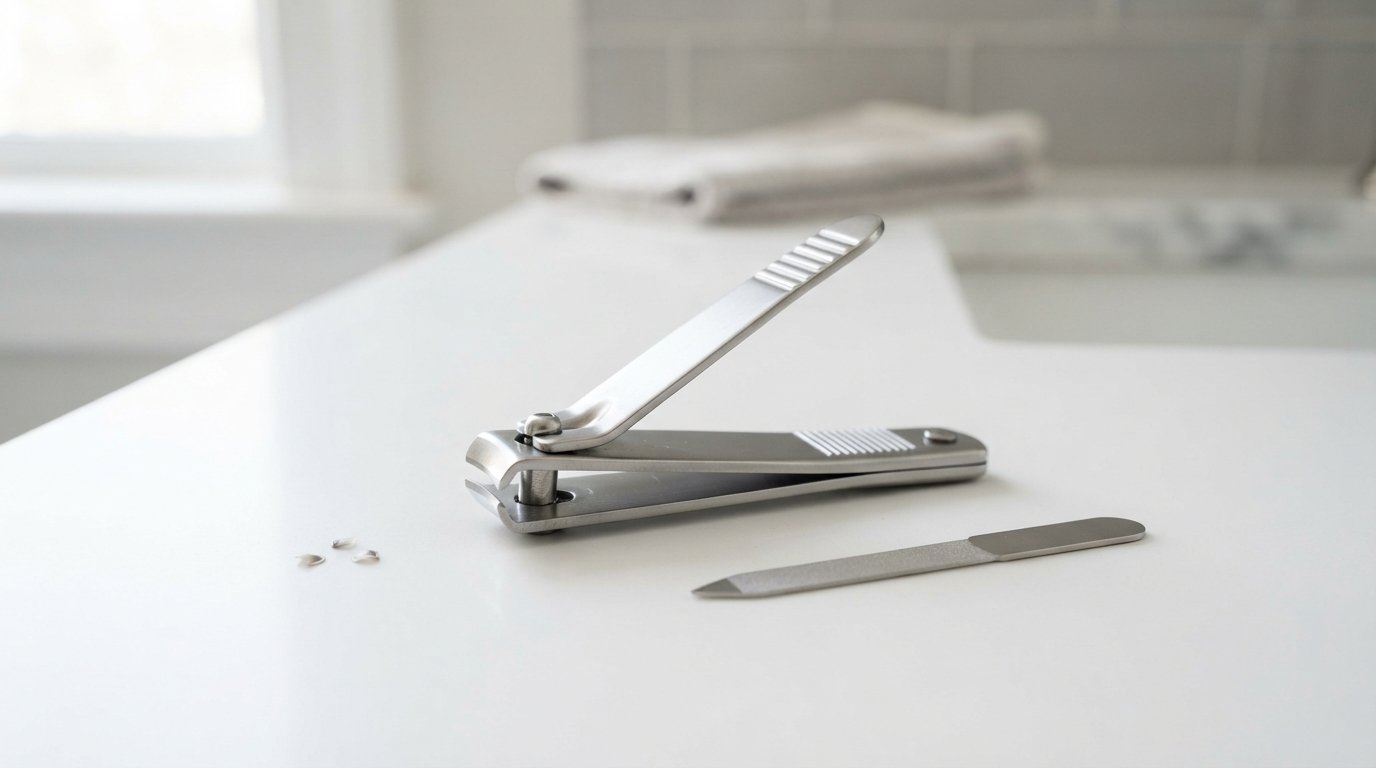
Toe Nail Clippers: How to Choose, Use, and Care for Your Toenails
Taking care of your toenails may not be something you think about every day. However, when your toenails become too long, thick, sharp, or difficult to cut, you quickly realize how important the right nail tool can be.
A good pair of toe nail clippers can make regular foot care much easier. Instead of struggling with a small fingernail clipper, you can use a tool designed specifically for the thicker and stronger nails on your toes.
Whether you are looking for toenail clippers for thick nails, a professional-style toe nail clipper, or a simple pair for everyday grooming, choosing the right tool can make a noticeable difference.
In this guide, we will explain what toe nail clippers are, how they differ from regular nail clippers, what features to look for, how to use them correctly, how to clean them, and what mistakes to avoid.
What Are Toe Nail Clippers?
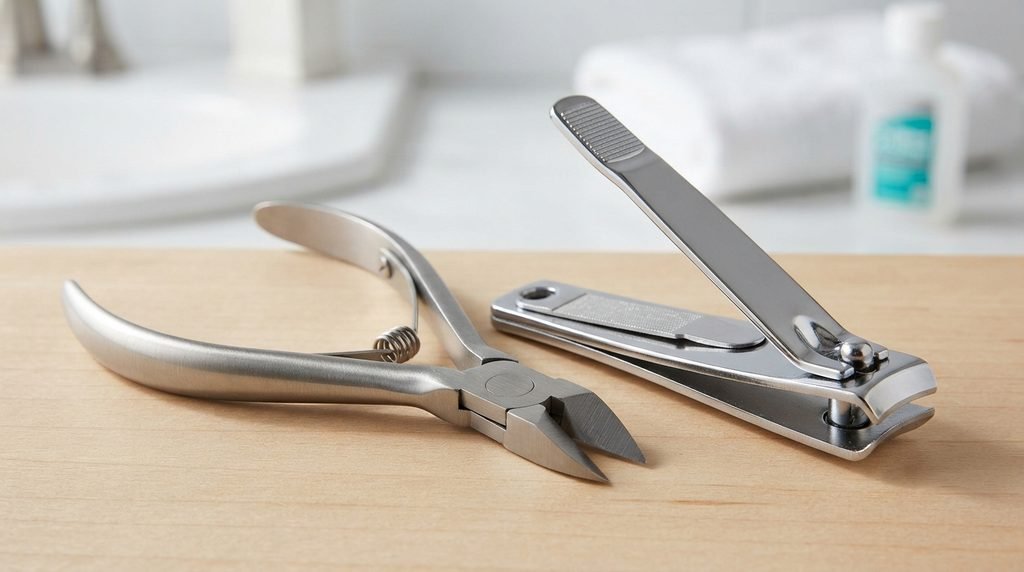
Toe nail clippers are nail-cutting tools designed specifically for trimming toenails. Compared with ordinary fingernail clippers, they are often larger, stronger, and easier to control.
Toenails can be thicker than fingernails, especially the big toenail. For that reason, a dedicated toenail clipper can provide more cutting power and a better grip.
Some models use a traditional lever design, while others look more like small pliers or nail nippers. The latter style can be especially useful when dealing with thick or difficult-to-cut toenails.
The main purpose is simple: trim the toenails cleanly without unnecessary pressure, cracking, or pulling.
Dermatologists recommend keeping toenails trimmed regularly and cutting them straight across.
Why Use Toe Nail Clippers Instead of Regular Nail Clippers?
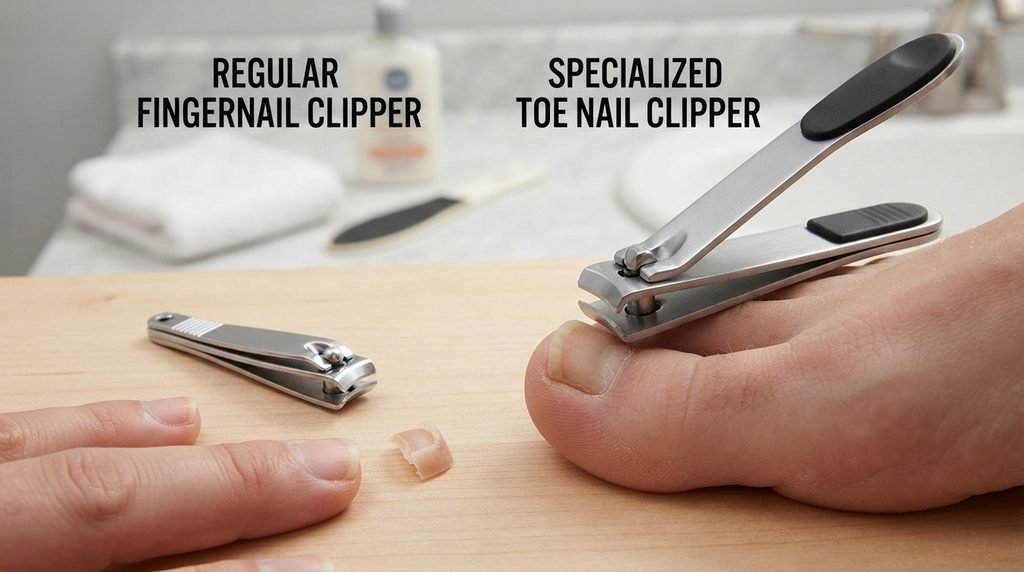
You might wonder whether you really need a separate pair of toe nail clippers.
After all, a regular nail clipper may seem capable of doing the same job.
However, toenails are usually thicker and wider than fingernails. A small clipper designed for fingers may not open wide enough or provide enough leverage.
A dedicated toenail clipper for thick nails can offer several advantages:
- A wider cutting jaw
- Stronger construction
- Better leverage
- Easier handling
- More control over each cut
- Better access to the big toenail
- Less need to force the tool through the nail
Imagine trying to cut a thick branch with a tiny pair of scissors. You might eventually manage it, but the right tool would make the job much easier.
The same idea applies to toenail care.
What Makes a Good Toe Nail Clipper?
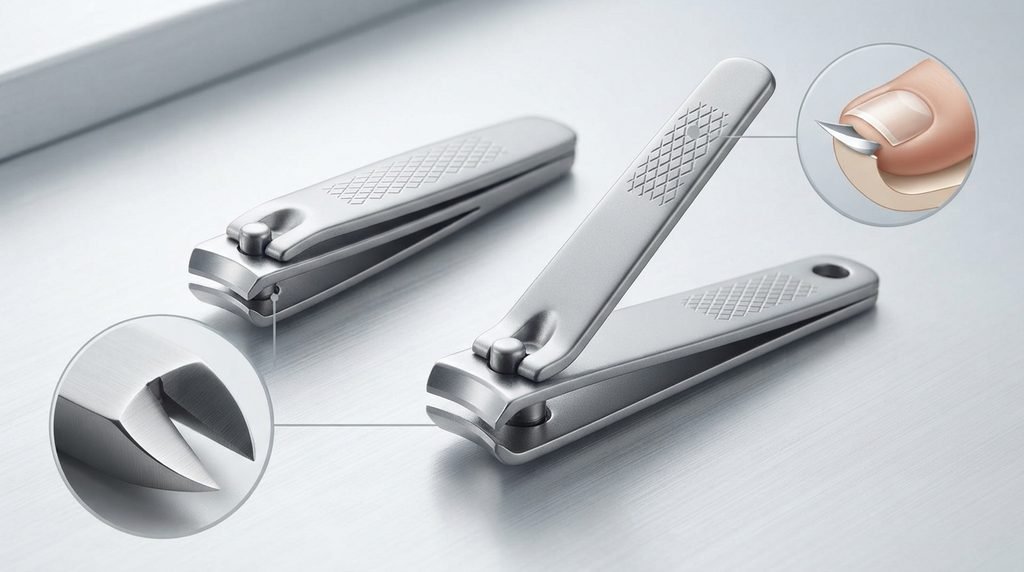
Not every nail clipper is made the same way. Before buying one, it is worth checking several important features.
1. Sharp Cutting Edges
The cutting edges should be sharp enough to cut through the nail cleanly.
A dull toe nail clipper can crush or split the nail rather than making a clean cut. It may also encourage you to apply excessive pressure.
A sharp cutting edge allows you to make smaller, controlled cuts.
2. Strong Construction
Toenails can require more cutting force than fingernails. Therefore, look for a clipper made from durable materials.
Many quality toenail clippers are made from stainless steel because it is strong, easy to clean, and resistant to corrosion when properly maintained.
3. Comfortable Grip
A good grip matters more than you might expect.
If the clipper is difficult to hold, your hand may slip while cutting. This can make toenail trimming uncomfortable and less precise.
Look for a handle that feels stable in your hand and does not require excessive force.
4. Wide Opening
If you have naturally thick toenails, a clipper with a wider opening can be helpful.
A narrow clipper may struggle to fit around a thick big toenail. A wider jaw gives you more room to position the tool properly.
5. Easy Control
More cutting power is not always better.
You want a tool that lets you make small, controlled cuts rather than one large cut across the entire nail.
This is particularly useful when trimming thicker toenails.
Toe Nail Clippers vs. Nail Nippers
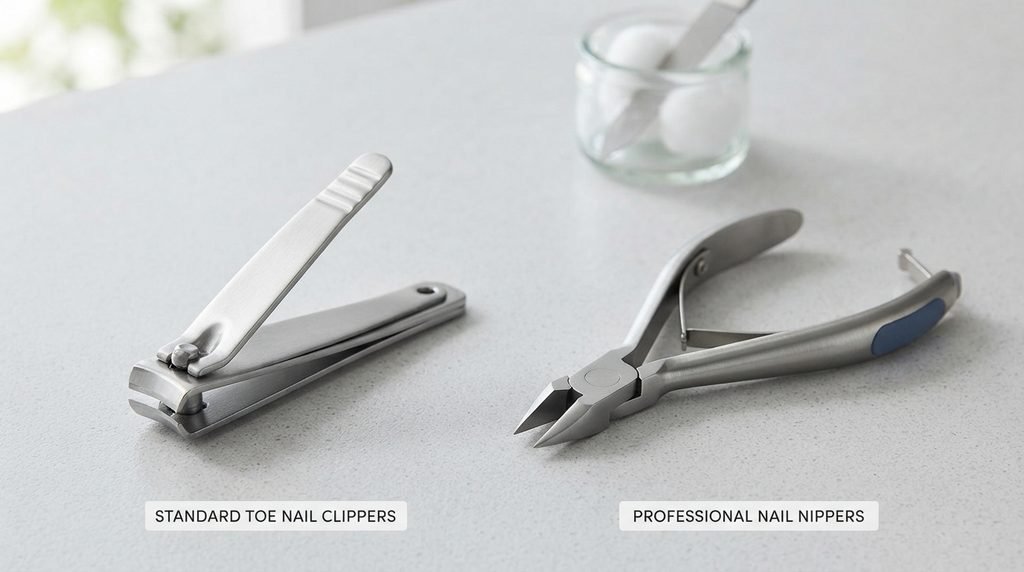
You will often see the terms toe nail clippers and nail nippers used together.
Although they perform a similar job, their designs can be different.
Traditional nail clippers usually have a lever that presses two cutting edges together.
Nail nippers, on the other hand, generally have handles that resemble small pliers. They can provide excellent control and leverage.
Mayo Clinic specifically notes that nail nippers can work well for thickened toenails because they are lightweight, easy to grip, and easy to control.
For someone with ordinary toenails, a standard toenail clipper may be enough.
For someone dealing with particularly thick nails, a strong pair of toenail nippers may be more practical.
How to Choose the Right Toe Nail Clippers
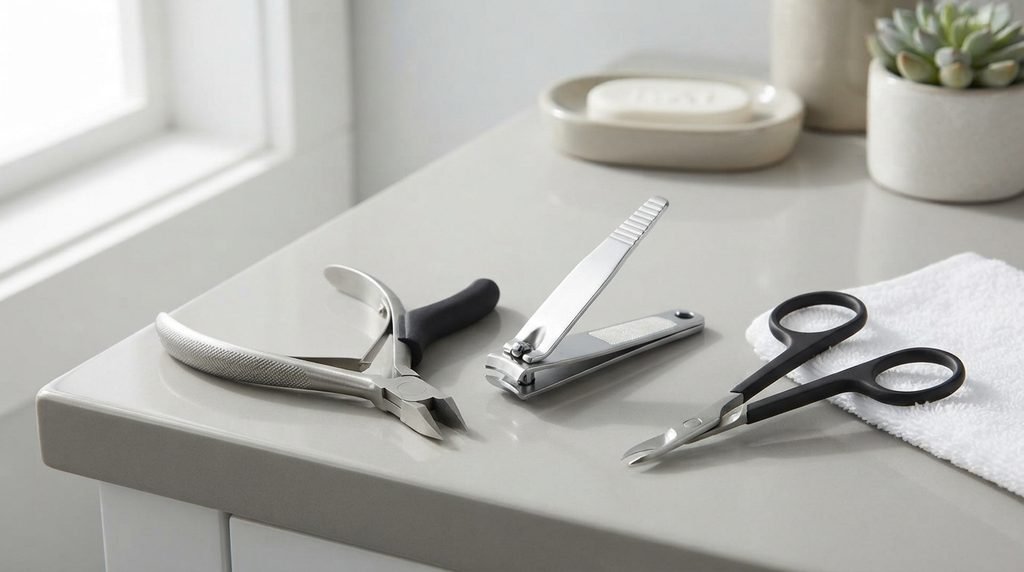
Choosing the right tool does not have to be complicated.
Start by considering your toenails and how often you trim them.
For Normal Toenails
If your toenails are normal thickness and you simply need a tool for regular grooming, choose:
- Sharp cutting edges
- Comfortable handles
- Stainless-steel construction
- A moderate jaw opening
- Easy-to-clean surfaces
You do not necessarily need a heavy-duty tool.
For Thick Toenails
If your toenails are thick, a stronger tool may be more appropriate.
Look for:
- Wide jaws
- Strong cutting edges
- High leverage
- Ergonomic handles
- A sturdy construction
Mayo Clinic recommends softening thickened toenails in warm water for 5 to 10 minutes before trimming. It also recommends making small, straight cuts rather than trying to cut the entire nail in one motion.
For Older Adults
People who have difficulty bending or reaching their feet may want a clipper that provides a secure grip and good control.
A longer handle can sometimes make positioning easier, although the right choice depends on the person’s mobility and comfort.
If someone has diabetes, poor circulation, or reduced sensation in the feet, professional medical advice is especially important before attempting to trim difficult or thick toenails.
How to Use Toe Nail Clippers Correctly
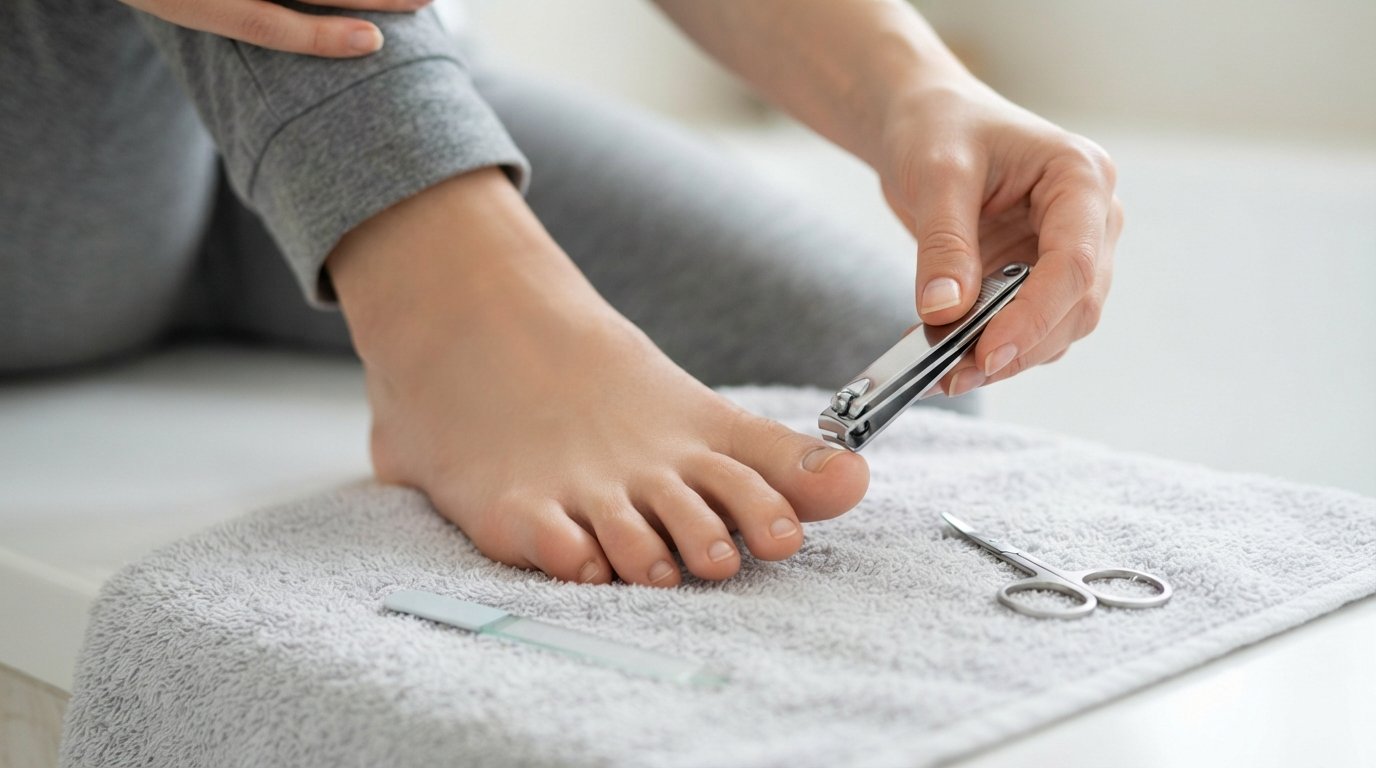
Buying a quality toe nail clipper is only half of the job.
The way you use it also matters.
Here is a simple step-by-step method.
Step 1: Prepare Your Feet
Start with clean feet.
If your toenails are hard or thick, soaking your feet in warm water for about 5 to 10 minutes can help soften them.
You can also trim your toenails after a bath or shower when they are naturally softer.
After soaking, dry your feet thoroughly with a clean towel.
This is particularly important because moisture around the feet can encourage unwanted bacteria and fungi.
Step 2: Choose a Comfortable Position
Sit somewhere where you can clearly see your toenails.
Do not try to cut your toenails while standing or balancing awkwardly.
Place your foot somewhere stable.
Good lighting is also useful because it allows you to see exactly where the clipper is positioned.
If you cannot comfortably reach your feet or see the nail clearly, consider asking someone for help or speaking with a healthcare professional.
Step 3: Start With the Big Toenail
The big toenail is usually the widest nail, so it is often easiest to start there.
Position the toe nail clippers near one side of the nail.
Do not immediately try to cut across the entire nail.
Instead, make small cuts.
For thick nails, this approach can help reduce splitting and gives you better control.
Step 4: Cut Straight Across
One of the most important rules of toenail trimming is to avoid aggressively rounding the corners.
Cut the toenail relatively straight across.
The American Academy of Dermatology recommends cutting toenails straight across to help reduce the chance of developing an ingrown toenail.
You do not need to cut extremely short.
Leave enough nail so that the edge does not become embedded into the surrounding skin.
Step 5: Make Small Cuts
If your toenails are thick, do not force the clipper through the nail.
Instead, move across the nail gradually.
Make one small cut, reposition the clipper, and make another.
This technique can provide better control and reduce the chance of the nail splintering.
Step 6: Smooth Sharp Edges
After trimming, check the edges.
If there are sharp or uneven areas, use a nail file or emery board to smooth them gently.
Avoid aggressively filing back and forth.
The goal is simply to remove sharp edges that could catch on socks or rub against your shoes.
Mayo Clinic recommends gently filing thickened toenails after trimming to remove sharp edges.
How Short Should You Cut Your Toenails?
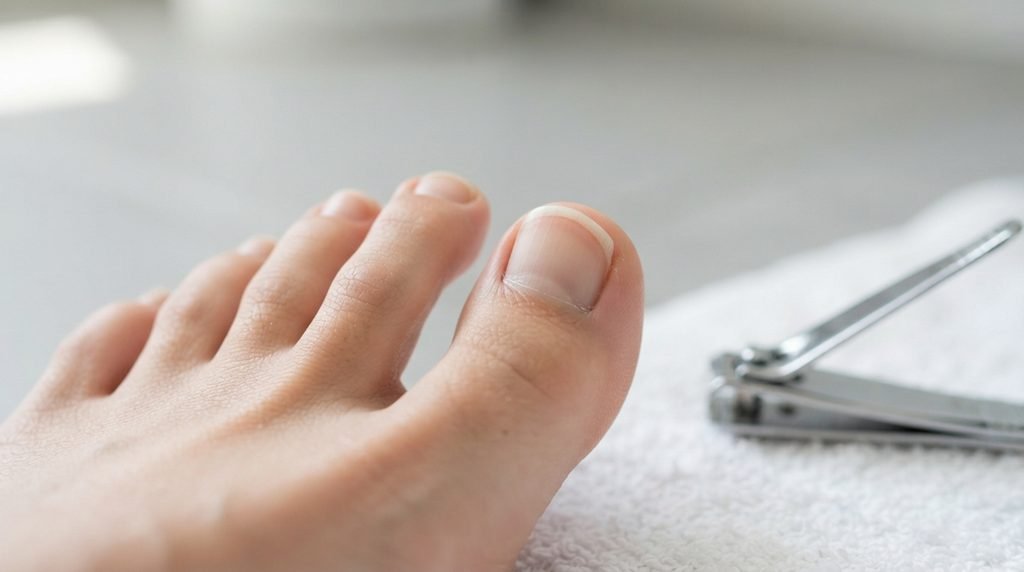
It can be tempting to cut your toenails as short as possible.
However, shorter is not always better.
Your goal should be to keep your toenails neat and comfortably short without cutting into the surrounding skin.
The American Academy of Dermatology recommends keeping toenails short while cutting them straight across.
If you repeatedly cut the corners too deeply, you may increase the chance of an ingrown toenail.
How Often Should You Use Toe Nail Clippers?
There is no single schedule that works for everyone.
Toenails generally grow more slowly than fingernails, so you may not need to trim them as frequently.
Instead of following a strict calendar, check your toenails regularly.
Trim them when they become noticeably long or begin catching on socks or rubbing against footwear.
Regular trimming can also help reduce the amount of dirt and debris that can collect underneath longer nails.
Toe Nail Clippers for Thick Nails
One of the most common reasons people search for toe nail clippers for thick nails is because ordinary clippers simply do not work comfortably.
Thick toenails can develop for several reasons, including aging, injury, tight-fitting shoes, psoriasis, and fungal infections.
If your nails are only slightly thick, a sturdy heavy-duty toenail clipper may be enough.
However, if a toenail has become very thick, painful, discolored, or increasingly difficult to trim, do not assume that a stronger clipper is the complete solution.
The underlying cause may need attention.
Mayo Clinic advises contacting a healthcare professional if thickened toenails continue to become thicker, become painful, or cannot be safely trimmed at home.
Common Mistakes When Using Toe Nail Clippers
Even a high-quality clipper can cause problems when used incorrectly.
Here are some common mistakes to avoid.
Cutting Too Deep Into the Corners
Avoid digging into the sides of your toenails.
Instead, keep the cut relatively straight across.
Cutting Too Short
Do not try to cut the nail down to the skin.
Leaving an appropriate amount of nail can help protect the toe.
Using a Dull Clipper
A dull clipper may crush the nail instead of cutting it cleanly.
If the tool requires excessive force, it may be time to replace or sharpen it, depending on the design.
Cutting Thick Nails in One Big Motion
For thick nails, several small cuts are usually easier to control.
Ignoring Sharp Edges
A freshly cut nail can sometimes leave a sharp point.
Use a nail file to gently smooth it.
Sharing Nail Clippers
Avoid sharing personal nail-grooming tools.
The American Academy of Dermatology recommends not sharing nail clippers because infections such as fungal nail infections can spread through contaminated grooming tools.
How to Clean and Disinfect Toe Nail Clippers
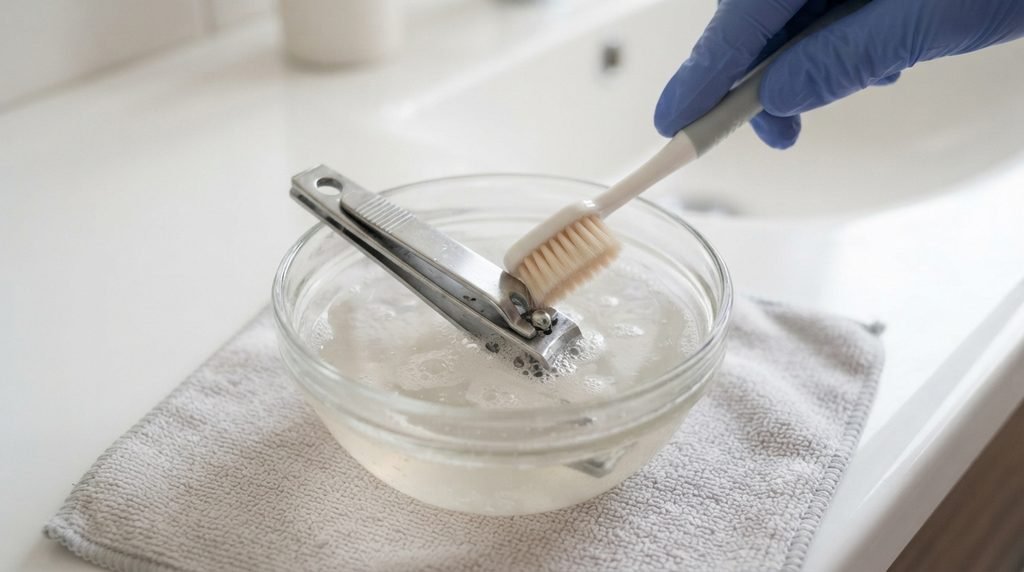
Your toe nail clippers should not simply be thrown into a drawer after use.
Nail clippings, skin particles, and other debris can remain on the tool.
A simple cleaning routine helps keep your nail-grooming equipment hygienic.
First, remove any visible nail fragments.
Then wash the clipper with warm water and soap.
After cleaning, disinfect it appropriately.
The American Academy of Dermatology provides specific guidance for disinfecting nail clippers, including using 70% rubbing alcohol when there is no nail infection. The tool should then be allowed to dry completely before storage.
If you have a known fungal infection or another infection, follow medical guidance for cleaning and disinfecting your tools rather than relying on ordinary cleaning alone.
Why a Good Toe Nail Clipper Is Worth Buying
A toe nail clipper may look like a very simple product.
However, a well-designed tool can make a regular grooming task much easier.
A quality clipper can provide:
- Better grip
- Cleaner cuts
- More control
- Less effort
- Easier trimming of thick nails
- Longer-lasting performance
- Easier maintenance
Think about how often you trim your toenails.
If you are using a cheap clipper that pinches, slips, or struggles with your nails every time, upgrading to a properly designed tool can make the process noticeably more comfortable.
You do not necessarily need the most expensive option.
Instead, focus on practical features such as sharp blades, strong construction, comfortable handles, and a suitable opening for your toenails.
What to Look for Before Buying Toe Nail Clippers
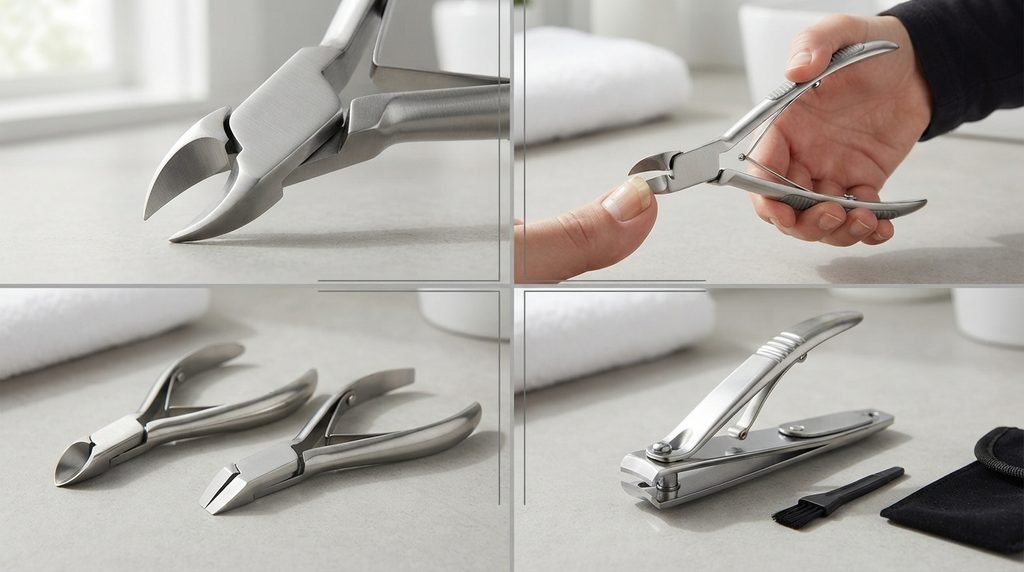
Before purchasing, use this simple checklist.
If you are looking for a reliable pair of toe nail clippers, you can compare available options on Amazon before making a purchase.
✔ Strong Cutting Edge
The clipper should be capable of cutting your toenails without excessive force.
✔ Comfortable Handle
You should be able to hold it securely.
✔ Wide Jaw
This is especially important if your toenails are thick or wide.
✔ Durable Material
Stainless steel is a common choice for nail-grooming tools because it is durable and easy to clean.
✔ Easy Maintenance
Look for a design that is simple to clean and dry after use.
✔ Good Control
The clipper should allow you to make small cuts rather than forcing you to make one large cut.
✔ Appropriate Size
A toenail clipper should feel substantial enough for toenails without becoming awkward to handle.
Can Toe Nail Clippers Be Used on Fingernails?
Technically, some toe nail clippers can cut fingernails.
However, they are generally larger and stronger than necessary for ordinary fingernail trimming.
A smaller fingernail clipper is usually more convenient for fingers.
It is therefore useful to have separate tools for your fingers and toes, particularly if you regularly maintain both.
Toe Nail Clippers for Home Pedicures
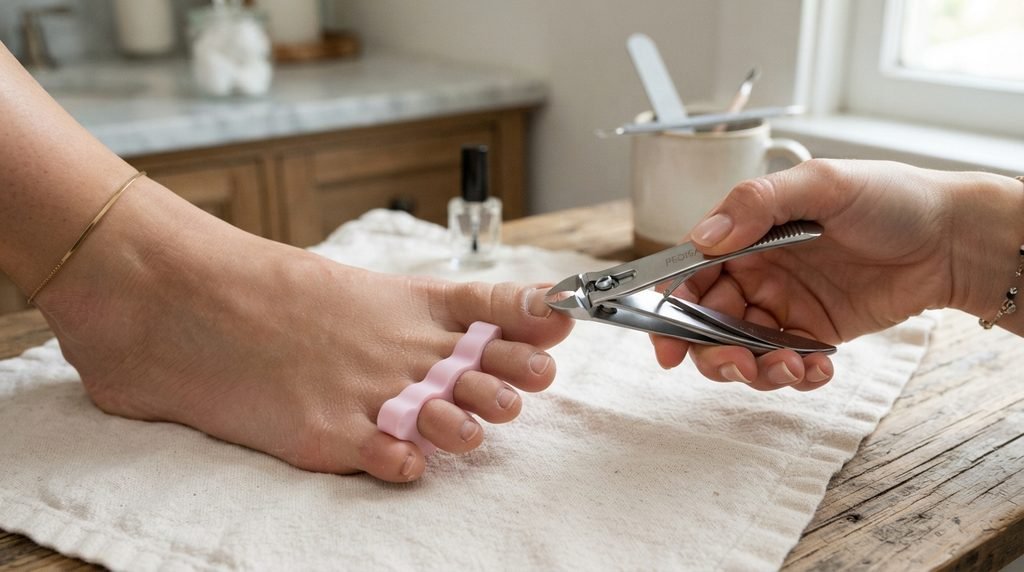
You do not need a professional salon setup to maintain neat toenails at home.
A basic home pedicure routine can include:
- Warm water
- Clean towel
- Toe nail clippers
- Nail file
- Moisturizer
- Clean storage container for your tools
Start by cleaning and softening your feet.
Then trim the toenails straight across.
Afterward, smooth any sharp edges with a nail file and moisturize your feet.
Keeping the routine simple makes it much easier to stay consistent.
When You Should Not Trim a Problem Toenail Yourself
A toe nail clipper is useful for normal grooming, but it should not be considered a treatment for every toenail problem.
Be careful if your toenail is:
- Very painful
- Severely swollen
- Bleeding
- Very thick
- Changing color significantly
- Separating from the skin
- Showing signs of infection
- Difficult to cut safely
Pain, swelling, bleeding, or significant changes in nail color, shape, or thickness can require professional evaluation.
People with diabetes, poor circulation, or reduced sensation in their feet should take particular care and discuss difficult toenail trimming with their healthcare team.
A Simple Toenail Care Routine
If you want an easy routine, follow these steps:
Step 1: Check Your Toenails
Look for excessive length, sharp edges, discoloration, or unusual changes.
Step 2: Clean Your Feet
Wash your feet and dry them thoroughly.
Step 3: Soften Thick Nails
If necessary, soak your feet in warm water for 5 to 10 minutes.
Step 4: Prepare Your Clipper
Make sure your toe nail clippers are clean and working properly.
Step 5: Cut Straight Across
Make controlled cuts without digging into the corners.
Step 6: File the Edges
Smooth any sharp or uneven sections.
Step 7: Moisturize
Apply moisturizer to help prevent excessively dry skin.
Step 8: Clean Your Tool
Remove nail fragments, clean and disinfect the clipper appropriately, then let it dry completely before storage.
This routine is simple enough to repeat regularly without turning toenail care into a complicated process.
Frequently Asked Questions About Toe Nail Clippers
Are toe nail clippers better than regular nail clippers?
For toenails, a dedicated toe nail clipper can be more convenient because it is generally designed for thicker and wider nails.
What are the best toe nail clippers for thick toenails?
Look for a sturdy clipper or nail nipper with a wide opening, sharp cutting edges, good leverage, and a comfortable grip. For very thick or painful nails, professional advice may be more appropriate than simply buying a stronger tool.
Should toenails be cut straight across?
Yes. Dermatology guidance recommends cutting toenails straight across rather than deeply rounding the corners.
Should I soak my feet before using toe nail clippers?
If your toenails are thick or difficult to cut, soaking your feet in warm water for 5 to 10 minutes can soften them.
How do I clean toe nail clippers?
Remove nail debris, wash the clipper with soap and warm water, disinfect it appropriately, and allow it to dry completely before storing it.
Can I use the same toe nail clipper as another person?
It is better not to share personal nail-grooming tools. Nail infections can spread through contaminated grooming equipment.
How often should I cut my toenails?
Toenails grow relatively slowly, so trimming frequency varies. Check them regularly and trim when they become too long or start causing discomfort.
Final Thoughts: Choosing the Right Toe Nail Clippers
The right toe nail clippers can turn an awkward grooming task into a quick and simple part of your regular self-care routine.
If your toenails are normal thickness, a comfortable and sharp clipper may be all you need. If your nails are thicker, look for a wider, stronger design that gives you better leverage and control.
Most importantly, do not focus only on price.
Look for a durable toe nail clipper, comfortable grip, sharp cutting edges, suitable jaw width, and easy-to-clean construction. A quality tool that feels comfortable in your hand is much more useful than a cheap clipper that bends, slips, or struggles with your nails.
Use your clipper carefully, make small controlled cuts, trim toenails straight across, and smooth sharp edges afterward. With these simple habits, regular toenail care becomes much easier.
And if a toenail becomes painful, unusually thick, discolored, swollen, or difficult to trim safely, remember that the problem may require professional attention rather than simply a stronger pair of toe nail clippers.
For most everyday grooming, however, choosing the right tool and using it correctly can make a big difference.
Helpful Nail-Care Resources
For additional guidance, readers can consult trusted dermatology and medical resources from the American Academy of Dermatology and Mayo Clinic. These resources cover toenail trimming, thickened toenails, nail hygiene, and signs that may require professional attention.