
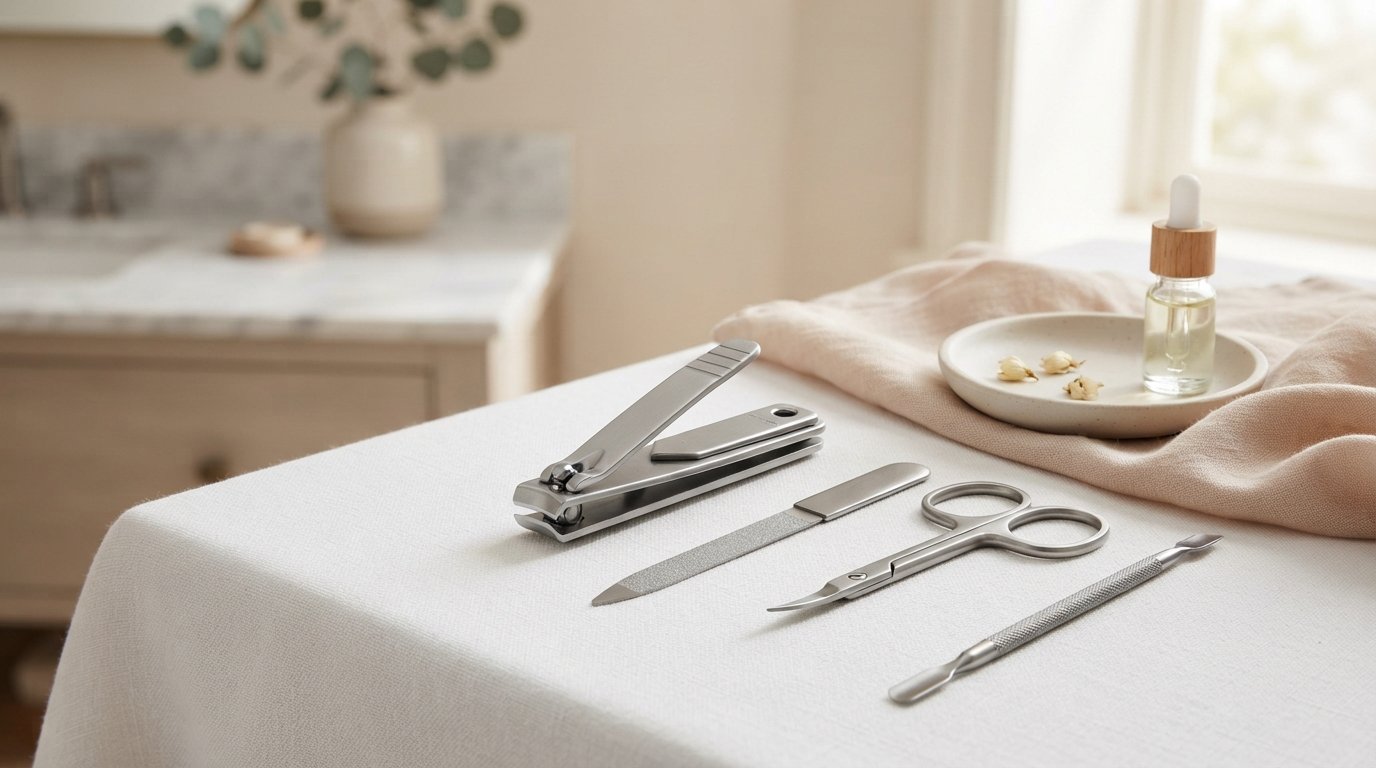
Nail Clippers: A Complete Guide to Choosing, Using, and Caring for Your Nails
Taking care of your nails does not have to be complicated. In fact, one of the simplest tools you can keep at home is a good pair of nail clippers. Whether you are trimming your fingernails, keeping your toenails neat, or maintaining your nails between salon visits, the right clipper can make the job much easier.
A good nail clipper should feel comfortable in your hand, make a clean cut, and be strong enough for the type of nails you have. However, not every clipper is designed the same way. Some are made mainly for fingernails, while others are wider and stronger for toenails. There are also professional nail clippers, heavy-duty toenail clippers, travel-size options, and complete manicure kits.
If you have ever used a cheap clipper that pinched your skin, cracked the nail, or struggled to cut a thick toenail, you already know why choosing the right tool matters.
In this guide, we will look at what nail clippers are, the different types available, how to choose the right one, how to use them correctly, how to clean them, and what features are worth paying for.
Important: Proper nail trimming is part of basic nail care, but a clipper should not be used to dig into painful or infected nails. If you notice significant pain, swelling, discoloration, or unusual nail changes, consider getting advice from a qualified healthcare professional. The American Academy of Dermatology recommends proper trimming techniques to reduce problems such as hangnails and ingrown toenails. (AAD)
What Are Nail Clippers?
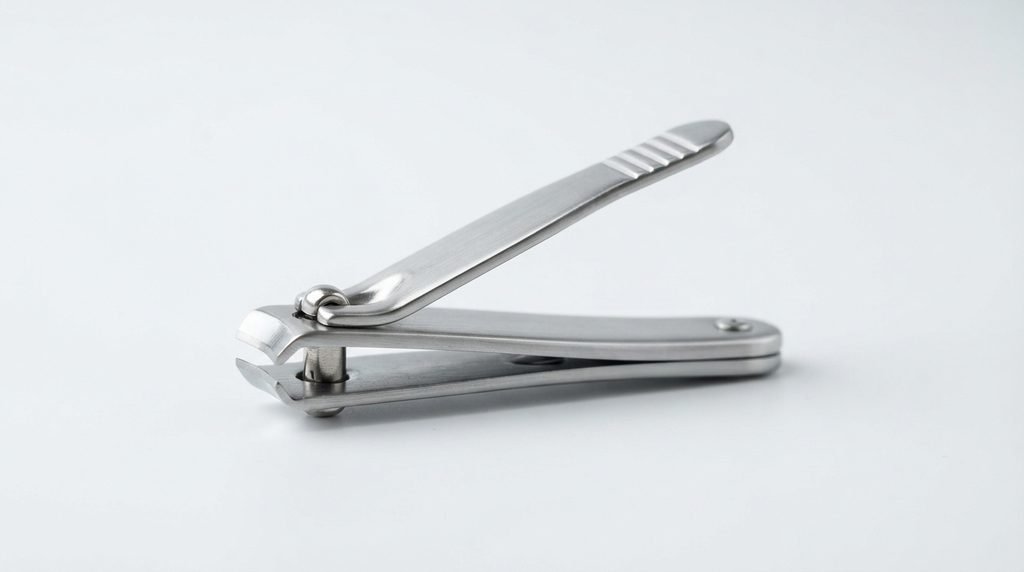
Nail clippers are small handheld tools designed to cut and shape fingernails and toenails. They normally have two sharp cutting edges that come together when you press the lever.
Although the basic idea is simple, the design of the clipper can make a big difference.
For example, a small fingernail clipper may be perfect for everyday manicure maintenance, while a larger toenail clipper can provide more leverage when dealing with thicker nails.
A quality clipper should allow you to control the cut rather than forcing you to squeeze extremely hard.
This is particularly useful if you trim your nails regularly. Instead of fighting with the tool, you can make small, controlled cuts and then use a nail file to smooth the edges.
Why a Good Nail Clipper Matters
At first glance, buying a nail clipper may seem like a very small decision. After all, it is just a simple grooming tool.
However, your clipper comes directly into contact with your nails and the skin around them. A poorly designed or dull tool can make trimming uncomfortable.
A good nail clipper can help you:
- Make cleaner cuts
- Trim nails more comfortably
- Reduce unnecessary pressure
- Reach toenails more easily
- Maintain a neat nail shape
- Make your home manicure routine easier
- Keep your grooming tools organized
The American Academy of Dermatology recommends using sharp nail clippers or nail scissors and trimming fingernails almost straight across. For toenails, cutting straight across can help reduce the chance of developing an ingrown toenail. (AAD)
So, while a clipper is a basic tool, using the right one and using it correctly can make your regular nail care routine much easier.
Types of Nail Clippers
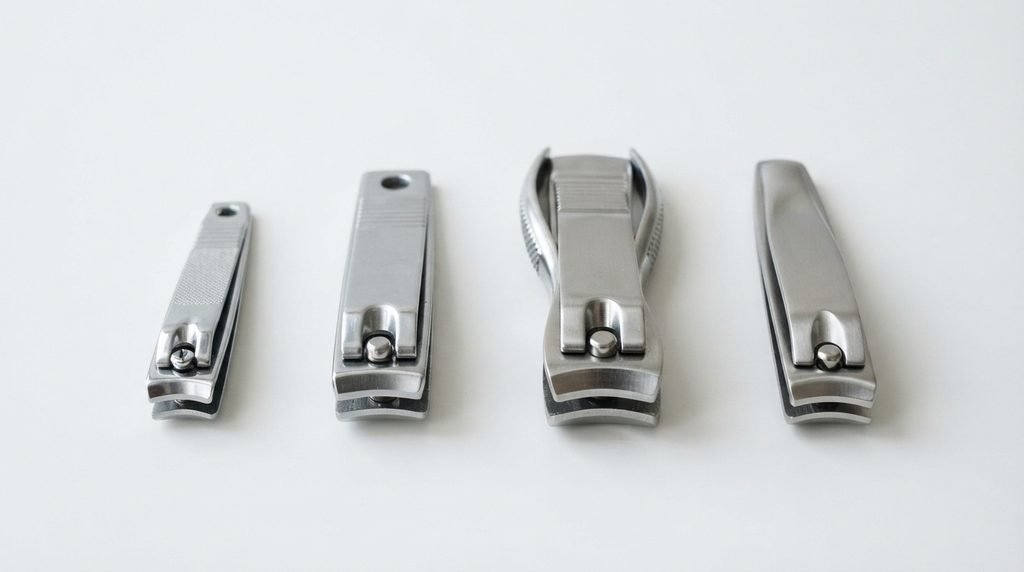
There is no single clipper that is perfect for everyone. The best option depends on your nails and how you normally take care of them.
1. Standard Nail Clippers
Standard nail clippers are the most common type.
They are compact, simple, and usually have a folding lever. They work well for everyday fingernail trimming and are easy to store in a bathroom drawer or travel bag.
If your nails are normal thickness and you mainly need a basic grooming tool, a standard clipper may be all you need.
2. Toenail Clippers
Toenail clippers are generally larger and stronger than standard fingernail clippers.
The wider cutting head and longer handle can provide more leverage. This makes them useful when toenails are thicker or harder to reach.
Because toenails are usually thicker than fingernails, using a tool designed specifically for them can make trimming more comfortable.
However, you should still avoid forcing the clipper through a nail.
If a nail is unusually thick, painful, discolored, or difficult to cut, it may be better to have it assessed rather than repeatedly trying to cut it yourself.
3. Heavy-Duty Nail Clippers
Heavy-duty nail clippers are designed for people who need extra cutting power.
They often have:
- Larger handles
- Stronger construction
- Wider cutting jaws
- Better leverage
- More durable materials
These can be useful for thick toenails or people who find standard clippers uncomfortable to operate.
The important point is that “heavy-duty” does not mean you should apply excessive force. A properly designed clipper should do most of the work for you.
4. Professional Nail Clippers
Professional nail clippers are commonly designed with durability, precision, and frequent use in mind.
They may feature stainless-steel construction, precision-ground cutting edges, ergonomic handles, and a more controlled cutting mechanism.
If you do your own manicure and pedicure regularly, investing in a better-quality tool can make sense.
For occasional home use, however, you do not necessarily need the most expensive professional model.
5. Lever-Style Nail Clippers
The classic lever-style design is probably the type most people recognize.
You place the cutting jaws over the nail and press down on the lever.
They are:
- Simple
- Affordable
- Compact
- Easy to carry
- Widely available
For everyday nail grooming, this traditional design remains a practical option.
How to Choose the Best Nail Clippers
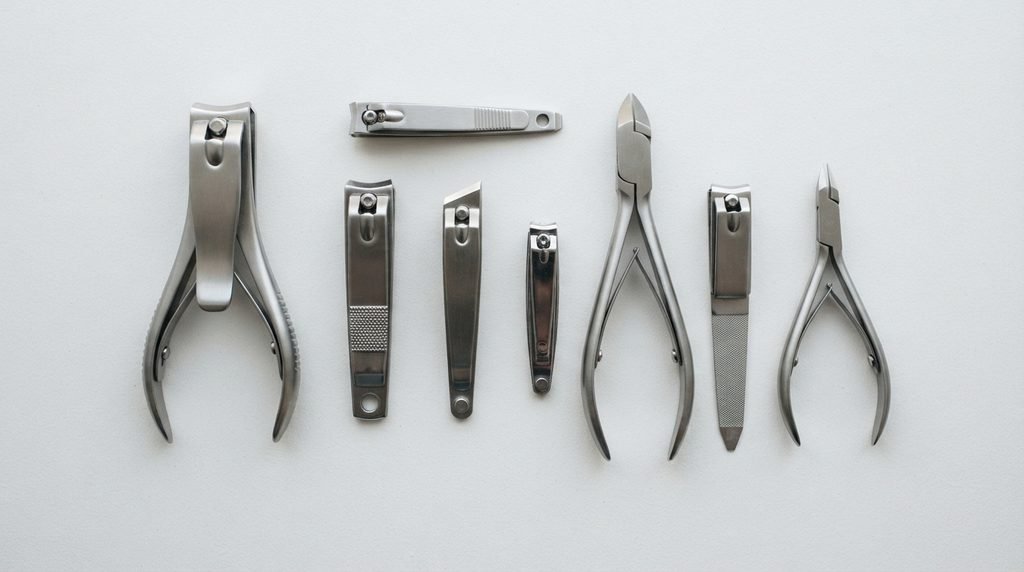
Choosing the right nail clippers becomes easier when you know what features actually matter.
Look for Sharp Cutting Edges
Sharp blades are one of the most important features.
A dull clipper may crush or split the nail instead of producing a clean cut.
When shopping, look for a clipper with precisely aligned cutting edges. The jaws should meet properly without feeling loose.
Choose the Right Size
Size matters.
A small clipper can be convenient for fingernails, while a larger clipper may be easier to control when trimming toenails.
If you want one tool for everything, choose a medium-to-large design that still feels comfortable in your hand.
Consider Stainless Steel
Stainless steel nail clippers are popular because they are durable and relatively easy to clean.
A quality stainless-steel construction can also give the clipper a solid feel and help it withstand regular use.
For a tool that you plan to keep for years, durable construction is generally worth considering.
Check the Grip
A clipper should not constantly slip from your fingers.
An ergonomic or textured handle can make trimming easier, especially if you need to apply a little more pressure.
This is particularly useful when trimming toenails.
Think About Portability
If you travel frequently, look for compact nail clippers that fit easily inside a toiletry bag.
Some grooming kits include a clipper, nail file, tweezers, and other tools in one case.
For everyday home use, portability may not matter as much.
Nail Clippers vs. Nail Scissors
You may wonder whether you should use nail clippers or nail scissors.
Both can be useful.
Clippers are generally quicker and easier for basic nail trimming. Scissors can provide more precise control for people who prefer them.
For many people, a simple combination works well:
Nail clipper → Nail file → Moisturizer
This gives you a straightforward routine without requiring a large collection of tools.
The American Academy of Dermatology lists both nail clippers and nail scissors as appropriate tools for trimming nails. (AAD)
How to Use Nail Clippers Correctly
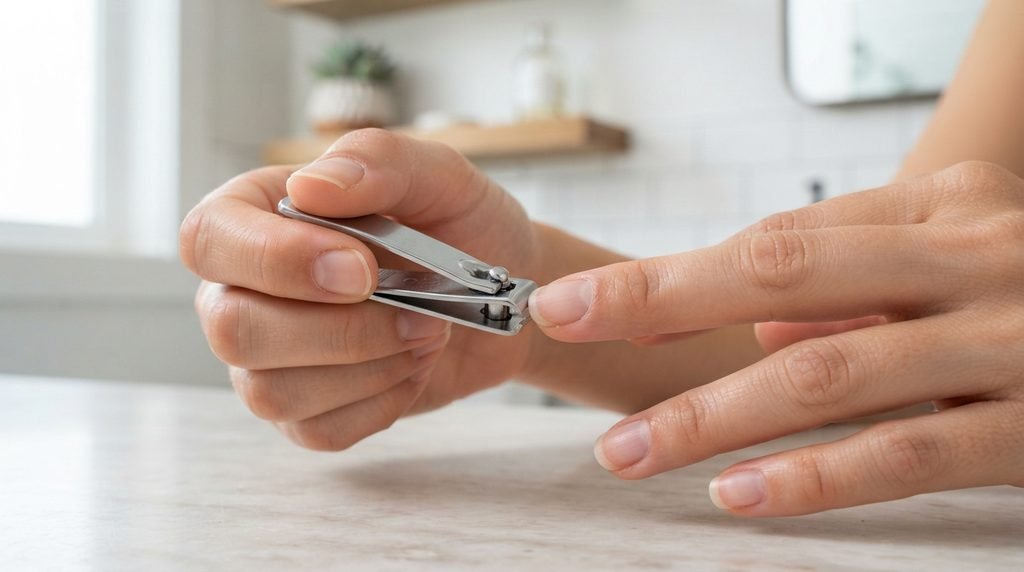
Using a clipper correctly is just as important as buying a good one.
Here is a simple step-by-step method.
Step 1: Wash Your Hands
Start with clean hands.
This removes dirt and reduces the amount of bacteria around your nails before you begin grooming.
If you are trimming your toenails, wash and dry your feet as well.
Step 2: Soften the Nails
The easiest time to trim your nails is usually after a bath or shower because the nails are softer.
The American Academy of Dermatology recommends trimming after bathing or showering, or soaking nails in lukewarm water for a few minutes if necessary. (AAD)
This simple step can make cutting easier.
Step 3: Choose the Correct Clipper
Use a smaller fingernail clipper for your fingernails and a suitable toenail clipper for your toenails.
Do not assume that the biggest clipper is automatically better.
The tool should match the nail.
Step 4: Start With Small Cuts
Do not try to remove a large section of the nail in one movement.
Instead, make small cuts across the nail.
This gives you better control and reduces the chance of cracking the nail.
Think of it as shaping rather than chopping.
Step 5: Trim Fingernails Almost Straight Across
For fingernails, trim almost straight across and then slightly round the corners if needed.
The goal is a clean, comfortable shape rather than an extremely rounded nail.
According to dermatologists at the American Academy of Dermatology, slightly rounding the corners can help prevent nails from catching on clothing and other objects. (AAD)
Step 6: Trim Toenails Straight Across
Toenails require a little more care.
Cut them straight across instead of aggressively rounding the corners.
This technique can help reduce the risk of ingrown toenails. (AAD)
Also, avoid cutting the nail extremely short.
A common mistake is thinking that shorter automatically means better.
It does not.
Step 7: File the Edges
After clipping, check the edges.
If you notice a rough or sharp area, use a nail file or emery board to smooth it.
The AAD recommends filing in one direction rather than aggressively moving the file back and forth, which can weaken the nails. (AAD)
Step 8: Moisturize
Finish your routine by applying a hand cream or moisturizer.
This is especially useful if your nails and surrounding skin feel dry.
Dry nails can become more prone to splitting, so keeping the surrounding skin moisturized is a useful part of regular nail care. (AAD)
A Simple Nail Clipping Routine
If you want an easy routine to remember, use this:
Clean → Soften → Clip → File → Moisturize
That is really all you need for basic nail maintenance.
You do not need an expensive salon setup to keep your nails looking neat.
A good nail clipper, a nail file, and a moisturizer can cover most everyday grooming needs.
How to Clean Nail Clippers
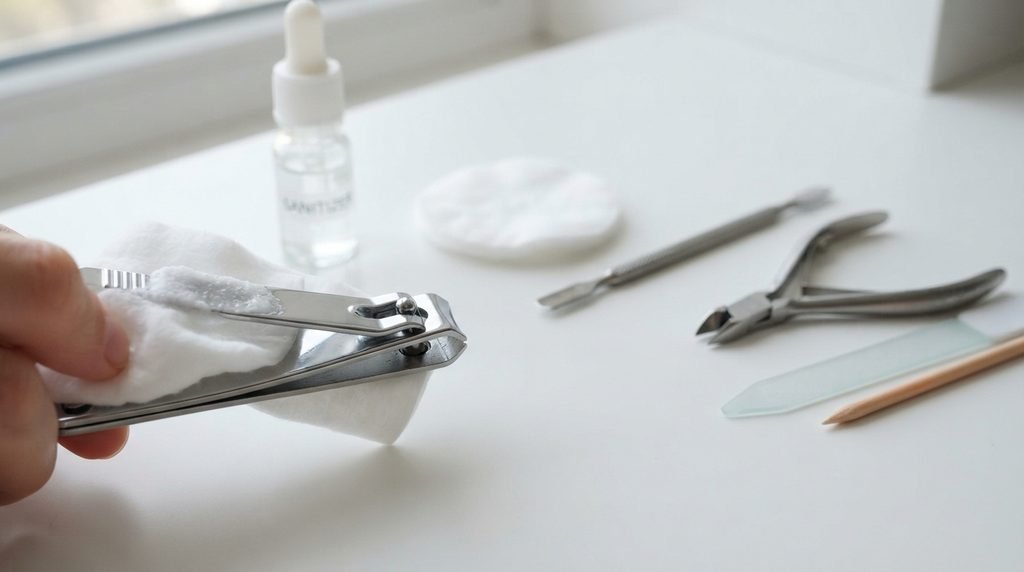
Your nail clipper should be cleaned regularly, especially if you use it frequently.
The American Academy of Dermatology recommends disinfecting nail clippers and nail scissors monthly using a scrub brush and 70% to 90% isopropyl alcohol, followed by rinsing with hot water and drying completely. (AAD)
A simple routine is:
- Remove visible nail pieces.
- Clean the cutting area.
- Disinfect the tool.
- Rinse as appropriate.
- Dry it completely.
- Store it somewhere clean and dry.
Never put a wet clipper away in a closed case.
Moisture can encourage unwanted microbial growth and may also affect the condition of the tool over time.
Should You Share Nail Clippers?
It is better to avoid sharing personal grooming tools.
Your nail clippers come into contact with your nails and surrounding skin, so keeping your grooming tools personal is a sensible hygiene habit.
This becomes even more important if someone has a nail infection, open skin, or another nail-related problem.
If you use clippers for a family, salon, or professional setting, proper cleaning and disinfection procedures become especially important.
Common Nail Clipper Mistakes to Avoid
Even a good clipper can cause problems if you use it incorrectly.
Cutting Nails Too Short
One of the most common mistakes is trimming nails extremely short.
This can make the surrounding skin uncomfortable and may contribute to problems such as ingrown toenails.
Leave enough nail to protect the end of the finger or toe.
Rounding Toenail Corners Too Much
Toenails should generally be cut straight across.
Aggressively cutting down the sides can increase the risk of ingrown toenails. (Cleveland Clinic)
Using a Dull Clipper
If your clipper struggles to cut the nail, do not simply squeeze harder.
The cutting edge may be dull or damaged.
A better-quality replacement can make the entire process easier.
Pulling Off Hangnails
A tiny hangnail can be tempting to pull.
Don’t.
Tearing it can cause bleeding and increase the chance of infection. Cleveland Clinic recommends using sterilized nail clippers or cuticle cutters to carefully trim a hangnail instead of ripping it. (Cleveland Clinic)
Cutting the Cuticles
Your cuticles have a protective role.
The American Academy of Dermatology recommends leaving them alone because cutting or aggressively pushing them can make it easier for bacteria and other germs to enter. (AAD)
How Often Should You Use Nail Clippers?
There is no single schedule that works for everyone.
Your nails grow at different rates depending on the person, age, season, and other factors.
Instead of following a strict calendar, look at your nails.
If your fingernails are getting too long or catching on clothing, it may be time to trim them.
Toenails generally grow more slowly, so they usually do not need trimming as frequently as fingernails. (AAD)
The goal is simple:
Keep your nails comfortable, neat, and at a practical length.
Nail Clippers for Thick Toenails
Thick toenails can be more difficult to trim.
This is where a heavy-duty toenail clipper with a wider cutting head and good leverage may be useful.
However, unusually thick, discolored, painful, or misshapen nails can sometimes be associated with an underlying nail condition.
In that situation, repeatedly forcing a clipper onto the nail is not the best approach.
If your nail changes significantly or becomes painful, it is sensible to seek professional medical advice. The AAD recommends seeing a dermatologist when nails change in color, texture, or shape, particularly when there are other symptoms. (AAD)
Nail Clippers for Men and Women
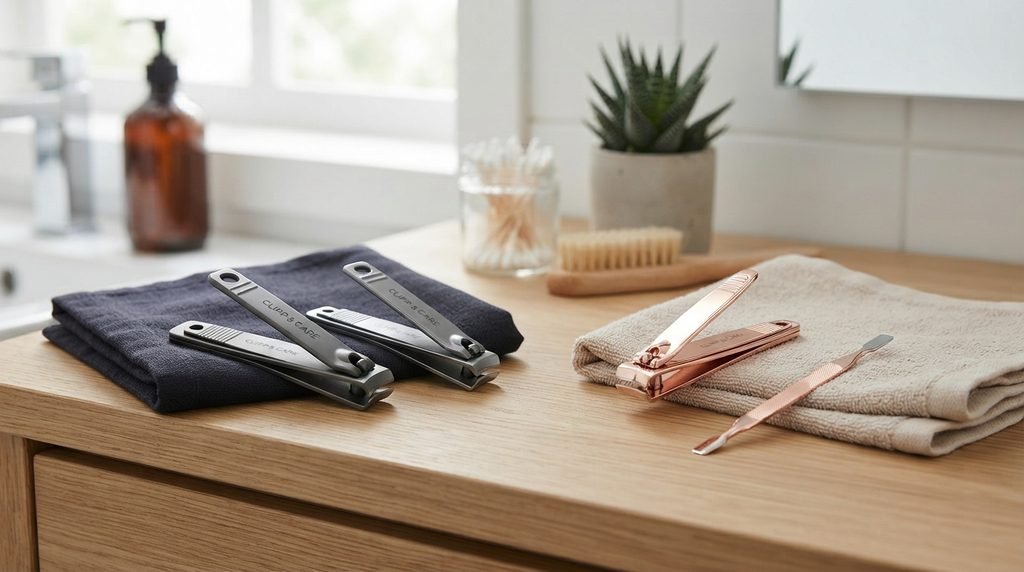
There is no major reason to choose a clipper based simply on gender.
Instead, choose according to nail thickness, hand size, comfort, and intended use.
For example:
- Small hands may prefer compact clippers.
- Thick toenails may need heavy-duty clippers.
- Frequent travelers may prefer compact grooming kits.
- Salon professionals may want durable professional tools.
- Home users may prefer a simple stainless-steel clipper.
The right tool is the one that gives you good control and clean cuts.
Are Expensive Nail Clippers Worth It?
Not necessarily.
Price is only one factor.
A more expensive clipper may offer better construction, sharper cutting edges, stronger materials, and a more comfortable grip. But you should focus on useful features rather than simply choosing the most expensive product.
Before buying, ask:
Does it cut cleanly?
Does it feel comfortable?
Is it the correct size for my nails?
Is it easy to clean?
Is it durable enough for regular use?
If the answer is yes, you may have found a good option.
What to Look for Before Buying Nail Clippers
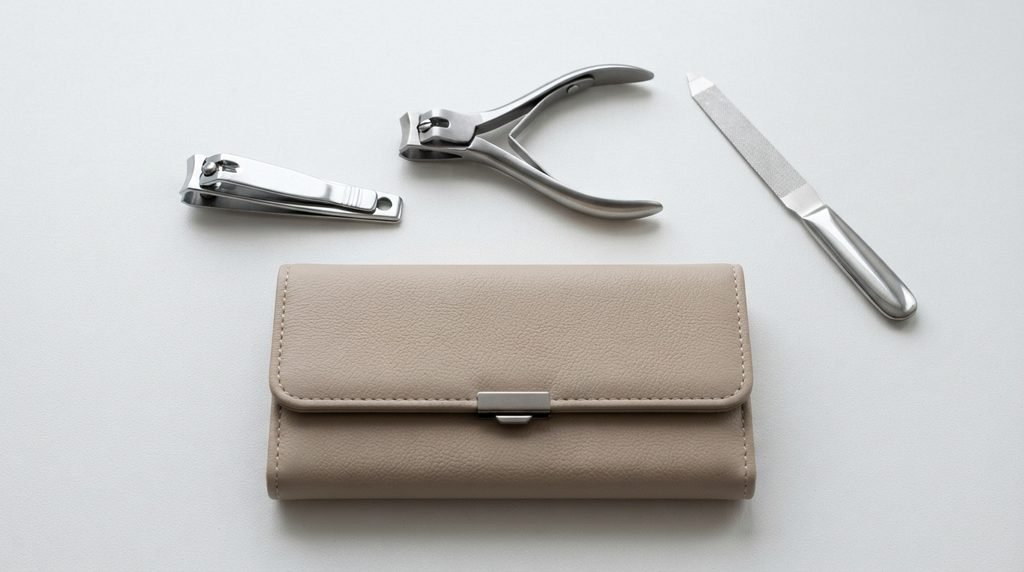
Here is a quick buying checklist:
| Feature | What to Look For |
|---|---|
| Cutting edge | Sharp and properly aligned |
| Material | Durable stainless steel |
| Grip | Comfortable and secure |
| Size | Suitable for fingers or toes |
| Leverage | Easy to operate without excessive force |
| Cleaning | Easy to disinfect |
| Storage | Protective case or safe storage |
| Durability | Solid construction |
| Precision | Clean, controlled cutting |
A good nail clipper does not need to be complicated.
It needs to work reliably.
My Experience With Simple Nail Care
Imagine getting ready for an important meeting.
You put on a clean shirt, fix your hair, check your shoes—and then notice that one fingernail is longer than the others.
It is a small detail, but suddenly it bothers you.
You grab your nail clipper, make a few controlled cuts, smooth the edge with a file, and you are done in less than two minutes.
That is the real value of a good nail clipper.
It is not about creating a complicated beauty routine.
It is about having the right little tool available when you need it.
Nail Clippers vs. Full Nail Care Kit
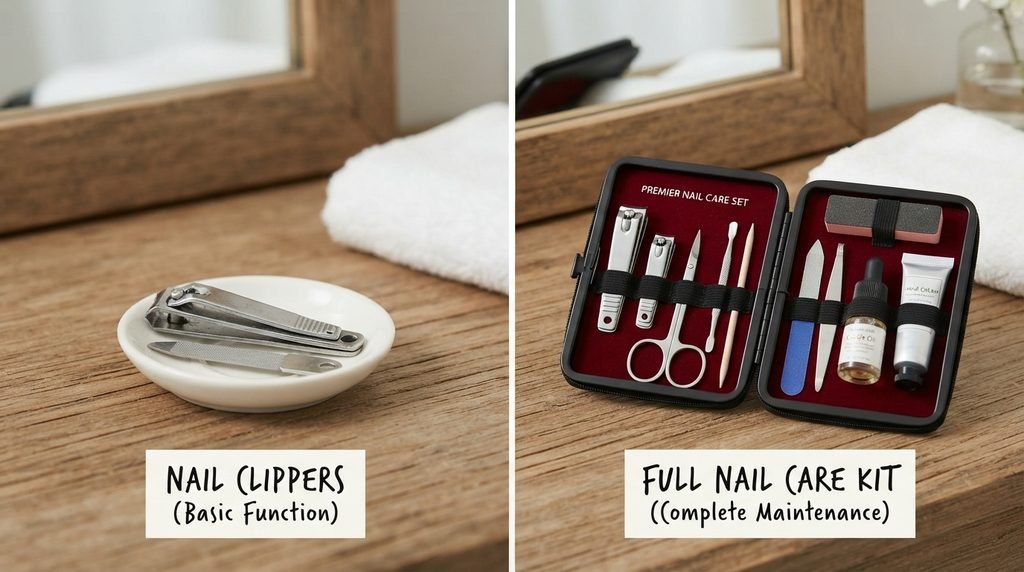
If you only need basic trimming, a single quality clipper may be enough.
However, a nail care kit can be useful if you regularly do manicures or pedicures at home.
A basic kit might include:
- Nail clippers
- Toenail clippers
- Nail file
- Nail scissors
- Cuticle tool
- Tweezers
- Storage case
The advantage is convenience.
Instead of searching through drawers for different tools, everything stays together.
For frequent travelers, a compact manicure set can be especially practical.
How to Make Your Nail Clippers Last Longer
Once you buy a quality clipper, take care of it.
Keep it dry
Moisture is not your friend. Dry the tool after cleaning.
Clean it regularly
Remove nail debris and disinfect it according to appropriate hygiene guidance.
Don’t use it for other jobs
Your nail clipper is not a wire cutter, package opener, or general-purpose tool.
Using it for things other than nails can damage the cutting edges.
Store it safely
Keep it in a clean drawer, grooming case, or protective pouch.
Replace it when necessary
If the cutting edges become damaged, misaligned, or consistently fail to cut cleanly, replacing the tool is usually better than forcing it to work.
Final Buying Advice: Is It Worth Buying a Good Nail Clipper?
Yes, if you trim your nails regularly, a quality nail clipper is a practical investment.
You use it repeatedly, it takes up very little space, and a good one can last for years when properly maintained.
The key is not simply buying the cheapest clipper available.
Look for:
Sharp cutting edges + comfortable grip + durable construction + correct size + easy cleaning.
For fingernails, a standard quality clipper is often sufficient.
For toenails, consider a larger toenail clipper with more leverage.
For thick nails, look for a suitable heavy-duty nail clipper, but remember that unusually thick, painful, or changing nails may need professional assessment rather than stronger cutting force.
Most importantly, use your clipper correctly. Soften the nails, make controlled cuts, trim toenails straight across, smooth rough edges with a file, and keep your tools clean. These simple habits can make your nail-care routine safer and much easier. (AAD)
Frequently Asked Questions About Nail Clippers
What are the best nail clippers for everyday use?
For everyday grooming, choose a sharp, comfortable, durable clipper that is appropriately sized for your fingernails. Stainless-steel construction is a practical choice for durability and easy cleaning.
Can I use fingernail clippers on my toenails?
You can, but a larger toenail clipper may be easier to control, especially when toenails are thicker.
Should toenails be cut straight across?
Yes. Dermatologists generally recommend cutting toenails straight across to reduce the risk of ingrown toenails. (AAD)
How do I clean nail clippers?
Remove nail debris, disinfect the tool appropriately, rinse when suitable, dry it completely, and store it in a clean, dry location. The AAD recommends monthly disinfection of nail clippers with 70% to 90% isopropyl alcohol. (AAD)
Why does my nail clipper hurt when I use it?
The clipper may be dull, misaligned, too small for the nail, or you may be applying too much pressure. Try a suitable, sharper clipper and make smaller cuts.
Should I cut my nails very short?
No. Avoid cutting nails excessively short. Keep enough nail length to protect the end of the finger or toe and avoid aggressive cutting around the corners.
Can nail clippers cut thick toenails?
A heavy-duty toenail clipper can make cutting easier when nails are naturally thicker. However, if a nail has become unusually thick, painful, discolored, or misshapen, consider professional advice instead of repeatedly forcing the clipper.
Final Thoughts
A nail clipper may be a small grooming tool, but the right one can make a surprisingly big difference.
You do not need a huge collection of manicure products. Start with a reliable clipper, add a good nail file, keep your tools clean, and develop a simple routine.
When you choose the right size, use controlled cuts, and take care of the tool, trimming your nails becomes quick, comfortable, and easy.
And that is exactly what a good nail clipper should do: make everyday nail care simpler.
One Comment