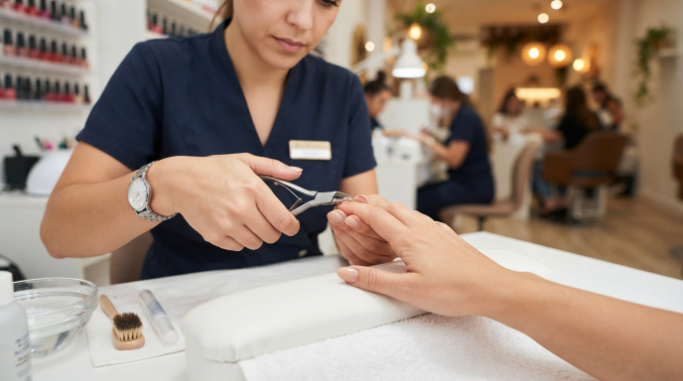
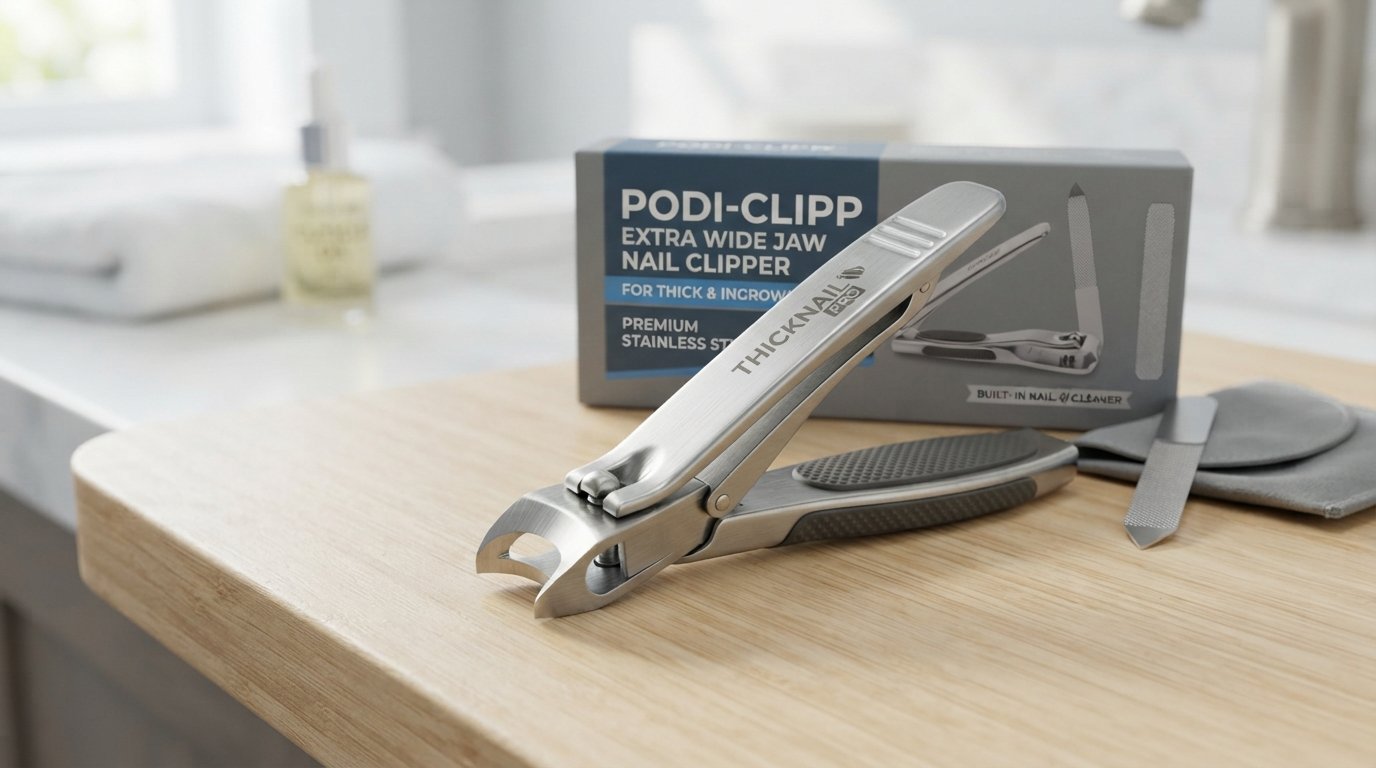
Nail Clippers for Thick Nails: A Complete Guide to Choosing, Using & Caring for Thick Nails
If you have thick nails, you already know that ordinary nail clippers can make a simple grooming task frustrating. The blades may struggle to get through the nail, the handles can feel uncomfortable, and trying to force the clipper can sometimes cause the nail to split or crack.
The good news is that choosing the right nail clippers for thick nails can make the process much easier. A strong, well-designed clipper or nail nipper gives you better control and can help you trim thick fingernails and toenails without using excessive force.
However, the tool is only part of the solution. Your trimming technique also matters. Health services recommend keeping toenails at a safe length, avoiding cuts down the sides, and using a file to smooth rough edges. (Oxford Health NHS Foundation Trust)
In this guide, we’ll look at what makes heavy-duty nail clippers different, how to choose the right pair, how to use them step by step, and when thick nails may need professional attention.
What Are Nail Clippers for Thick Nails?
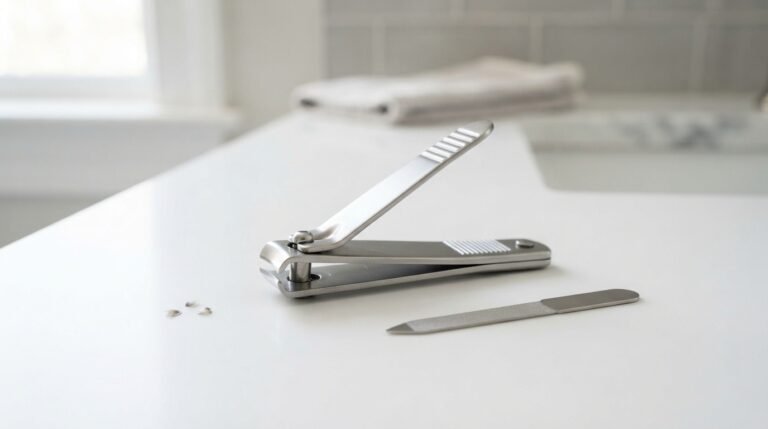
Nail clippers for thick nails are stronger nail-cutting tools designed to handle nails that are harder, wider, or thicker than normal.
Unlike small standard nail clippers, heavy-duty models often have:
- Stronger cutting blades
- Wider jaws
- Larger handles
- Better leverage
- More durable construction
- A design that allows you to make smaller cuts
These features can be particularly helpful when dealing with thick toenails, which may become difficult to cut because of age, repeated pressure from footwear, previous nail injury, or other nail conditions.
For example, NHS podiatry guidance notes that thickened toenails can be difficult to manage and may sometimes be maintained by regular filing rather than repeated cutting. (South Tees NHS Trust)
That means you should not simply look for the strongest possible clipper. You want a tool that gives you strength plus control.
Why Are Thick Nails Difficult to Cut?
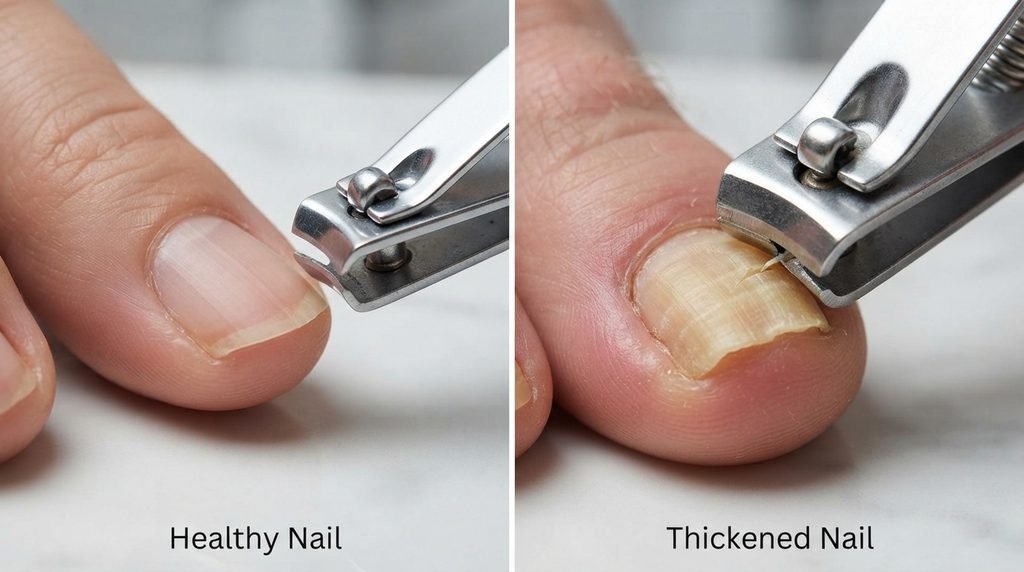
A normal nail clipper is usually fine for ordinary nails. But when the nail becomes significantly thicker, several problems can appear.
1. The clipper may not open wide enough
Some small clippers have narrow jaws. If your toenail is thick and curved, the jaws may not fit around it properly.
2. You need more pressure
Trying to force a weak clipper through a thick nail can be uncomfortable. It can also make the tool difficult to control.
3. Thick nails can be brittle
Some thick nails are also hard and brittle. Instead of making a clean cut, they may crack or break.
4. Toenails can be difficult to reach
Even if you have a good clipper, reaching your toenails comfortably can be challenging.
NHS guidance recommends finding a safe, comfortable position and using good lighting when cutting toenails. (Leeds Community Healthcare)
What to Look for in Nail Clippers for Thick Nails
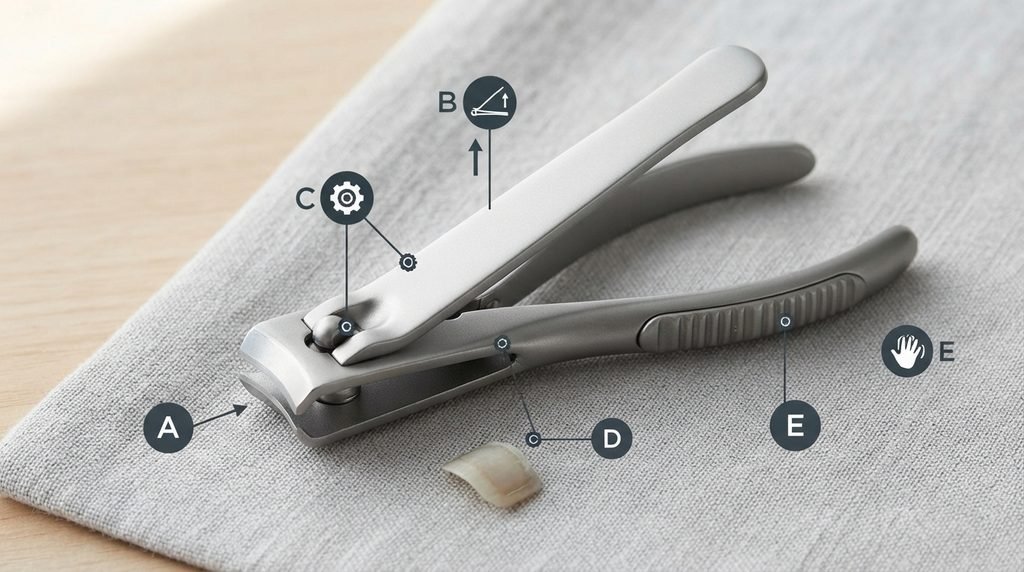
Before buying a pair, consider several important features.
1. Strong, Sharp Cutting Blades
The cutting edge is one of the most important parts of a thick nail clipper.
Look for blades that are:
- Sharp
- Strong
- Properly aligned
- Resistant to corrosion
- Designed for thicker nails
A sharp blade should cut through the nail with controlled pressure rather than requiring you to squeeze the handles with all your strength.
Remember, however, that sharp does not mean aggressive. You still need to make small, controlled cuts.
2. Wide Jaw Opening
A wider jaw can be extremely useful for thick toenails.
If the nail is unusually thick, a narrow clipper may not be able to get around the free edge.
Look for a design that gives you enough opening to position the blades comfortably without forcing them underneath the nail.
3. Long Handles for Better Leverage
Handle length makes a surprisingly big difference.
A longer handle can provide better leverage, meaning you can create enough cutting force without squeezing excessively hard.
This is particularly useful if your nails are:
- Very thick
- Hard
- Wide
- Difficult to reach
A comfortable grip also helps you maintain control during each cut.
4. Comfortable, Non-Slip Grip
A clipper that slips from your hand is difficult to control.
Look for handles that feel secure and comfortable. This becomes even more important when you’re working on toenails because you may need to hold your foot in an awkward position.
If your hands become tired while cutting, stop and reposition yourself rather than trying to finish quickly.
5. Durable Construction
For heavy-duty toenail clippers, durability matters.
Stainless-steel construction is commonly preferred because it can provide strength and is easier to clean than materials that corrode easily.
A well-made tool should also have a smooth hinge or joint so that the handles open and close consistently.
Nail Clippers vs. Nail Nippers for Thick Nails
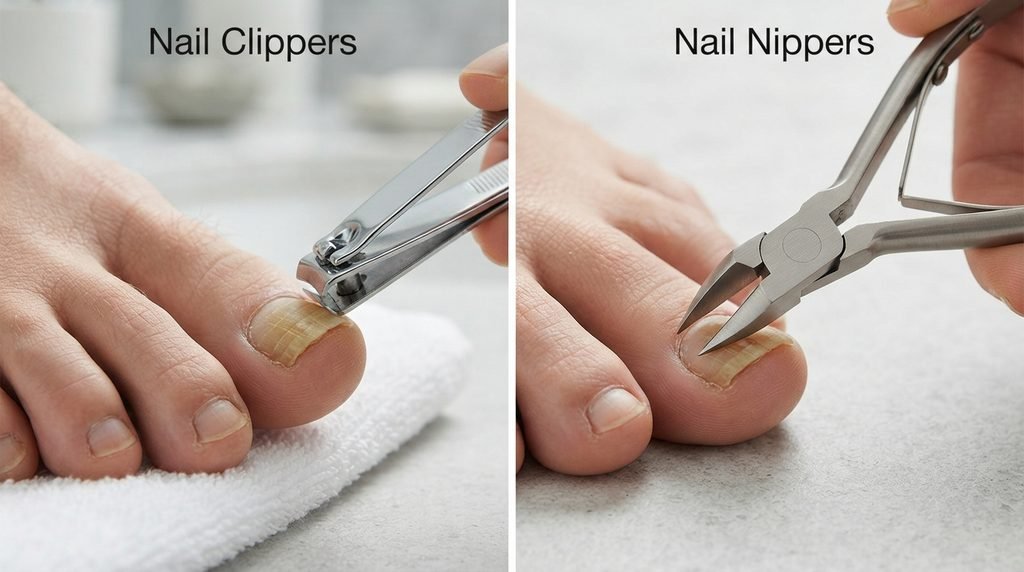
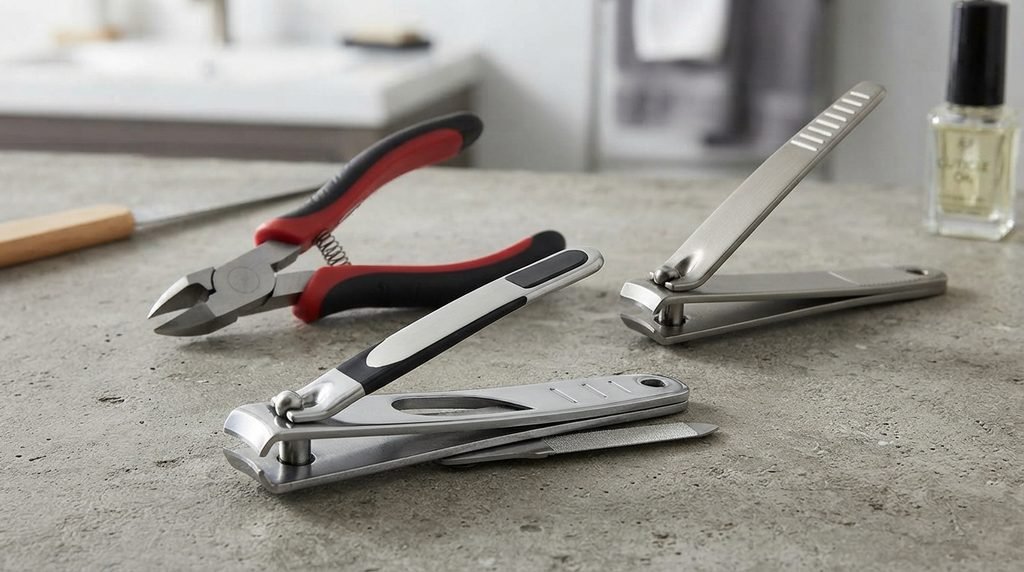
You may see both terms when shopping for a tool.
Although they are often used interchangeably, nail nippers generally have a scissor-like handle design and can provide strong leverage.
They are especially useful for toenails that are:
- Thick
- Hard
- Wide
- Difficult to cut with ordinary clippers
Some podiatry guidance specifically recommends nippers for toenails and suggests taking multiple small cuts rather than trying to remove a large section in one snip. (Dorset HealthCare)
Which should you choose?
For ordinary nails, standard clippers may be enough.
For very thick toenails, a sturdy nail nipper may give you better control and leverage.
The key is not simply buying the biggest tool available. Choose one that you can comfortably hold and control.
How to Use Nail Clippers for Thick Nails: Step-by-Step Guide
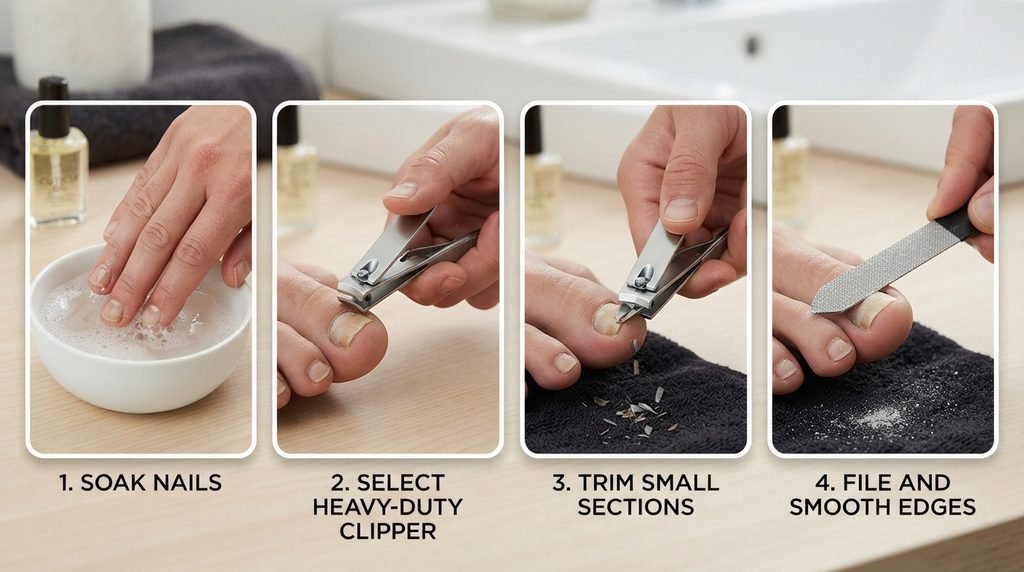
Using a powerful clipper correctly is just as important as choosing one.
Here is a simple process.
Step 1: Choose a Comfortable Location
Start somewhere with:
- Good lighting
- A comfortable chair
- Enough space
- A stable position
Avoid cutting your toenails while standing or in a position where your foot can suddenly move.
Step 2: Clean Your Hands and Tools
Before trimming, clean your hands and make sure the clipper is clean.
Don’t share nail clippers with other people. NHS guidance specifically advises against sharing nail-cutting tools because nail infections can spread through shared equipment. (Leeds Community Healthcare)
Step 3: Soften the Nails When Appropriate
Thick nails can be easier to manage after bathing or showering because they become softer.
Several NHS foot-care resources recommend cutting nails after bathing or showering when they are easier to manage. (Leeds Community Healthcare)
However, if you’re using a file specifically to reduce the thickness of a thickened nail, some podiatry guidance recommends filing the nail while dry.
So, the best approach depends on whether you’re cutting length or filing down thickness.
Step 4: Position the Clipper Correctly
Place the cutting jaws over the free edge of the nail.
Don’t force the tool deep underneath the nail.
Instead, position it where you want to make a controlled cut.
Step 5: Make Small Cuts
This is one of the most useful tips for cutting thick nails.
Don’t try to remove the entire nail in one powerful squeeze.
Instead:
- Start from one side.
- Make a small cut.
- Move slightly across.
- Make another cut.
- Continue until you reach the other side.
Small cuts give you better control and can reduce the chance of cracking the nail.
Step 6: Don’t Cut Too Short
One of the most common nail-care mistakes is cutting toenails too short.
The NHS recommends cutting toenails straight across rather than cutting down the sides, because cutting into the edges can contribute to ingrown toenails. (nhs.uk)
Leave a small amount of nail at the end rather than trying to cut right down to the skin.
Step 7: Smooth the Edges
After cutting, use a nail file or emery board to smooth rough or sharp edges.
File gently rather than aggressively.
If the nail is particularly thick, regular filing may sometimes be easier than frequent clipping. NHS podiatry guidance recommends regular filing for thickened nails that are difficult to cut. (RDaSH)
A Quick Real-Life Example
Imagine someone who has avoided cutting their toenails because ordinary clippers simply won’t handle them.
They finally buy a heavy-duty clipper and expect the problem to disappear immediately.
Instead, they make one huge cut.
The nail cracks.
The next time, they try squeezing even harder.
That isn’t the best approach.
A better method is to soften the nail when appropriate, position the clipper carefully, make several small cuts, and finish with a file.
The lesson is simple: a stronger tool works best when you combine it with better technique.
How to Choose the Best Nail Clippers for Thick Toenails
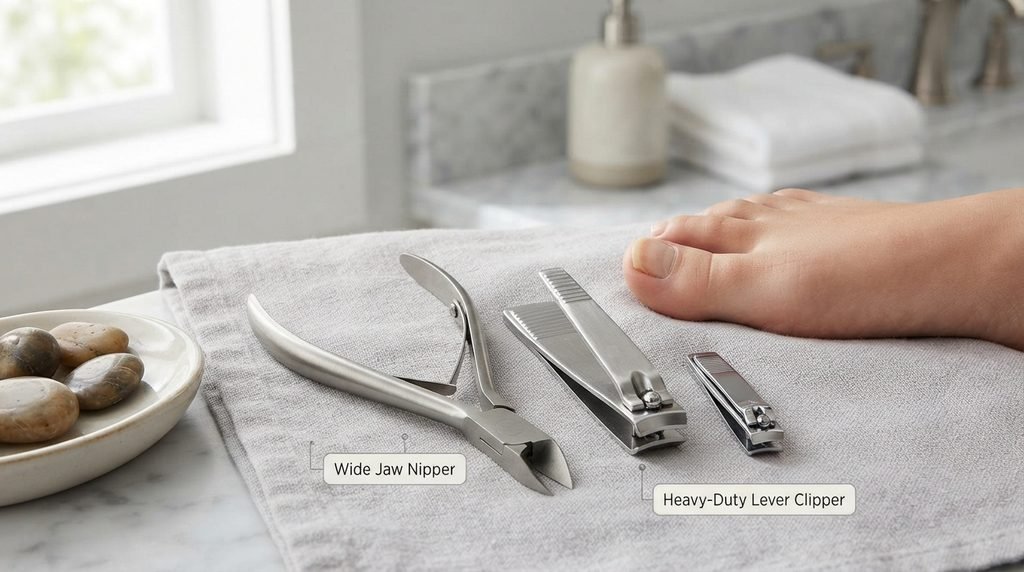
When comparing products, use this checklist.
Look for:
- Wide cutting jaws
- Sharp blades
- Strong construction
- Comfortable handles
- Good leverage
- Non-slip grip
- Easy cleaning
- A design made for thick toenails
You should also consider the size of your nails.
Someone with mildly thickened toenails may not need an extremely large professional-style nipper. Someone with very thick, hard nails may benefit from a larger tool.
Are Heavy-Duty Nail Clippers Worth Buying?
If ordinary nail clippers struggle with your nails, a heavy-duty nail clipper can be a worthwhile purchase.
The main benefit is convenience.
Instead of repeatedly squeezing a small clipper, a stronger tool can give you more leverage and better control.
A good pair can also become a regular part of your personal nail-care routine.
However, don’t assume that the strongest clipper is automatically the safest option.
Control matters more than brute force.
A tool that feels comfortable in your hand and allows you to make small cuts is often more practical than one that feels oversized and difficult to control.
How Often Should You Cut Thick Nails?
There isn’t one schedule that works for everyone.
Nail growth varies from person to person. Instead of waiting until your toenails become extremely long, inspect them regularly.
For some people with thick nails, regular filing can help maintain a comfortable length and reduce the need for difficult cutting sessions. NHS podiatry guidance notes that thickened nails may be managed with regular filing. (Oxford Health NHS Foundation Trust)
A simple routine could be:
Check → Trim small amounts → File → Clean the tool → Store safely
The important thing is consistency.
How to Maintain Your Nail Clippers
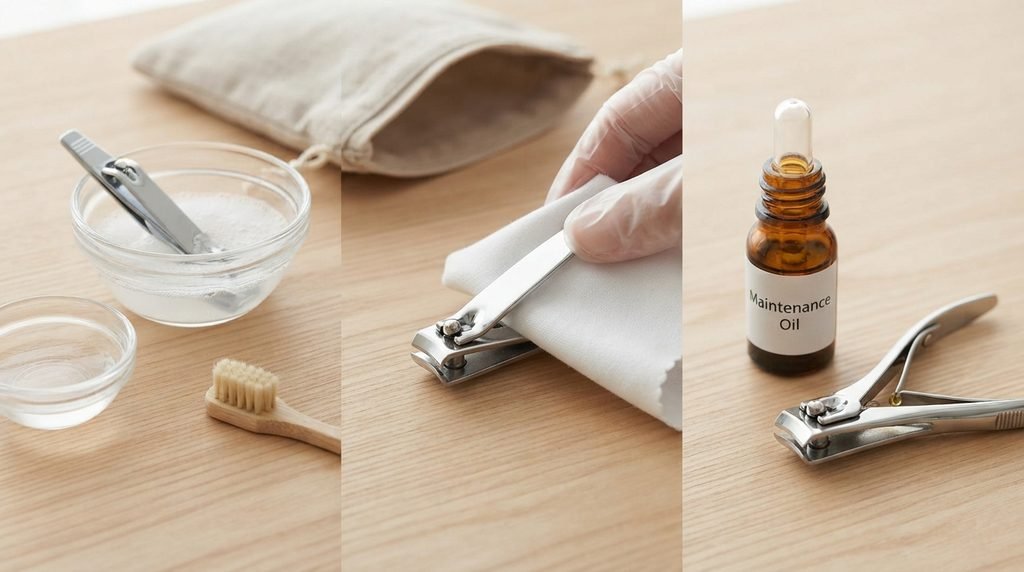
Even the best nail clippers for thick nails need proper care.
Clean After Use
Remove nail debris after every use.
Keeping the tool clean helps maintain good hygiene.
Keep It Dry
After cleaning, dry the clipper thoroughly.
Moisture can contribute to corrosion over time, particularly around joints and cutting surfaces.
Store It Safely
Keep your clipper somewhere clean and dry.
Don’t leave it loose in a damp bathroom where it can constantly be exposed to moisture.
Don’t Use It for Other Jobs
Your nail clipper should remain a nail-care tool.
Never use it to cut:
- Wire
- Plastic
- Paper
- Packaging
- Other materials
Using the blades for unrelated jobs can damage the cutting edge.
Common Mistakes to Avoid
Cutting Too Much at Once
Large cuts can cause thick nails to split.
Better: Make several small cuts.
Cutting Down the Corners
This can increase the risk of an ingrown toenail.
Better: Follow the natural end of the nail and avoid cutting deep into the sides. (nhs.uk)
Using a Razor or Sharp Object
Never try to thin or cut thick nails with a razor blade, knife, or other improvised sharp object.
NHS podiatry guidance specifically advises against using inappropriate sharp instruments for nail and foot care. (Leeds Community Healthcare)
Ignoring Pain
Pain isn’t something you should simply push through.
If cutting your nail is painful or the nail looks abnormal, stop and consider professional advice.
When Should You See a Podiatrist?
Sometimes thick nails are more than a grooming issue.
A thickened nail can be associated with previous injury, repeated pressure from footwear, or fungal infection. (South Tees NHS Trust)
Consider speaking with a healthcare professional or podiatrist if:
- The nail is too tough to cut safely.
- You cannot reach the nail properly.
- The nail is painful.
- The nail is changing colour or shape.
- The skin around the nail is red, swollen, or warm.
- You have a recurring ingrown toenail.
- The nail has suddenly changed.
- You suspect a fungal nail infection.
The NHS specifically recommends seeing a podiatrist if your nails are too tough to cut or you cannot reach them. (nhs.uk)
What About Fungal or Very Thick Toenails?
A common mistake is assuming every thick toenail simply needs a stronger clipper.
That’s not always true.
Some thick nails are caused by mechanical damage, while others can be associated with fungal infection. South Tees Hospitals notes that thickened nails can sometimes be mistaken for fungal infection, while discolouration and brittleness may occur with infection. (South Tees NHS Trust)
If you think you may have a fungal nail infection, don’t rely only on a stronger clipper.
The underlying cause may need to be assessed.
Tips for Easier Thick-Nail Care
Here are a few practical habits that can make nail care easier.
Keep Nails at a Manageable Length
Don’t wait until the nails become extremely long and difficult to cut.
File Regularly
A good nail file for thick nails can help gradually reduce length and, in some cases, thickness. (UHCW NHS Trust)
Wear Comfortable Shoes
Repeated pressure from unsuitable footwear can contribute to thickened or damaged toenails. (South Tees NHS Trust)
Keep Feet Clean and Dry
Good foot hygiene is an important part of nail care.
Inspect Your Nails
Check your toenails regularly so you notice changes early.
Nail Clippers for Thick Nails: Buying Checklist
Before clicking the buy button, ask yourself:
| Feature | Why It Matters |
|---|---|
| Wide jaws | Helps accommodate thicker nails |
| Sharp blades | Makes cutting more controlled |
| Strong construction | Handles repeated use |
| Long handles | Provides better leverage |
| Comfortable grip | Improves control |
| Easy to clean | Supports good hygiene |
| Durable hinge | Helps maintain smooth movement |
| Suitable size | Makes the tool easier to control |
If a product meets most of these requirements and feels appropriate for your nail thickness, it can be a sensible addition to your nail-care kit.
Frequently Asked Questions
What are the best nail clippers for thick nails?
The right option should have strong blades, wide jaws, good leverage, and comfortable handles. For particularly thick toenails, nail nippers may offer more leverage than small household nail clippers.
Can regular nail clippers cut thick toenails?
They can sometimes handle mildly thickened nails, but very thick nails may be difficult to cut safely and comfortably. In these cases, a heavy-duty clipper or nipper may be more practical.
Should I cut thick toenails wet or dry?
Toenails are often easier to cut after bathing or showering because they become softer. However, guidance for filing thickened nails may recommend filing them while dry. (Leeds Community Healthcare)
How do I cut extremely thick toenails?
Work slowly. Make several small cuts rather than trying to remove the entire nail in one squeeze. If the nail is too hard, painful, deformed, or impossible to manage safely, consult a podiatrist.
Can filing help thick toenails?
Yes. Regular filing can help maintain thickened nails and reduce their length. Some podiatry guidance also describes filing across the surface of thickened nails to gradually reduce thickness. (Leeds Community Healthcare)
How do I prevent ingrown toenails?
Avoid cutting toenails too short or cutting deeply into the sides. Cut across the nail and leave the corners visible. (nhs.uk)
Final Thoughts
Finding the right nail clippers for thick nails can make nail care much less frustrating. Instead of struggling with a small, weak clipper, a strong tool with wide jaws, sharp blades, comfortable handles, and good leverage can give you better control.
But remember that the tool is only half of the equation.
Good technique matters too. Make small cuts, don’t force the clipper, avoid cutting toenails too short, and smooth rough edges with a file. If a nail is unusually thick, painful, discoloured, or impossible to manage safely, getting professional advice is more appropriate than simply buying a stronger tool.
For everyday maintenance, a quality heavy-duty nail clipper, combined with a suitable nail file and a simple nail-care routine, can make thick-nail grooming considerably easier.
The goal isn’t to cut harder. It’s to cut smarter, more carefully, and with better control.