Nail Cutters: The Complete Guide to Choosing, Using, and Caring for the Right Nail Cutter
Taking care of your nails does not always require an expensive salon visit. Sometimes, a simple, reliable tool can make the biggest difference. Nail cutters are one of those everyday grooming tools that most people have at home, yet many of us do not think much about the type we buy or the way we use them.
A good nail cutter can help you keep fingernails and toenails neat, comfortable, and easy to manage. On the other hand, a blunt or poorly designed cutter can make trimming uncomfortable and may leave rough, uneven edges.
Whether you are building a complete nail care routine, looking for a professional nail cutter, or simply replacing an old pair, understanding what makes a good cutter is worth your time.


What Are Nail Cutters?
Nail cutters are small grooming tools designed to trim nails to a manageable length. They usually have two sharp cutting edges that come together when you press the lever. This allows you to cut through the nail with controlled pressure.
You may also hear them called:
- Nail clippers
- Nail trimmers
- Fingernail clippers
- Toenail clippers
- Nail cutting tools
- Manicure clippers
- Pedicure nail cutters
Although these names are often used interchangeably, different cutters can have different shapes, sizes, cutting angles, and levels of strength.
For example, a small fingernail cutter is generally convenient for precise trimming, while a larger toenail cutter can provide more leverage for thicker toenails.
According to the American Academy of Dermatology, dermatologists recommend using a nail clipper or nail scissors for fingernails and a suitable toenail clipper for toenails. (AAD)
Why Are Good Nail Cutters Important?
It can be tempting to think, “A nail cutter is just a nail cutter.” However, the quality and design of the tool can make your nail-care routine much easier.
A good nail cutter should give you enough control to trim the nail without excessive pressure. It should also feel comfortable in your hand and produce a relatively clean cut.
Regular nail trimming has practical benefits, too. Shorter nails are generally easier to keep clean, and keeping nails short can reduce the amount of dirt and germs that collect underneath them. The CDC’s nail hygiene guidance recommends keeping nails short and clean and cleaning nail-grooming tools before use. (CDC)
Good nail cutters can help with:
- Keeping nails at a comfortable length
- Reducing accidental nail breaks
- Maintaining a neat appearance
- Managing rough or overgrown nails
- Supporting a regular manicure or pedicure routine
- Making nail trimming quicker
- Keeping your grooming kit organized
A quality cutter is also something you can use repeatedly, so spending a little more on a well-made tool can make sense.
Types of Nail Cutters
Not every nail cutter is designed for exactly the same job. Choosing the right type can make trimming much easier.
1. Standard Fingernail Cutters
These are the classic compact cutters found in many household grooming kits.
They are usually:
- Small and lightweight
- Easy to carry
- Simple to operate
- Suitable for everyday fingernail trimming
A standard fingernail cutter is a practical option if you want one basic tool for regular nail maintenance.
2. Toenail Cutters
Toenails can be thicker and harder to cut than fingernails. Therefore, a toenail cutter is generally larger and may provide more leverage.
Look for a sturdy design with a comfortable grip if you regularly trim thick toenails.
The AAD recommends cutting toenails straight across to help reduce the chance of an ingrown toenail. (AAD)
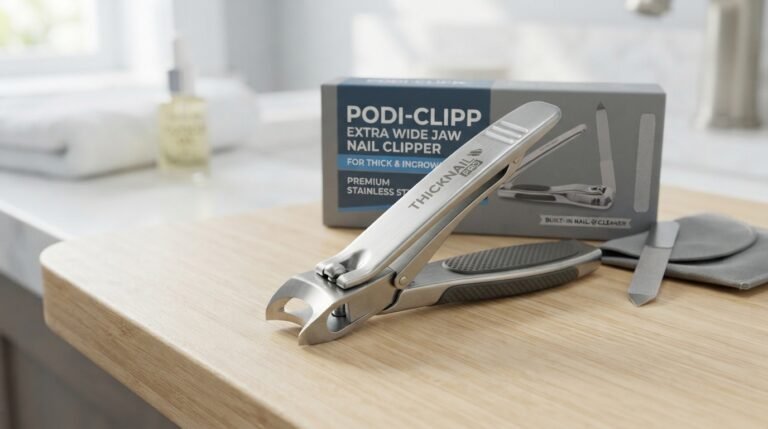
3. Heavy-Duty Nail Clippers
Heavy-duty nail clippers are designed for nails that require more cutting power.
They often have:
- Larger handles
- Stronger construction
- Wider cutting jaws
- Better leverage
These can be useful when ordinary small cutters struggle with thicker nails.
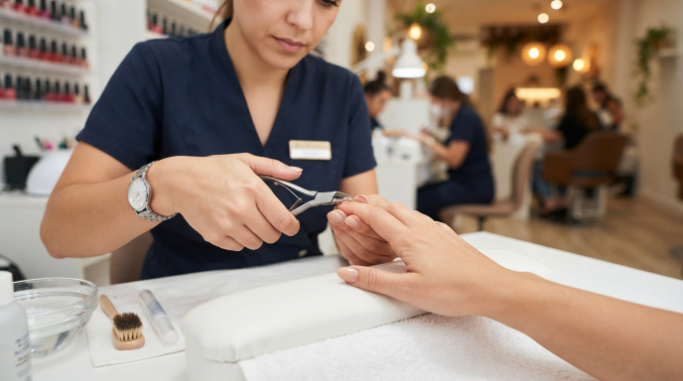
4. Professional Nail Cutters
A professional nail cutter is designed with frequent use in mind. These tools may have sharper cutting edges, stronger materials, ergonomic handles, and more precise construction.
They are particularly useful for professional manicure and pedicure environments.
However, “professional” does not automatically mean that a tool is better for every person. Your choice should depend on your nail type, comfort, and intended use.
5. Stainless Steel Nail Cutters
Stainless steel nail cutters are popular because they are durable and easy to clean.
A well-made stainless-steel cutter can be a practical long-term addition to your grooming kit. It is also worth checking whether the tool feels solid rather than excessively loose or flimsy.

How to Choose the Best Nail Cutter
With so many grooming tools available, choosing a nail cutter can feel surprisingly confusing.
The good news is that you do not need to overthink it. Focus on a few important features.
1. Check the Cutting Edge
The cutting edges should meet properly and should not look obviously damaged.
A dull cutter may require more pressure, which can make trimming uncomfortable and may result in uneven cuts.
2. Consider the Size
Small cutters are convenient for fingernails and travel.
Larger cutters may be easier to handle when working with toenails or thicker nails.
If you struggle to hold tiny grooming tools, choosing a slightly larger design can make a noticeable difference.
3. Look for Comfortable Handling
A cutter should sit comfortably between your fingers.
If the lever is difficult to press or the tool slips easily, you may find nail trimming frustrating.
An ergonomic nail trimmer can make repeated grooming much more comfortable.
4. Choose Durable Materials
Stainless steel is a popular choice for nail grooming tools because of its durability and easy maintenance.
However, material alone does not guarantee quality. Construction, alignment, sharpness, and overall handling matter too.
5. Think About Fingernails vs. Toenails
Do you need one tool for everything?
If your toenails are thicker, you may prefer a dedicated toenail clipper rather than using a tiny fingernail cutter.
For many people, having separate fingernail and toenail tools is a simple way to make trimming easier.
6. Look at Additional Features
Some nail clippers include useful extras such as:
- Built-in nail files
- Nail-cleaning tips
- Catchers for nail clippings
- Non-slip grips
- Travel cases
- Curved or straight cutting edges
These features are not essential, but they can be convenient.
How to Use Nail Cutters Correctly: Step-by-Step Guide
Buying a good nail cutter is only half the job. How you use it matters, too.
Here is a simple routine you can follow.
Step 1: Wash Your Hands
Start by washing your hands with soap and water.
Clean hands make the grooming process more hygienic. Also make sure your nail cutter is clean before using it.
The CDC recommends cleaning nail grooming tools before use. (CDC)
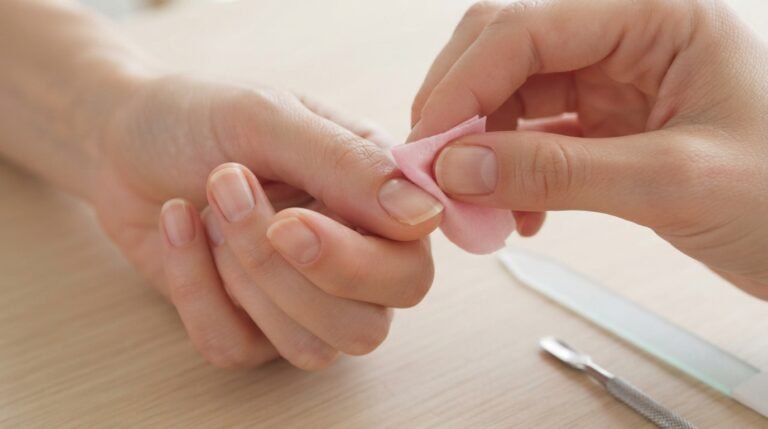
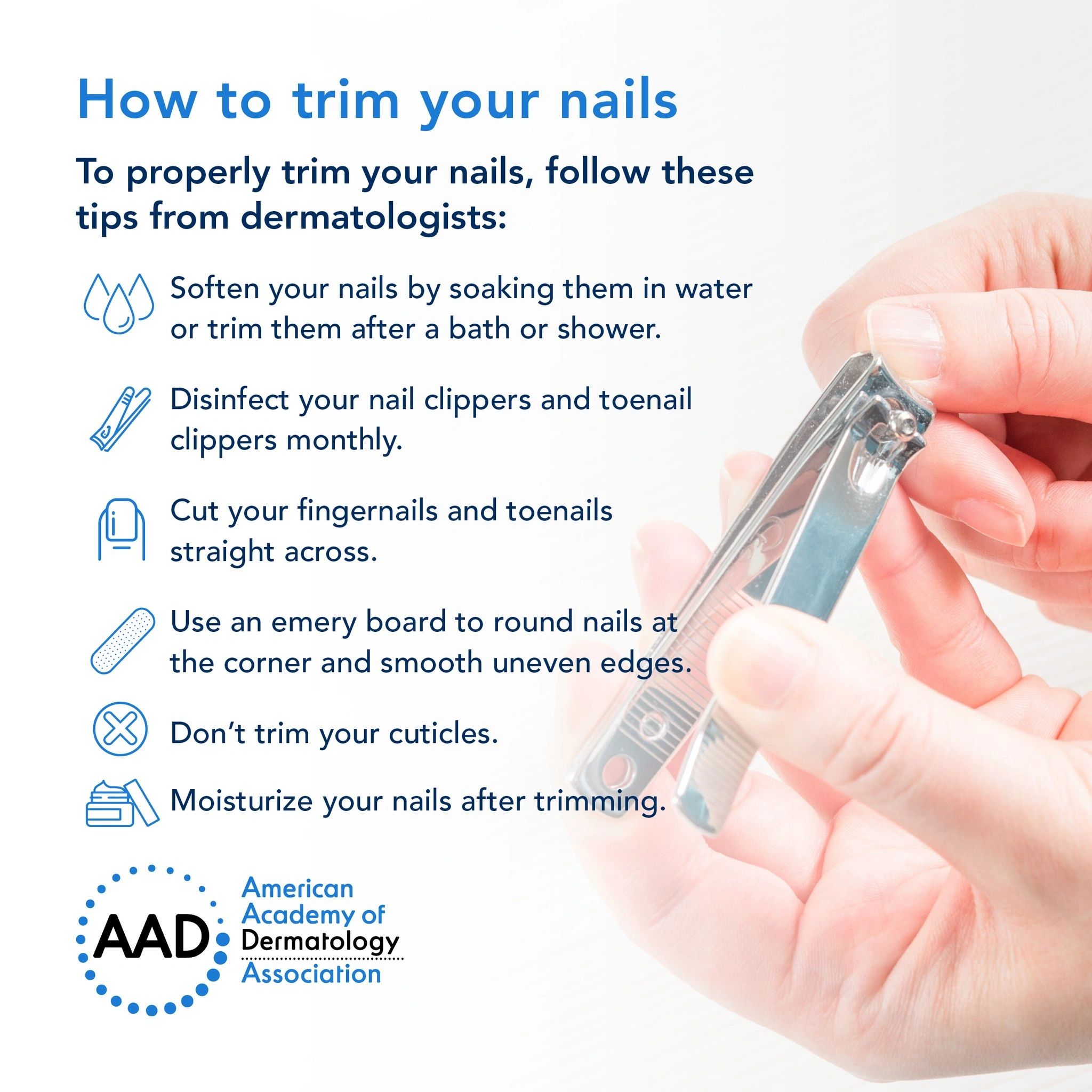
Step 2: Soften the Nails
One of the easiest times to trim your nails is after a bath or shower.
Your nails are softer at this point, making trimming easier. Alternatively, you can soak your nails in lukewarm water for a few minutes.
The AAD recommends softening nails before trimming. (AAD)
Step 3: Position the Cutter
Hold the nail cutter comfortably.
Place the nail between the cutting edges without trying to cut too much at once.
If you are trimming a fingernail, take your time instead of making one huge cut.
Step 4: Trim Fingernails Almost Straight Across
For fingernails, cut almost straight across and then gently smooth the corners.
The AAD recommends this approach because slightly rounding the corners can help keep the nails strong and reduce catching on objects. (AAD)
Step 5: Trim Toenails Straight Across
Toenails should generally be cut straight across.
Avoid cutting deeply into the corners simply because you want a very rounded shape.
This is particularly important because cutting too deeply around the sides can contribute to ingrown toenail problems.
Step 6: File the Edges
After using your nail clipper, check the edges.
If you notice a sharp or rough section, use a nail file or emery board.
The AAD recommends filing in one direction rather than repeatedly moving the file back and forth. (AAD)
Step 7: Moisturize
Finish by applying hand cream, nail moisturizer, or cuticle moisturizer around the nails.
Moisturizing can help prevent nails from becoming excessively dry and brittle.
A Small Nail-Care Story
Imagine getting ready for an important meeting.
You have your outfit ready, your hair looks great, and then you notice one nail has a sharp, uneven edge.
You grab an old nail cutter from the bathroom drawer. It takes several attempts to cut the nail, leaves a rough edge, and suddenly you are searching for a nail file.
It is a tiny problem, but it is annoying.
Now imagine having a sharp, comfortable nail cutter that makes the cut cleanly in seconds.
That small difference is exactly why the right grooming tools are worth having.
A good nail-care routine does not need to be complicated. It simply needs the right tools and a few consistent habits.
Common Mistakes to Avoid When Using Nail Cutters
Even a high-quality nail cutter cannot compensate for poor technique.
Here are some common mistakes to avoid.
Cutting Nails Too Short
It may seem cleaner to cut nails as short as possible, but excessively short nails can become uncomfortable.
Leave enough nail to protect the fingertip.
Cutting Toenails Into the Corners
Avoid aggressively rounding the sides of toenails.
Instead, follow a straighter cutting pattern.
Using a Dull Cutter
If you have to squeeze extremely hard to cut through a nail, your cutter may no longer be performing well.
A dull tool can make grooming frustrating.
Sharing Nail Cutters Without Cleaning Them
Nail grooming tools should be cleaned before use, especially when they are shared.
The CDC specifically advises cleaning nail clippers and files before use and sterilizing shared tools in commercial settings. (CDC)
Cutting the Cuticles
This is an important distinction: nail cutters are for nails, not for cutting healthy cuticles.
The cuticle helps protect the nail root and surrounding area. Dermatologists advise against cutting cuticles because this can make it easier for bacteria and other germs to enter. (AAD)
Using Your Nails as Tools
If you use your freshly trimmed nails to open cans, scratch surfaces, or pick at objects, even strong nails can become damaged.
The AAD recommends avoiding using nails as tools because this can contribute to chipping, splitting, and lifting. (AAD)
How to Clean Nail Cutters
Keeping your nail cutters clean is just as important as choosing a good pair.
Basic cleaning routine:
- Remove visible nail clippings.
- Wash or scrub the tool appropriately.
- Disinfect the cutting surfaces.
- Rinse if the product/disinfection method calls for it.
- Dry the cutter completely.
- Store it somewhere clean and dry.
The AAD recommends disinfecting nail clippers and scissors monthly using a scrub brush and 70–90% isopropyl alcohol, followed by rinsing with hot water and thoroughly drying the tool. (AAD)
If you use nail tools professionally or share them with other people, follow appropriate professional sanitation and sterilization procedures rather than relying on simple home cleaning.
How Often Should You Cut Your Nails?
There is no single schedule that works perfectly for everyone.
Your nails grow at different rates, so check them regularly.
Fingernails
Trim them whenever they become too long, uneven, or uncomfortable.
Toenails
Toenails usually grow more slowly, so they may need trimming less frequently.
The important thing is not the exact number of days. Instead, look at the nail length and condition.
If a nail is catching on clothing, breaking frequently, or collecting dirt underneath, it may be time for a trim.
Nail Cutters for Manicures and Pedicures
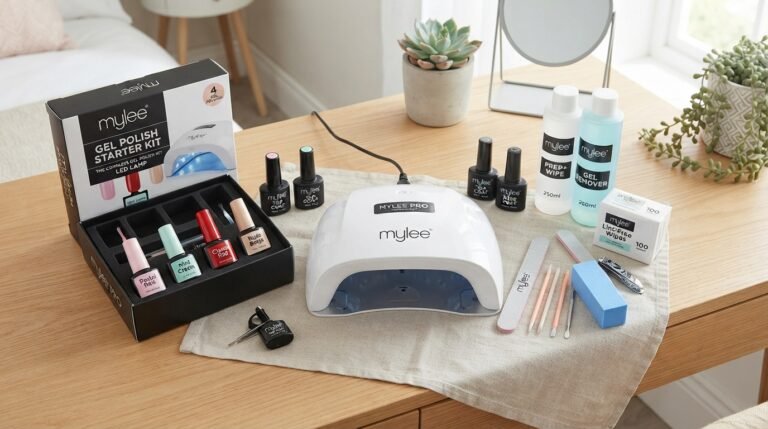
If you enjoy doing your nails at home, nail cutters are one of the basic tools worth keeping in your manicure kit.
A simple home manicure kit might include:
- Nail cutter
- Nail file
- Nail buffer
- Cuticle moisturizer
- Hand cream
- Nail polish remover
- Base coat
- Nail polish
- Top coat
However, remember that trimming and shaping are different jobs.
The nail cutter reduces length, while a file helps refine the shape.
This combination gives you greater control over the final result.
Nail Cutters vs. Nail Scissors
Both nail cutters and nail scissors can be useful.
Nail cutters
Pros:
- Quick to use
- Easy for beginners
- Compact
- Good for routine trimming
- Convenient for travel
Nail scissors
Pros:
- Can offer precise control
- Useful for people who prefer scissor-style tools
- Helpful for certain detailed grooming tasks
For everyday home use, many people find nail clippers simpler and quicker.
The best choice ultimately comes down to comfort, nail type, and personal preference.
What Makes a Nail Cutter Worth Buying?
A good nail cutter does not have to be the most expensive one on the market.
Instead, look for a tool that gives you the features that actually matter.
Look for:
Sharp cutting edges:
The cutter should cut without excessive force.
Strong construction:
The tool should feel stable rather than loose.
Comfortable lever:
You should be able to operate it without struggling.
Suitable size:
Choose a size appropriate for your fingernails or toenails.
Easy cleaning:
Simple maintenance makes regular hygiene easier.
Good durability:
A well-made cutter should remain useful through repeated grooming sessions.
Why Investing in Good Nail Cutters Makes Sense
You use your hands every day.
Your nails may be small, but they are constantly exposed to washing, work, typing, cooking, cleaning, and everyday activities.
That is why a reliable nail cutter can be a surprisingly useful purchase.
Instead of repeatedly replacing cheap tools that become dull or uncomfortable, a well-made cutter can become a dependable part of your personal-care kit.
Think of it as a small investment in convenience.
You are not simply buying a piece of metal. You are buying a tool that can make a routine task quicker, easier, and more comfortable.
For someone who regularly does their own manicure or pedicure, the value becomes even clearer.
How to Store Your Nail Cutter
After cleaning your nail cutter, let it dry completely before storing it.
Avoid leaving it in a damp bathroom corner where moisture can accumulate.
Instead, consider keeping it:
- In a manicure case
- In a clean grooming pouch
- Inside a drawer
- In a dedicated nail-care container
If the cutter has a protective cover, use it when appropriate.
Keeping your tools organized also makes your grooming routine faster because you know exactly where everything is.
Nail Cutters for Travel
A compact nail cutter is one of those small items that can be useful when traveling.
Broken nails have a habit of appearing at the worst possible time—during a holiday, business trip, or long journey.
A small grooming kit can prevent that little problem from becoming a bigger annoyance.
For travel, look for:
- Compact construction
- Protective storage
- Lightweight design
- Durable material
- Easy-to-clean surfaces
Always remember to check the current rules of your airline or transport provider when packing grooming tools in hand luggage.
Can You Use the Same Nail Cutter for Fingernails and Toenails?
Technically, people may use similar clippers for both, but having separate tools can make sense.
Toenails can be thicker and may require a stronger, larger cutter.
If you have one cutter that works comfortably for both and you maintain proper hygiene, it may be sufficient for personal use.
However, never share grooming tools casually between people without proper cleaning and disinfection.
When You Should Not Simply Trim the Nail Yourself
Most everyday nail trimming is straightforward. However, some nail problems deserve professional attention.
If a nail becomes:
- Painful
- Swollen
- Significantly discolored
- Very thick
- Distorted
- Separated from the nail bed
- Surrounded by inflamed skin
it is better to seek medical advice rather than trying to solve the problem with a nail cutter.
The AAD notes that changes in nail color, texture, or shape can sometimes be associated with infection or other health conditions and recommends seeing a dermatologist when concerning changes occur. (AAD)
People with diabetes or poor circulation should also be especially careful with nail problems and seek appropriate medical advice. (AAD)
Frequently Asked Questions About Nail Cutters
Are nail cutters and nail clippers the same thing?
In everyday language, nail cutters and nail clippers usually refer to the same type of grooming tool. Different products can, however, vary in size, shape, strength, and design.
What is the best material for nail cutters?
Stainless steel is a popular option because it is durable and relatively easy to clean. However, the overall construction and cutting performance are just as important as the material.
Should fingernails be cut straight across?
Fingernails can be cut almost straight across, with the corners gently rounded or smoothed afterward. This is consistent with dermatologists’ nail-trimming guidance. (AAD)
Should toenails be rounded?
It is generally better to cut toenails straight across rather than deeply rounding the corners. This can help reduce the risk of ingrown toenails. (AAD)
How do I make nail cutters last longer?
Keep them clean and dry, avoid dropping them, and do not use them for materials other than nails. Store them in a clean, dry place.
Can nail cutters become dull?
Yes. Like other cutting tools, the cutting edges can lose performance over time. If your cutter struggles to cut nails cleanly or requires excessive pressure, it may be time to replace it.
Should I cut my cuticles with nail cutters?
No. Healthy cuticles help protect the nail area. Dermatologists recommend leaving cuticles alone rather than cutting them. (AAD)
How do I clean nail cutters?
Clean away nail debris, disinfect the tool appropriately, rinse when required by the disinfecting method, and dry it completely before storage. The AAD provides specific guidance using 70–90% isopropyl alcohol for routine disinfection. (AAD)
Final Thoughts: Are Good Nail Cutters Worth It?
Absolutely, nail cutters are one of the simplest tools you can add to your personal-care routine.
You do not need a huge collection of expensive manicure products to maintain neat nails. A good nail cutter, a quality nail file, and basic moisturizing can already give you a strong foundation for everyday nail care.
The key is choosing a cutter that suits your nails, feels comfortable in your hand, has reliable cutting edges, and can be cleaned easily.
Most importantly, use it correctly. Soften your nails when appropriate, trim fingernails almost straight across, cut toenails straight across, smooth rough edges with a file, and avoid cutting your cuticles. These simple habits can make your nail-care routine much safer and more comfortable. (AAD)
So, if your current nail cutter is old, blunt, uncomfortable, or difficult to control, upgrading to a well-designed one can be a worthwhile little investment. After all, nail care is not only about having attractive nails—it is also about making everyday grooming easy, clean, comfortable, and convenient.
A good nail cutter may be a small tool, but when you find the right one, you will probably wonder how you managed without it.
Helpful Nail-Care Resources
- American Academy of Dermatology – How to Trim Your Nails — detailed dermatologist-backed trimming guidance. (AAD)
- American Academy of Dermatology – Healthy Nail Tips — everyday nail-care recommendations. (AAD)
- CDC – Nail Hygiene — information about keeping nails and nail tools clean. (CDC)
- American Academy of Dermatology – Manicure and Pedicure Safety — useful guidance for safer manicure and pedicure habits. (AAD)