
How to Remove Acrylic Nails at Home: Safe Step-by-Step Guide
Acrylics look fantastic for weeks, but sooner or later they have to come off. If you are wondering how to remove acrylic nails without a salon trip, the good news is that it is completely doable at home with a little patience, pure acetone and the right technique.
The bad news? Ripping, prising or biting them off is the fastest way to end up with thin, peeling, painful natural nails. This guide walks you through the safest soak-off method, two acetone-free alternatives, a comparison table, aftercare and the most common questions people ask.
Quick Answer
Clip the acrylics short, file away the shiny top layer, then soak your nails in 100% acetone (in a bowl or with foil wraps) for 15–20 minutes. Gently push the softened acrylic off with an orange stick, re-soak any stubborn bits for 5 minutes, then buff, wash and apply cuticle oil.
Key Takeaways
- Pure acetone is the only thing that properly dissolves acrylic; standard nail varnish remover is too weak.
- Expect the whole process to take 30–45 minutes for ten nails.
- Filing off the top coat first cuts soaking time roughly in half.
- Never pry or peel; if the product won’t budge, it needs more soaking time.
- Rehydrate with cuticle oil daily for at least a week afterwards.
Why Acrylics Need Careful Removal
Acrylic nails are made by mixing a liquid monomer with a powder polymer. The mixture hardens into a tough plastic that bonds tightly to the top layers of your natural nail plate. That bond is exactly why acrylics last so long, and also why pulling them off can strip away layers of keratin with them.
Acetone breaks that hardened plastic down so it softens into a gummy texture that slides off. According to Cleveland Clinic, soaking for around 15 minutes can leave nails dry and brittle, which is why knowing how to remove acrylic nails properly, and caring for them afterwards, matters more than speed. If you’d like a gentler enhancement next time, read our guide to what BIAB is and how it differs from acrylics.
What You Need
Before you learn how to remove acrylic nails step by step, gather everything first so you are not hunting for foil with acetone-soaked fingers.
- 100% pure acetone – check the label; “acetone-free” or “gentle” removers won’t work. Not sure what you have? See whether your nail polish remover is acetone.
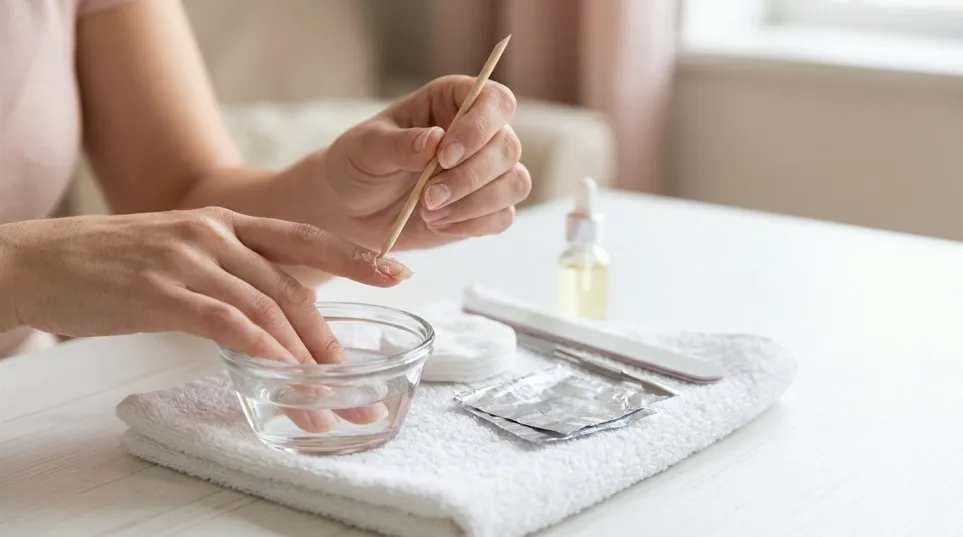
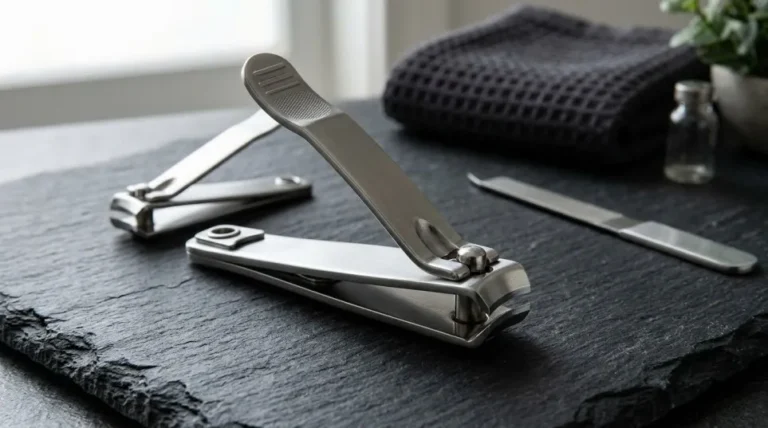
- Nail clippers and a coarse nail file (100/180 grit)
- Cotton pads or cotton wool and kitchen foil (or reusable soak-off clips)
- A glass or ceramic bowl (acetone can melt some plastics)
- Orange wood stick or metal cuticle pusher
- Petroleum jelly or a rich balm to protect the skin
- Buffer block, cuticle oil and hand cream
How to Remove Acrylic Nails at Home: Step-by-Step
This soak-off method is the one most nail technicians use in the salon, adapted for your kitchen table. Work in a well-ventilated room and keep acetone away from candles, hobs and cigarettes because it is highly flammable.
- Clip the length. Trim the acrylic tips as short as you comfortably can. Less product means less soaking.
- File off the top coat. Use the coarse side of your file to remove the shine and colour until the surface looks dull and dusty. Stop before you reach your natural nail.
- Protect your skin. Rub petroleum jelly around your cuticles and fingertips to reduce dryness.
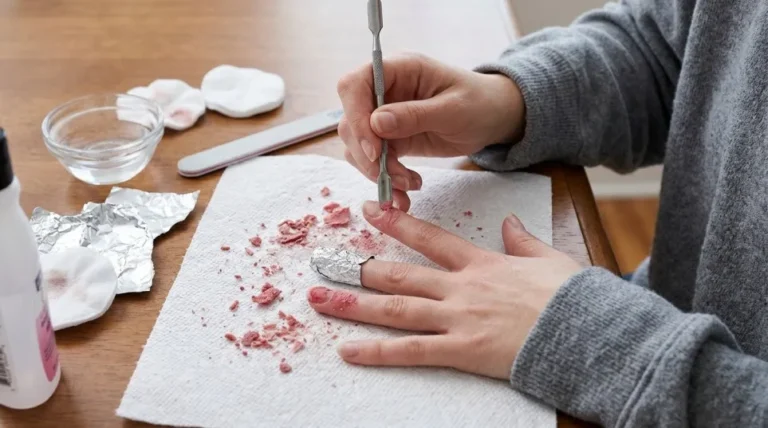
- Soak. Either dip your fingertips in a bowl of acetone, or place an acetone-soaked cotton pad on each nail and wrap it tightly in a square of foil.
- Wait 15–20 minutes. Placing the bowl inside a larger bowl of warm (not hot) water speeds things up.
- Push, don’t pry. Remove one wrap and gently glide the softened acrylic towards the free edge with an orange stick.
- Re-soak stubborn areas. If anything resists, re-wrap that nail for another 5 minutes rather than forcing it.
- Buff and cleanse. Lightly buff away residue, wash your hands with mild soap and dry thoroughly.
- Hydrate. Massage in cuticle oil and hand cream straight away.
Can You Take Off Acrylics Without Acetone?
Yes, but it is slower and less reliable. Acetone-free options work best on acrylics that are already lifting at the edges.
Warm soapy water and oil
Soak nails in warm water with a squeeze of washing-up liquid and a teaspoon of olive oil for 20–30 minutes, then work an orange stick under any lifted edges. Repeat over a few days if needed. This is the gentlest method but rarely removes a fresh, well-bonded set.
Filing off completely
You can file the acrylic down layer by layer until only a thin film remains, then buff smooth. It avoids acetone entirely, but it is very easy to over-file and thin your natural nail, so go slowly and check often.
Dental floss (only for lifting nails)
Slide floss under a lifted edge and see-saw gently. If you feel any pull on the nail bed, stop immediately. Never try this on acrylics that are fully attached.
Removal Methods Compared
Still deciding how to remove acrylic nails in your situation? This table compares every option by time, risk and who it suits best.
| Method | Time | Damage risk | Best for |
|---|---|---|---|
| Acetone foil wraps | 30–45 min | Low | Most people, full sets |
| Acetone bowl soak | 30–40 min | Low–medium (more skin dryness) | Quick removal of all ten nails |
| Warm soapy water + oil | Several sessions | Very low | Lifting acrylics, sensitive skin |
| Filing only | 45–60 min | Medium–high (over-filing) | Acetone allergy |
| Dental floss | 10–20 min | High if forced | Nails already half-off |
| Salon removal | 20–30 min | Lowest | Long, thick or damaged sets (around £10–£20) |
Mistakes That Damage Your Natural Nails
- Peeling or biting them off – this tears away the top layers of nail plate and leaves white, weak patches.
- Using regular remover – you’ll soak for an hour and still be scraping.
- Scraping hard with metal tools – push gently; if it isn’t soft, it isn’t ready.
- Filing too deep – stop as soon as you see the natural nail’s matte surface.
- Skipping aftercare – acetone strips natural oils, so dry nails will split if you don’t rehydrate.
Aftercare: Getting Your Nails Healthy Again
Your nails will probably feel thinner and bendier straight after removal. That’s normal, and they’ll recover as new nail grows through over the next few months.
- Apply cuticle oil twice a day – our cuticle care guide explains the best routine.
- Keep nails short and rounded for a couple of weeks to prevent snagging.
- Wear gloves for washing up and cleaning.
- Give your nails a short break, or switch to a strengthening overlay like BIAB, which many people find kinder to weak nails.
When to Get Them Removed Professionally
Knowing how to remove acrylic nails at home doesn’t mean you always should. Book a nail technician if your set is very long or thick, if a nail is cracked into the nail bed, or if you notice green or yellow discolouration underneath, which can signal infection. The NHS advice on nail problems recommends seeing a GP if a nail is painful, swollen or changing shape. Removing press-ons or tips glued with nail adhesive instead? Our guide on removing nail glue safely will help with leftover residue.
Frequently Asked Questions
How long does it take to soak off acrylic nails?
Most acrylic sets soften after 15–20 minutes in 100% acetone, and the full process takes 30–45 minutes for ten nails. Filing off the top coat first and keeping the acetone slightly warm helps it work faster. Thick or freshly applied sets may need an extra 5–10 minutes.
Can I use normal nail polish remover to take off acrylics?
Normal nail polish remover usually contains only a small amount of acetone, or none at all, so it barely softens acrylic. You may soak for an hour and still need to scrape. For a clean, low-damage removal, buy a bottle of 100% pure acetone from a chemist or beauty supplier.
Is it bad to pull off acrylic nails?
Yes. Pulling or peeling acrylics off rips away the top layers of your natural nail plate along with the product. This leaves nails thin, rough, sensitive and prone to splitting for months. If an acrylic is lifting, trim it and soak it in acetone rather than pulling.
How do you get acrylic nails off with hot water?
Hot water alone won’t dissolve acrylic, but warm soapy water with a little oil can loosen nails that are already lifting. Soak for 20–30 minutes, then ease an orange stick under the edges. Use warm rather than hot water to avoid scalding, and repeat over several days if needed.
Does removing acrylics ruin your nails?
Removing acrylics correctly causes minimal damage, though acetone will leave nails temporarily dry. Most lasting damage comes from prying, heavy filing or wearing acrylics back-to-back without breaks. Daily cuticle oil and short, rounded nails help them recover as healthy nail grows out over three to six months.
How much does it cost to have acrylics removed at a salon in the UK?
A standalone acrylic removal at a UK salon typically costs around £10–£20, depending on the area and nail length. Many salons include removal free or at a reduced price if you book a new set or another treatment in the same appointment, so it’s worth asking when you book.
Final Thoughts
Now you know how to remove acrylic nails the safe way: clip, file the top coat, soak in pure acetone, push gently and rehydrate. Patience is the secret; the extra five minutes of soaking always beats a damaged nail. Planning your next set? Find out how long acrylic nails last and when to book infills, or browse our beginner’s guide to acrylic nail kits if you’d like to do them yourself.
Last updated: 1 November 2026
4 Comments