
Nail Cuticle: The Complete Guide to Healthy, Soft & Well-Groomed Cuticles
Beautiful nails are not only about the polish, shape, or length. The small area of skin around the base of your nails can make a surprisingly big difference to how your hands look. This area is known as the nail cuticle, and taking proper care of it can help your manicure look cleaner while keeping the surrounding skin comfortable and moisturized.
Many people think that the best way to get neat-looking nails is to cut the cuticles completely. However, dermatologists generally recommend leaving the cuticle alone because it forms part of the natural protective barrier around the nail. (AAD)
The good news is that you don’t need a complicated salon routine to have attractive healthy cuticles. With a few simple habits, the right cuticle care products, and regular moisturizing, you can keep your nails looking polished even when you’re not wearing nail polish.


What Is a Nail Cuticle?
The nail cuticle is a thin layer of skin located around the base of the nail. It sits where the nail meets the surrounding skin and helps create a protective seal around the growing part of the nail.
You may hear people use the words cuticle and proximal nail fold as if they mean exactly the same thing. Technically, they are different structures. However, in everyday nail care, people commonly use “cuticle” to describe the thin skin at the base of the nail.
This little area may not seem important, but it has a useful job. The cuticle helps protect the nail area from outside irritants and microorganisms. That is one reason dermatologists advise against aggressively cutting or removing it. (AAD)
So, when you’re doing your manicure, the goal should not necessarily be to remove every little piece of skin. Instead, the goal is to keep the area soft, moisturized, clean, and tidy.
Why Is Cuticle Care Important?
Think about the number of things your hands go through every day.
You wash dishes, wash your hands, use hand sanitizer, clean your home, type on a keyboard, work with different products, and sometimes expose your hands to cold or dry weather.
All of this can leave the skin around your nails feeling dry.
When dry cuticles become extremely dry, they can feel rough and may develop small cracks or hangnails. Regular moisturizing can help keep the surrounding skin flexible.
The American Academy of Dermatology recommends moisturizing nails and hands, particularly when the air is dry. (AAD)
That’s why cuticle care is much more than a beauty routine. It can be a simple part of maintaining comfortable, well-groomed hands.
Cuticle vs. Dead Skin: What’s the Difference?
This is where many home manicures become confusing.
Sometimes you see a thin, almost transparent layer of skin sitting on the nail plate. Other times, you see dry skin around the sides of the nail.
These aren’t necessarily something that needs to be aggressively cut away.
The safest approach is to avoid treating the cuticle like unwanted dirt. Instead, soften the area with cuticle oil or a moisturizer and gently tidy only loose skin when appropriate.
The American Academy of Dermatology specifically advises people not to cut or remove their cuticles because doing so can make it easier for bacteria and other germs to enter and cause infection. (AAD)
What Causes Dry Cuticles?
Several everyday habits can contribute to dry cuticles.
1. Frequent Hand Washing
Washing your hands is important, but repeated exposure to water and cleansing products can leave your skin dry.
If your hands frequently feel tight after washing, your cuticles may also become dry.
2. Hand Sanitizer
Hand sanitizer is useful when soap and water aren’t available, but frequent use can contribute to dryness.
If you notice rough skin around your nails, applying a hand cream or cuticle oil afterward can help maintain moisture.
3. Cold or Dry Weather
Cold weather and dry indoor air can make the skin around your nails feel rougher.
This is why a simple winter nail care routine can make a noticeable difference.
4. Nail Polish Remover
Some nail polish removers can be drying. After removing polish, moisturize your hands and nails rather than immediately applying another drying product.
5. Picking or Biting
It can be tempting to pull at a tiny piece of loose skin. However, tearing it can make the area sore and potentially create an opening where germs can enter.
If you have a hangnail, dermatologists recommend washing your hands and using clean nail scissors or clippers to carefully cut the loose piece rather than tearing it. (AAD)
How to Take Care of Your Nail Cuticle Step by Step
You don’t need a professional manicure every week to maintain attractive cuticles.
Here’s a simple routine you can do at home.


Step 1: Clean Your Hands
Start with clean hands and nails.
Use gentle soap and water, then dry your hands thoroughly. Keeping nails clean and dry is an important part of general nail hygiene because bacteria and fungi can thrive in moist environments. (AAD)
You don’t need to scrub the cuticles aggressively. Gentle cleaning is enough.
Step 2: Soften the Cuticles
If your cuticles feel rough or dry, soften them before doing anything else.
A warm shower is often enough. You can also gently moisturize the area with a suitable cuticle oil, cream, or ointment.
The idea is simple: soft skin is easier to care for than dry, hardened skin.
Avoid aggressively scraping the nail plate or using sharp tools to dig underneath the cuticle.
Step 3: Apply Cuticle Oil
This is one of the easiest steps in a good cuticle care routine.
Place a small drop of cuticle oil around the base and sides of each nail. Then gently massage it into the surrounding skin.
You don’t need a huge amount. A small quantity spread properly is usually enough.
Look for formulas containing moisturizing oils such as jojoba oil or other skin-conditioning ingredients. You can also use a simple moisturizer or petroleum jelly if that works better for your skin.
The American Academy of Dermatology notes that petroleum jelly can be a budget-friendly way to soften rough, dry cuticles, while cuticle oil is another option. (AAD)
Step 4: Massage the Area
Spend a few seconds massaging the cuticle oil into each nail.
This makes the routine feel more like a mini manicure, and it also helps distribute the product evenly.
A little trick: keep your cuticle oil next to your bed.
That way, you can apply it before sleeping instead of waiting for the perfect time during the day.
Step 5: Don’t Cut the Cuticle
This is probably the most important part.
It can be tempting to take a cuticle cutter and remove everything that looks slightly uneven. But the cuticle has a protective function.
The AAD recommends leaving the cuticles alone rather than cutting or removing them. (AAD)
If you’re visiting a salon, you can tell your nail technician that you’d prefer your cuticles not to be aggressively cut.
Step 6: Deal With Hangnails Carefully
A hangnail is a small piece of skin that has partially separated from the surrounding skin.
It can be incredibly tempting to bite or pull it.
Don’t.
Instead:
- Wash your hands.
- Clean your nail scissors or clipper.
- Carefully clip the loose piece of skin.
- Apply moisturizer or cuticle oil afterward.
- Avoid picking at the area.
Tearing a hangnail can create unnecessary damage to the surrounding skin. Dermatologists recommend trimming the loose piece rather than chewing or tearing it. (AAD)
How Often Should You Use Cuticle Oil?
There isn’t a need to drown your nails in oil several times a day.
For most people, using cuticle oil once or twice a day is an easy routine. If your cuticles are particularly dry, you may find it helpful to moisturize more frequently.
One of the easiest routines is:
Morning: Hand cream if needed.
After washing: Moisturizer when your hands feel dry.
Before bed: Cuticle oil followed by hand cream.
The bedtime step is particularly convenient because you don’t have to worry about touching things immediately afterward.
What Should You Look For in a Cuticle Oil?
When shopping for cuticle oil, don’t feel that you need the most expensive bottle on the shelf.
Instead, pay attention to the formula and how it feels on your skin.
Common ingredients you may see include:
- Jojoba oil
- Vitamin E
- Almond oil
- Coconut-derived oils
- Sunflower oil
- Botanical oils
- Other skin-conditioning ingredients
A good cuticle product should be comfortable to use and easy to incorporate into your routine.
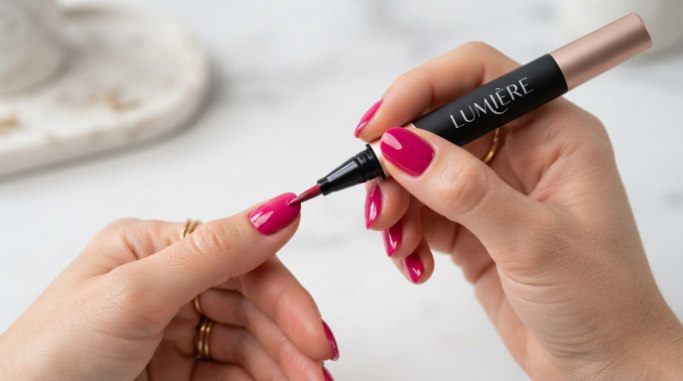
For example, a pen-style cuticle oil can be convenient if you travel frequently, while a bottle with a brush may work well for a nighttime routine.


Why Buying a Dedicated Cuticle Product Can Be Worth It
You might wonder:
“Why should I buy cuticle oil when I already have hand cream?”
You don’t necessarily have to buy a separate product. A good hand moisturizer can help.
However, a dedicated cuticle oil can be convenient because you can apply a small amount precisely around the nail. It’s also easy to keep beside your manicure products.
If you enjoy doing your nails regularly, investing in a good-quality cuticle product can make the routine easier and more enjoyable.
The best product is ultimately the one you will actually use consistently.
Can You Push Back Your Cuticles?
This is a common manicure question.
Some salons gently push back the cuticle area as part of a manicure. However, dermatologists recommend avoiding forceful pushing or cutting because the cuticle helps protect the nail area from infection. (AAD)
If you choose to have the area gently tidied, it should never hurt, bleed, or feel aggressively scraped.
Pain is not a sign that you’re getting a better manicure.
A beautiful manicure should still respect the health of your natural nails and surrounding skin.
Nail Cuticle Care for Gel, BIAB and Acrylic Nails
If you regularly wear gel nails, BIAB nails, or acrylic nails, cuticle care becomes especially useful.
A manicure can look beautiful when it is freshly done, but dry skin around the edges can make the whole set look less polished as it grows out.
Using cuticle oil regularly can help keep the surrounding skin moisturized.
However, it’s important not to use cuticle care as an excuse for aggressive preparation.
The American Academy of Dermatology recommends skipping cuticle trimming with artificial nails because cutting the cuticle can increase the risk of infection. (AAD)
If you’re getting gel or other artificial nail treatments, also pay attention to how the product is removed. Picking or peeling off gel polish can damage the natural nail. (AAD)
A Simple 5-Minute Cuticle Care Routine
If you don’t want a long beauty routine, try this.
Minute 1: Wash
Clean your hands and dry them properly.
Minute 2: Inspect
Look for obvious dryness, loose skin, or hangnails.
Minute 3: Apply Oil
Place a small amount of cuticle oil around each nail.
Minute 4: Massage
Massage the oil into the cuticle and surrounding skin.
Minute 5: Moisturize
Finish with a nourishing hand cream.
That’s it.
You don’t need ten different products or complicated tools.
My Favorite Little Cuticle-Care Habit
Here’s a simple habit that can make a surprisingly big difference.
Keep a cuticle oil pen in a place you visit every night—perhaps beside your bed or at your desk.
Imagine you’re scrolling through your phone before sleeping. Instead of picking at a dry piece of skin around your nail, apply a tiny amount of oil and massage it in.
After doing this regularly, cuticle care becomes automatic.
And that’s the secret with most beauty routines: consistency beats complexity.
Common Cuticle Care Mistakes to Avoid
Cutting Cuticles Too Deeply
Removing too much skin can damage the protective barrier around the nail.
Pulling Hangnails
Never rip a hangnail off with your fingers or teeth.
Using Dirty Tools
Nail clippers, scissors, and other manicure tools should be cleaned and disinfected appropriately. The AAD recommends disinfecting nail tools regularly. (AAD)
Filing Aggressively
When shaping your nails, avoid excessive back-and-forth filing. Dermatologists recommend filing in one direction because aggressive filing can weaken nails. (AAD)
Ignoring Dryness
Don’t wait until your cuticles become extremely cracked before moisturizing.
Picking at Gel Polish
If you wear gel polish, resist the temptation to peel it away.
What If Your Cuticles Are Extremely Dry?
If your cuticles are very dry, start with moisture rather than cutting.
Apply a rich moisturizer or petroleum jelly and give the area time to soften. You can also incorporate a cuticle oil into your daily routine.
For very dry hands, dermatologists recommend ointment-based moisturizers such as petroleum jelly, particularly after washing. (AAD)
You may also want to protect your hands from household cleaning products by wearing appropriate gloves.
When Should You See a Dermatologist?
Most minor dryness can be managed with sensible nail care. However, don’t assume every nail or cuticle problem is simply cosmetic.
Speak with a healthcare professional if you notice significant:
- Pain
- Swelling
- Persistent redness
- Pus
- Bleeding that doesn’t settle
- Nail lifting
- Major nail discoloration
- Sudden changes in nail texture or shape
- A new or changing dark streak
The American Academy of Dermatology notes that changes in nail color, texture, or shape can sometimes indicate an infection or another medical condition and should be evaluated when concerning. (AAD)
Nail Cuticle Care Shopping Checklist
If you’re ready to build your own nail care kit, you don’t need to buy everything at once.
Start with these basics:
| Product | Why You Need It |
|---|---|
| Cuticle oil | Helps moisturize the cuticle area |
| Hand cream | Keeps hands and surrounding skin hydrated |
| Nail file | Helps smooth rough nail edges |
| Nail clipper | Useful for regular nail grooming |
| Clean nail scissors | Useful for carefully trimming loose hangnails |
| Gentle soap | Keeps hands and nails clean |
| Protective gloves | Helpful during household chores |
A cuticle oil is probably the easiest product to add if your current routine is only hand cream and nail polish.
Look for a formula that feels comfortable, isn’t excessively greasy for your lifestyle, and contains ingredients you are happy to use regularly.
Most importantly, don’t buy a product simply because the packaging promises miraculous nail growth or instant transformation. Good cuticle care is about protecting, moisturizing, and maintaining the skin around your nails—not expecting one product to fix every nail problem overnight.
Frequently Asked Questions About Nail Cuticles
What is a nail cuticle?
The nail cuticle is a thin layer of skin around the base of the nail that helps protect the nail area from outside irritants and microorganisms.
Should you cut your cuticles?
Generally, dermatologists recommend leaving your cuticles alone rather than cutting or removing them because they help protect the nail from infection. (AAD)
Is cuticle oil worth buying?
For people with dry or rough cuticles, cuticle oil can be a convenient addition to a nail-care routine. It isn’t essential if you already have an effective moisturizer, but its precise application makes it particularly convenient.
How often should I use cuticle oil?
Once or twice daily is a simple routine. If your skin is especially dry, you can moisturize whenever needed.
Can cuticle oil make nails grow faster?
Cuticle oil shouldn’t be treated as a guaranteed nail-growth treatment. Its main purpose is to moisturize the cuticle and surrounding skin. Keeping the area moisturized can make your nails and manicure look healthier and better maintained.
Should I push my cuticles back?
Avoid aggressive or forceful pushing. Dermatologists recommend not cutting the cuticle and caution against forceful pushing because the cuticle provides a protective barrier. (AAD)
Can I use petroleum jelly instead of cuticle oil?
Yes. Petroleum jelly is an inexpensive option for moisturizing dry cuticles. The AAD specifically recommends it as a budget-friendly way to soften rough, dry cuticles. (AAD)
How do I fix a hangnail?
Wash your hands, use clean nail scissors or clippers to carefully remove only the loose piece, and moisturize the area. Don’t bite or tear it off. (AAD)
Final Thoughts: Healthy Cuticles Don’t Need to Be Complicated
Your nail cuticle may be one of the smallest parts of your manicure, but caring for it can completely change the finished look of your hands.
The best routine isn’t necessarily the most expensive one. It’s the one you can comfortably repeat.
Keep your hands clean, moisturize regularly, use cuticle oil when your skin needs extra nourishment, avoid aggressively cutting the cuticle, and treat hangnails carefully.
If you love doing gel nails, BIAB nails, or traditional manicures, adding cuticle care to your routine is an easy way to keep the surrounding skin looking neat between appointments.
And if you’re choosing a product to buy, focus on quality ingredients, comfortable application, and consistency rather than unrealistic promises. A small bottle of good cuticle oil that you actually remember to use can be much more useful than a drawer full of products you never touch.
Beautiful nails start with healthy habits—and sometimes, the simplest five-minute routine is all you need.