
Is BIAB Good for Nails? Benefits, Risks & How to Use It Safely
If your nails are weak, bend easily, break every few days, or never seem to grow past a certain length, you may have heard people talking about BIAB nails. But one question comes up again and again: is BIAB good for nails, or can it actually cause more damage?
The short answer is: BIAB can be a useful way to add strength and structure to natural nails when it is applied, cured, maintained, and removed correctly. However, BIAB is still a gel product, so it is not completely risk-free. Poor application, skin contact with uncured gel, incorrect curing, aggressive filing, and picking the product off can all create problems.
BIAB stands for Builder In A Bottle. It is a type of builder gel designed to add structure and strength to the natural nail. It is generally thicker than ordinary gel polish and is commonly used as a structured overlay on natural nails.
For someone who wants stronger-looking nails without immediately moving to long extensions, BIAB can be an attractive option.
But is it actually good for your natural nails?
Let’s take a closer look.
What Is BIAB?
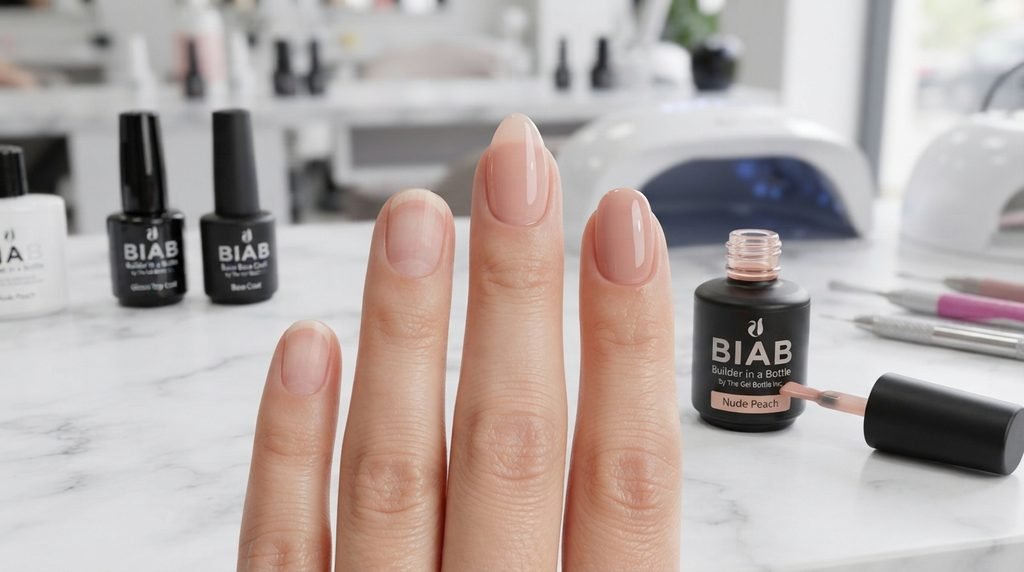
BIAB, or Builder In A Bottle, is a type of builder gel that comes in a bottle, usually with a brush similar to gel polish.
Unlike ordinary nail polish, BIAB is designed to create more structure on the nail. It can be used over natural nails to provide additional support and can also be used for certain small repairs or short extensions.
The main purpose of builder gel is not simply to add colour. Instead, it creates a stronger coating that can help protect the natural nail from everyday bending and minor impact.
Think of your natural nail like a thin piece of plastic.
If it is very thin, it can bend easily. Once you add an appropriate layer of structured material, the overall surface can become more resistant to everyday stress.
That is one reason people with weak nails, thin nails, or nails that frequently break become interested in BIAB.
However, there is an important point to understand.
BIAB does not permanently change or “heal” the natural nail. The strength comes from the product sitting on top of the nail. Your natural nail continues to grow underneath it.
Is BIAB Good for Nails?
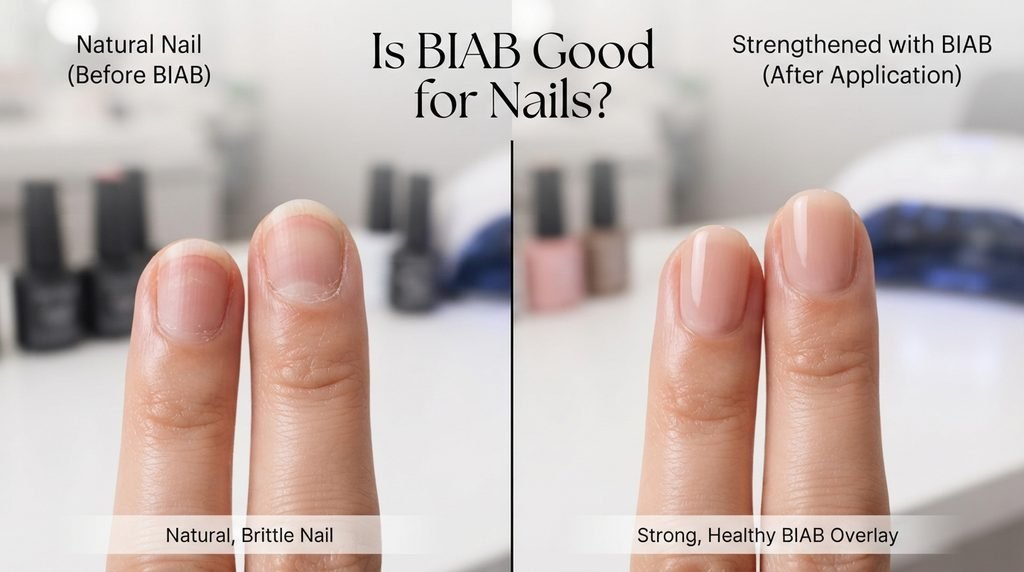
Yes, BIAB can be good for nails when used correctly, particularly if your main goal is to add temporary strength and help your natural nails grow without constantly breaking.
A properly applied BIAB overlay can:
- Add structure to natural nails
- Reduce everyday bending
- Help protect the free edge
- Make nails feel stronger
- Support the appearance of natural nail growth
- Create a smooth surface
- Give nails a neat, polished appearance
- Work well for people who prefer short or medium-length natural nails
However, BIAB is not automatically healthy simply because it is called BIAB.
The quality of the product, application technique, curing system, maintenance, and removal process all matter.
This is where many online BIAB tutorials can become confusing.
One person may say, “BIAB saved my nails,” while another person says, “BIAB ruined my nails.”
Both experiences can happen.
Often, the difference is not simply the product itself. It is how the product was applied and removed.
How Does BIAB Help Weak Nails?
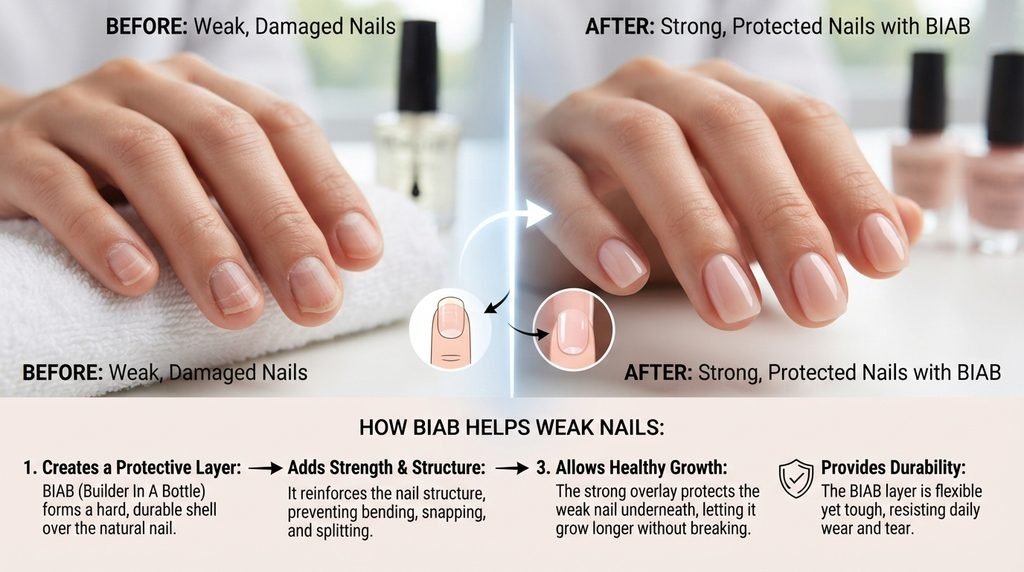
One of the biggest reasons people choose BIAB for weak nails is because it provides a stronger structure over the natural nail.
Imagine having naturally flexible nails that bend every time you open a can, type on a keyboard, wash dishes, or pick something up.
Repeated bending can make it easier for the nail to split or break.
A structured BIAB overlay can reduce some of that movement.
For example, imagine Sarah.
Sarah had always wanted longer natural nails, but every time her nails reached a certain length, one would break. She started using a structured builder-gel manicure. Instead of treating BIAB as a magical nail treatment, she used it as a protective coating and kept her nails at a practical length.
After several maintenance appointments, the natural nail underneath had grown out.
The important part was not that BIAB “made her nails grow faster.” Rather, the coating helped her keep the length she was already growing instead of losing it through repeated breakage.
That is a much more realistic way to think about BIAB.
Benefits of BIAB Nails
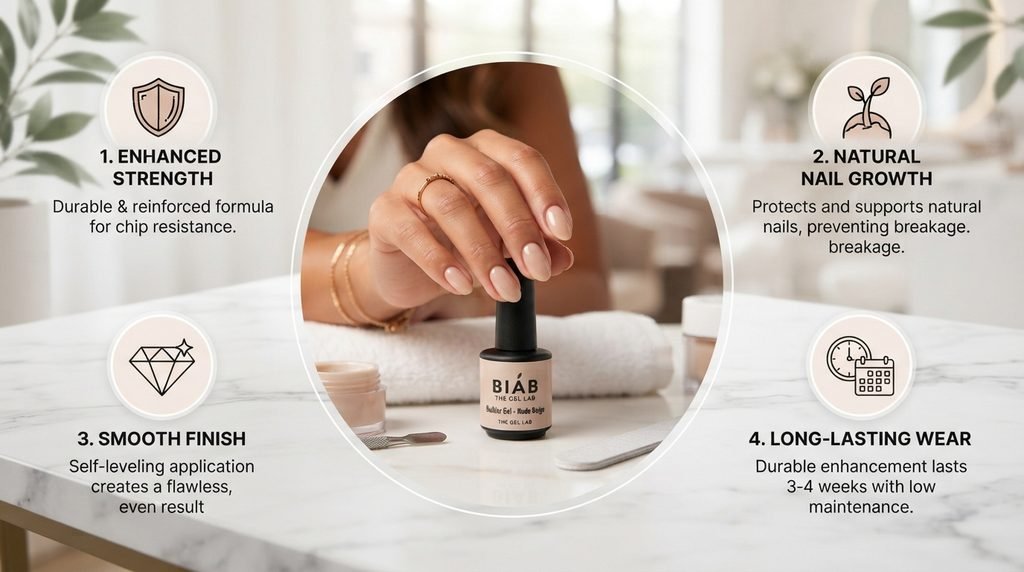
1. BIAB Can Add Strength
The biggest advantage of BIAB nails is the extra structure they can provide.
If your natural nails are flexible or prone to breaking, a suitable builder gel can make them feel more stable.
This can be especially useful if you want to maintain natural-looking nails without using traditional long acrylic extensions.
2. BIAB Can Help Protect the Free Edge
The free edge is the part of your nail that extends beyond your fingertip.
This area often takes the most abuse.
It can catch on clothing, bend backward, hit hard surfaces, or split when you perform everyday tasks.
A properly structured overlay can provide additional support around this area.
That does not mean your nails become impossible to break. They can still crack if they experience enough force.
But the additional structure can make everyday wear easier to manage.
3. BIAB Can Support Natural Nail Growth
This is one of the most attractive benefits for people trying to grow their nails.
BIAB does not make your nails grow faster.
Instead, it can help you retain the length you grow by reducing breakage.
There is a big difference.
If your nails normally grow but break before they become long, improving protection may make it appear as though your nails are growing faster.
In reality, you are simply keeping more of the length.
4. BIAB Gives a Natural-Looking Finish
Another reason BIAB has become popular is its appearance.
A structured manicure can look clean and natural without requiring extremely long extensions.
Many BIAB products are available in nude, pink, beige, milky, and other natural shades.
You can also apply gel colour over the builder layer if you want a more noticeable manicure.
This makes BIAB suitable for people who want something between completely natural nails and dramatic nail extensions.
5. BIAB Can Create a Smooth Nail Surface
Natural nails can have ridges, uneven areas, or minor imperfections.
A correctly applied builder gel can create a more even surface.
This gives the manicure a smooth appearance and can also provide a good base for gel colour or simple nail art.
However, the natural nail should not be aggressively filed just to make it perfectly smooth.
Over-filing can make the nail thinner.
Is BIAB Better Than Gel Polish?
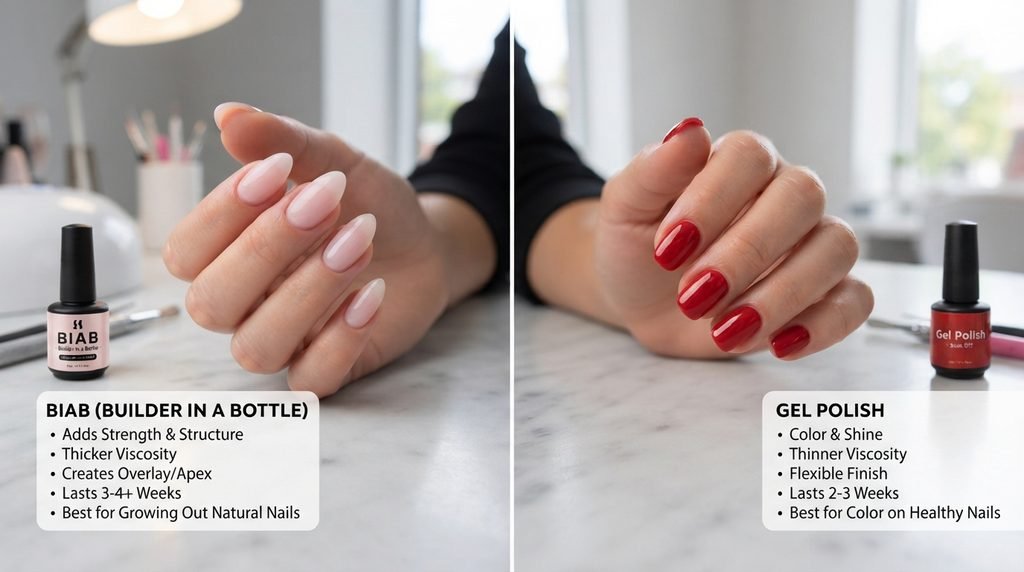
This depends on what you want from your manicure.
Gel polish is mainly designed to provide colour and a durable finish.
BIAB, on the other hand, is a builder product designed to provide more structure.
If your nails are already strong and you mainly want colour, ordinary gel polish may be enough.
If your nails are flexible and you want additional structure, BIAB may be more suitable.
However, neither option should be considered automatically “healthy.”
Both involve a gel product that needs proper curing and removal.
The right choice depends on your nail condition, lifestyle, desired length, and the specific product system being used.
BIAB vs Acrylic Nails
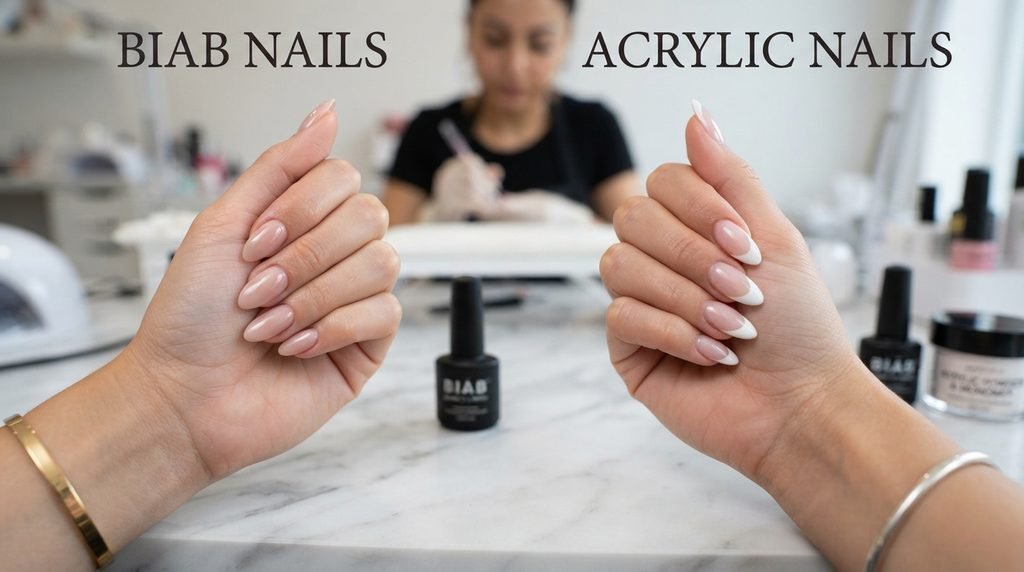
People often compare BIAB vs acrylic, but they are not exactly the same thing.
Acrylic systems are traditionally used to create strong artificial nail enhancements and longer extensions.
BIAB is commonly used as a builder-gel overlay on natural nails and can also be suitable for certain short extensions, depending on the formulation and professional system.
One potential advantage of a soak-off builder-gel system is that it may offer a more flexible alternative to some rigid enhancement systems.
However, “BIAB is healthier than acrylic” is too broad a statement.
Both systems can cause problems if the natural nail is aggressively prepared, the product touches the skin, the product is improperly cured, or removal damages the nail.
The technique matters just as much as the product category.
Can BIAB Damage Your Natural Nails?
Yes, BIAB can contribute to nail damage, particularly when application or removal is done incorrectly.
This does not mean BIAB is automatically damaging.
Several factors can increase the risk of problems.
Common causes include:
- Aggressive filing of the natural nail
- Peeling or picking off the product
- Incorrect removal
- Applying excessive product
- Incorrect curing
- Using an incompatible lamp
- Allowing uncured product to touch the skin
- Repeated rough preparation
- Ignoring lifting
- Covering already damaged nails without addressing the underlying problem
This is why technique matters.
A beautiful manicure can still be poorly applied underneath.
Can BIAB Make Nails Thin?
BIAB itself does not have to make your nails thin.
The bigger concern is often what happens during preparation and removal.
For example, if a technician repeatedly files the natural nail too aggressively before every application, the nail plate can gradually become thinner.
Likewise, if someone tries to scrape or peel off remaining product, layers of the natural nail may come away with it.
That can leave nails looking:
- Thin
- Weak
- Flexible
- Peeling
- Rough
- Sensitive
This is why safe removal is just as important as the original application.
BIAB and Nail Allergies
This is an important part of the conversation.
Many gel systems contain (meth)acrylate chemicals, and skin contact with uncured product can contribute to sensitisation and allergic reactions in some people.
Possible symptoms can include redness, itching, swelling, rash, or changes around the nails.
This is one reason professional application is valuable, particularly if you are new to builder gel.
If you use a BIAB home kit, carefully follow the manufacturer’s instructions and use the recommended curing system.
Do not allow uncured gel to sit on the surrounding skin.
If you develop a persistent itchy rash, swelling, nail lifting, or other unusual reaction after using a gel nail product, stop using it and consider speaking with a qualified healthcare professional or dermatologist.
A good manicure should never require you to ignore an allergic reaction.
Why Proper Curing Matters
Curing is one of the most important parts of using BIAB.
Builder gel needs the correct light source and curing process to harden properly.
Simply putting gel under any random lamp is not a good idea.
Different gel systems can have specific curing requirements.
Using the wrong lamp, incorrect curing time, or overly thick layers can create an improperly cured product.
That is one reason it is better to follow the instructions supplied by the product manufacturer rather than copying a random social-media tutorial.
More product does not necessarily mean stronger nails.
In fact, applying gel too thickly can create curing problems and may also cause excessive heat during curing.
How to Apply BIAB Correctly
If you are considering BIAB, the following general process can help you understand what a professional application involves.
Always follow the instructions for your specific BIAB system because application requirements can vary between brands.
Step 1: Examine the Natural Nails
Before applying anything, look at the condition of the natural nails.
If the nails are:
- Severely damaged
- Painful
- Inflamed
- Infected
- Lifting from the nail bed
- Showing unusual colour changes
do not simply cover the problem with BIAB.
A nail problem should be assessed appropriately before applying enhancements.
Step 2: Clean the Nails
The nail plate should be clean and free from oils, creams, and debris.
Clean preparation helps the product adhere properly.
However, clean preparation does not mean aggressively removing layers of the natural nail.
Step 3: Prepare the Nail Carefully
The natural nail may require gentle preparation according to the manufacturer’s system.
Avoid excessive buffing.
The goal should be appropriate preparation, not making the natural nail extremely rough or thin.
Step 4: Apply the BIAB
Apply the builder gel according to the product instructions.
The amount and number of layers should depend on the product and the nail.
Do not assume that every BIAB needs exactly three thick layers.
Some products are designed for different application methods.
Step 5: Keep Product Off the Skin
This step is extremely important.
Try to prevent uncured BIAB from touching the:
- Cuticles
- Sidewalls
- Finger skin
- Surrounding nail area
If uncured gel floods onto the skin, clean it appropriately before curing according to the product’s instructions.
Step 6: Cure Using the Correct Lamp
Use the lamp recommended for the particular product system.
Follow the manufacturer’s curing time.
Do not shorten the curing time simply because the surface appears hard.
A product can look cured on the outside without being adequately cured throughout.
Step 7: Check the Finished Structure
After curing, the nails should look balanced and appropriate for their length.
The goal is not to create an unnecessarily thick nail.
A well-structured manicure should look neat and proportionate.
How to Remove BIAB Without Damaging Your Nails
Removal is one of the most important parts of maintaining healthy-looking nails.
Never peel BIAB off your natural nails.
It may be tempting when the product starts lifting.
You might think, “I’ll just pull this little piece off.”
That small piece can take part of the natural nail surface with it.
Dermatologists also warn against picking and scraping gel products because this can damage the nail.
If your particular BIAB system is designed to soak off, follow the manufacturer’s removal instructions.
A typical soak-off process may involve carefully reducing the product and using acetone as directed.
The important thing is to avoid force.
A safer general approach:
- File down the bulk of the product carefully.
- Avoid aggressive filing of the natural nail.
- Use the removal method recommended by the product manufacturer.
- Allow the product to soften rather than forcing it off.
- Gently remove softened product.
- Stop if the product is still firmly attached rather than scraping aggressively.
- Clean the nails.
- Apply a moisturising product to the nails and surrounding skin.
If you are unsure about removal, having it done by a trained nail professional is often the safer choice.
How to Keep Your Nails Healthy While Wearing BIAB
If you want the benefits of a structured manicure without unnecessarily stressing your natural nails, your aftercare routine matters.
Keep Your Cuticles Moisturised
Dry skin around the nails can make your manicure look rough.
Regular use of cuticle oil or a moisturising product can help keep the surrounding skin comfortable.
Do Not Use Your Nails as Tools
This is an easy habit to overlook.
Try not to use your nails to:
- Open cans
- Scratch hard surfaces
- Peel stickers
- Open packaging
- Pry objects apart
Even strong builder gel cannot make your nails indestructible.
Deal With Lifting Promptly
If your BIAB starts lifting, do not keep picking at it.
Lifting can allow water and debris to get underneath the product.
Instead, have the manicure repaired or removed properly.
Give Your Nails a Break When Needed
You do not necessarily need to wear BIAB continuously.
If your natural nails become unusually thin, painful, peeling, or damaged, consider taking a break and allowing them to recover.
Dermatologists recommend periods without gel polish when appropriate, especially for people experiencing recurring nail problems.
Who Is BIAB Best For?
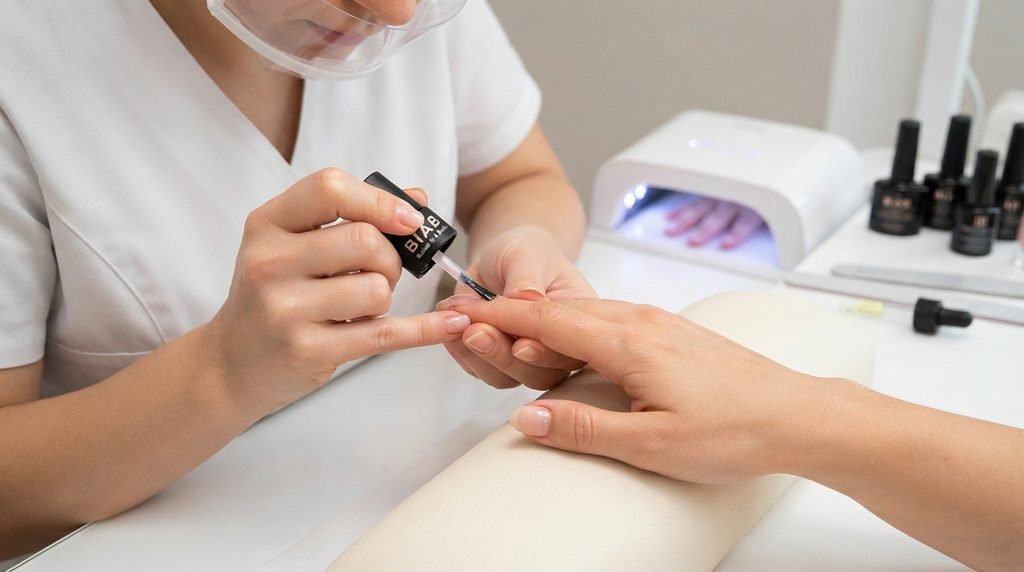
BIAB can be a good option for people who:
- Have naturally flexible nails
- Want additional nail strength
- Prefer a natural-looking manicure
- Want to grow their natural nails
- Frequently experience nail breakage
- Prefer short or medium-length nails
- Want a structured base for gel colour
- Like the appearance of a clean, minimal manicure
It may not be the right choice for everyone.
If your nails are currently damaged, painful, infected, or showing unusual changes, it is better to address that issue first.
Who Should Be More Careful With BIAB?
You should be particularly cautious if you:
- Have previously reacted to gel products
- Have a known acrylate allergy
- Have damaged or very thin nails
- Have an active nail infection
- Have unexplained nail changes
- Frequently pick or peel nail products
- Are unsure how to cure builder gel correctly
If you have a history of allergic reactions to nail products, speak with a healthcare professional before trying another gel system.
Is BIAB Worth Buying?
If your main goal is stronger-looking natural nails, better length retention, and a clean structured manicure, a good-quality BIAB system can be worth considering.
The key is not simply buying the most popular product on social media.
Instead, look for a reputable brand with clear application instructions, proper curing guidance, and a compatible lamp system.
A good BIAB product should fit your nail type and your normal lifestyle.
For example, someone with short, flexible nails may need a different approach from someone wanting long extensions.
So before buying, ask yourself:
Do I want colour, or do I actually need structure?
If you mainly want colour, gel polish may be enough.
If you want additional structure and support, a suitable builder gel may make more sense.
How to Choose a BIAB Product
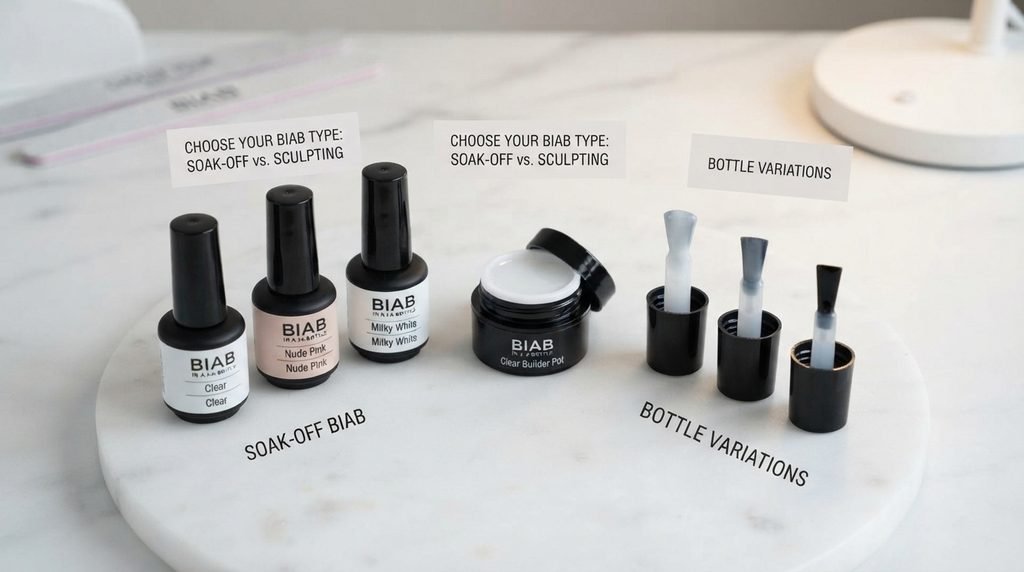
When shopping for BIAB gel, consider these points:
1. Check the Manufacturer’s Instructions
A reputable product should explain how it should be applied and cured.
2. Check the Recommended Lamp
Do not automatically assume that every LED or UV lamp works perfectly with every gel.
3. Consider Your Nail Type
Very flexible nails may need a different formulation from naturally strong nails.
4. Look at the Removal Method
If easy removal matters to you, check whether the product is specifically designed to be soak-off.
5. Avoid Unknown Products With Poor Instructions
Cheap products are not necessarily bad, but unclear instructions and questionable curing information are reasons to be cautious.
6. Consider Professional Application
If you are completely new to builder gel, a trained nail professional can help you understand how the system should be applied and maintained.
BIAB Mistakes That Can Ruin Your Nails
Even a high-quality product can cause problems if used incorrectly.
Avoid these common mistakes:
Mistake 1: Peeling BIAB Off
This can remove layers from the natural nail.
Mistake 2: Over-Filing
The goal is not to make the natural nail paper-thin before application.
Mistake 3: Applying Too Much Product
Thicker does not automatically mean stronger.
Mistake 4: Curing With the Wrong Lamp
The lamp and gel system need to work together.
Mistake 5: Getting Gel on the Skin
Avoid curing uncured product against the skin.
Mistake 6: Ignoring Lifting
Do not keep wearing a severely lifted manicure simply because the colour still looks good.
Mistake 7: Following Random TikTok or Instagram Tutorials
Social media can be useful for inspiration, but not every application method is professionally sound.
How Long Does BIAB Last?
The exact wear time depends on the product, nail growth, lifestyle, application quality, and maintenance schedule.
As your natural nail grows, the BIAB moves farther away from the cuticle area.
Eventually, the structure needs maintenance or removal.
Do not wait until the manicure becomes heavily grown out or severely lifted.
Regular professional maintenance can help keep the structure balanced and reduce unnecessary stress on the natural nail.
Does BIAB Make Nails Grow Faster?
No.
This is one of the biggest misunderstandings about BIAB.
BIAB does not directly make your nails grow faster.
Your nails naturally grow from the nail matrix.
What BIAB can potentially do is help protect the existing nail from everyday breakage.
So if your nails usually grow 3 mm but break 2 mm before you notice the length, better protection could allow you to keep more of those 3 mm.
That is why someone may feel that their nails are suddenly “growing faster” after starting BIAB.
They may simply be experiencing less breakage.
Does BIAB Strengthen Nails Permanently?
No.
The strength provided by BIAB comes from the product applied over the natural nail.
Once the product is removed, your natural nail returns to its own natural characteristics.
If your nails were naturally flexible before BIAB, they will still be naturally flexible afterward.
This is not necessarily a bad thing.
It simply means BIAB should be viewed as a protective cosmetic enhancement, not a permanent nail-strengthening treatment.
Is BIAB Good for Nails? Final Verdict
So, is BIAB good for nails?
For many people, BIAB can be a useful option for adding structure and protecting natural nail length, especially when the nails are weak, flexible, or prone to everyday breakage.
However, BIAB is not automatically good or bad.
The result depends heavily on:
- Product quality
- Nail preparation
- Application technique
- Correct curing
- Avoiding skin contact
- Proper maintenance
- Safe removal
- Your existing nail condition
If you use BIAB correctly, avoid aggressive filing, never peel the product off, and follow the manufacturer’s curing and removal instructions, you can enjoy a strong, polished manicure while maintaining the appearance of healthy natural nails.
The most important thing is to stop thinking of BIAB as a miracle treatment.
It is a builder gel designed to add structure.
And when used properly, that structure can be exactly what you need to keep your natural nails looking longer, neater, and more protected.
Final Takeaway
If your goal is to grow natural nails without constantly breaking them, BIAB may be worth considering.
Choose a reputable system, use the correct lamp, follow the manufacturer’s instructions, protect your surrounding skin, and take removal seriously.
Most importantly, listen to your nails.
If they become painful, unusually thin, severely peeling, or show unexplained changes, do not simply cover them with another layer of product. Give them attention first.
Healthy-looking nails come from good nail care—not simply from adding more product.