What Is BIAB Nails? A Complete Beginner’s Guide
If you have booked a nail appointment recently or scrolled through nail inspiration online, you have likely seen the term come up again and again. So what is BIAB nails exactly, and why has it become one of the most requested treatments in salons today? This guide breaks down the basics, how the treatment is applied, how it compares to acrylic and gel polish, and what kind of results you can expect.
What Is BIAB Nails?
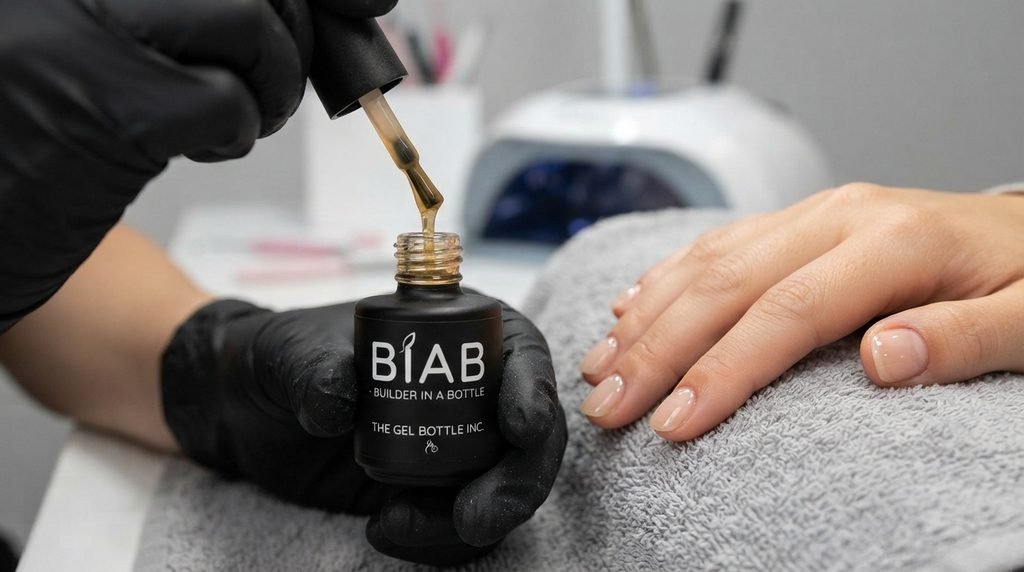
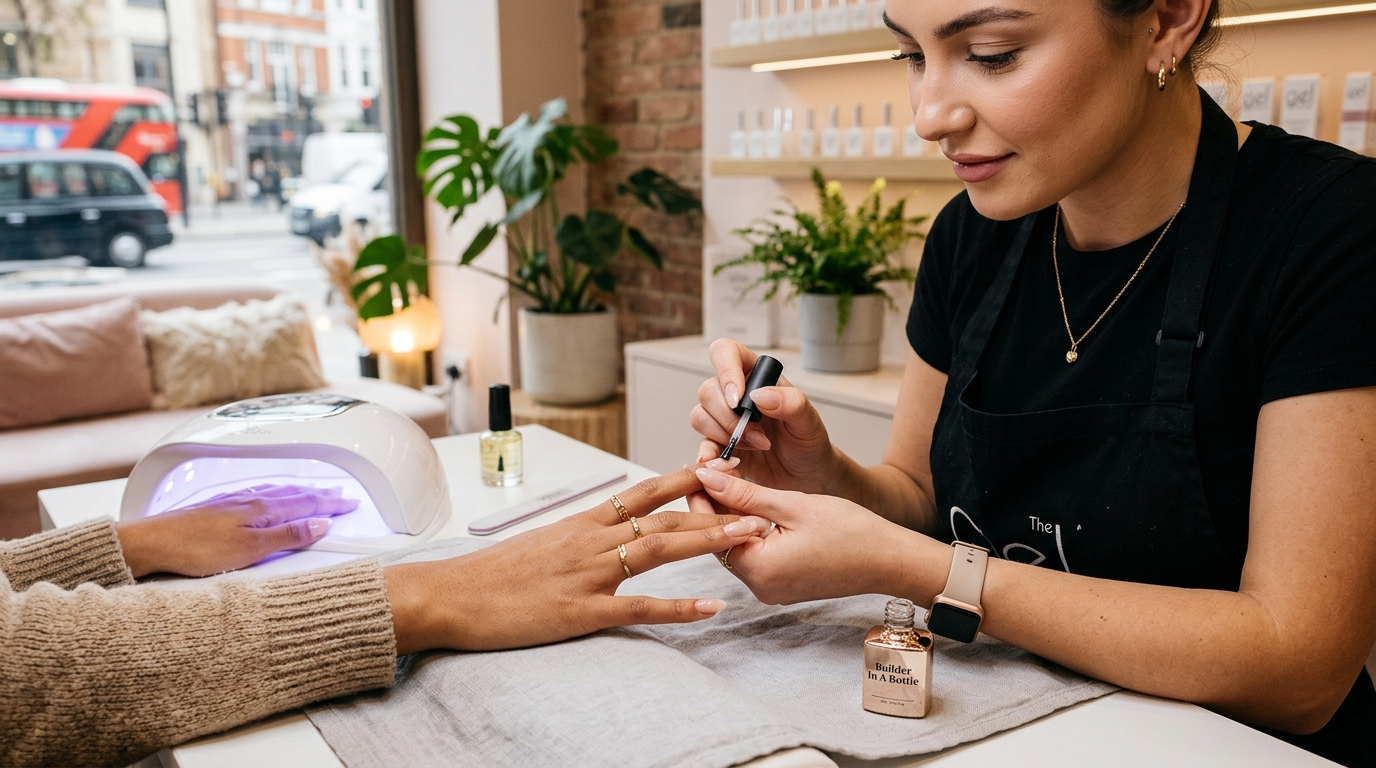
BIAB stands for Builder in a Bottle, a soak off gel formula used to strengthen and extend the natural nail. Unlike acrylic, which relies on a powder and liquid mix, this system comes ready to use straight from the bottle. It is brushed directly onto a clean, prepped nail plate in thin layers, with each layer cured under an LED lamp before the next is added.
The end result is a flexible, durable overlay that bonds closely to the natural nail rather than sitting on top of it like a rigid shell. Because of this flexibility, the finish moves naturally with the nail bed, which makes it a popular choice for people who want extra strength without the stiffness often associated with acrylic extensions.
Nail technicians often describe this treatment as a hybrid between a strengthener and an extension. It can be used purely to reinforce weak or bitten nails, or shaped and built up to add length in the same way acrylic would.
How Is the Treatment Applied?
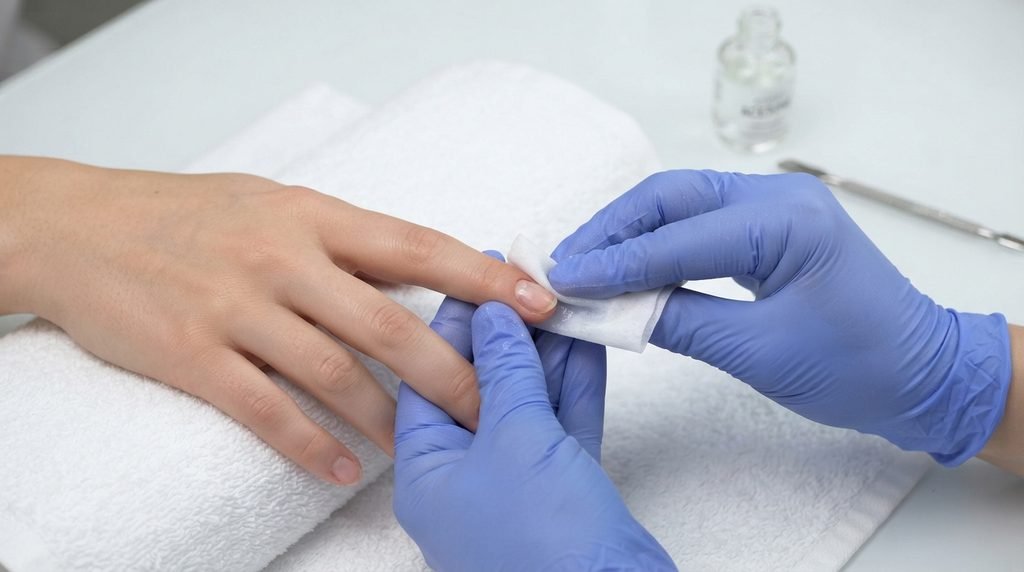
The process starts with proper nail prep. Cuticles are pushed back and tidied, the nail surface is lightly buffed to help the gel adhere, and any oils are removed with a cleanser. A thin base coat is applied first, followed by several layers of builder gel that are shaped and structured to create an even apex across the nail plate.
Each layer is cured under an LED lamp for a set amount of time before the next one is added. Once the desired shape and strength are achieved, the nail is filed and buffed smooth, and a glossy top coat seals the finish. The entire process typically takes slightly longer than a standard gel polish manicure, since building the structure correctly takes more care than simply painting colour on top of the natural nail.
Removal follows the same soak off method used for regular gel polish, which means acetone is used to gently dissolve the product rather than filing everything away by force.
How Does This Compare to Acrylic and Gel Polish?

Acrylic nails are built using a powder and liquid system that hardens quickly and creates a strong, rigid extension. While durable, acrylic can feel heavier and less flexible, and the strong odour during application puts some clients off. Builder gel offers a lighter alternative that still provides significant strength, just with more natural movement.
Compared to standard gel polish, the difference comes down to structure. Gel polish is essentially colour with a protective coating, offering little to no added strength to the nail itself. Builder gel, on the other hand, actively reinforces the nail plate, which is why it tends to last longer and hold up better against daily wear, typing, and general hand use.
For anyone torn between the two extremes of acrylic and gel polish, this treatment sits comfortably in the middle, offering strength without heaviness.
Benefits of Choosing This Treatment
The most commonly reported benefit is stronger natural nails. Because the gel bonds to the nail bed rather than replacing it, many clients notice their own nails growing longer and healthier underneath after a few sets, particularly if they previously struggled with biting or breakage.
The finish itself also holds up well. A smooth, glossy top coat resists chipping far better than regular gel polish, and the flexible base reduces the risk of lifting compared to rigid acrylic. It works well on both short and longer nails, making it a versatile option regardless of personal style preference.
Removal is another advantage. Since the product soaks off rather than requiring heavy filing, there is less risk of damage compared to some acrylic removal methods, provided it is done correctly by a trained technician.
If you want to maintain your nails between salon visits, a good cuticle oil can help keep the surrounding skin healthy and support a neater grow out: Cuticle Oil on Amazon.
How Long Does It Last?
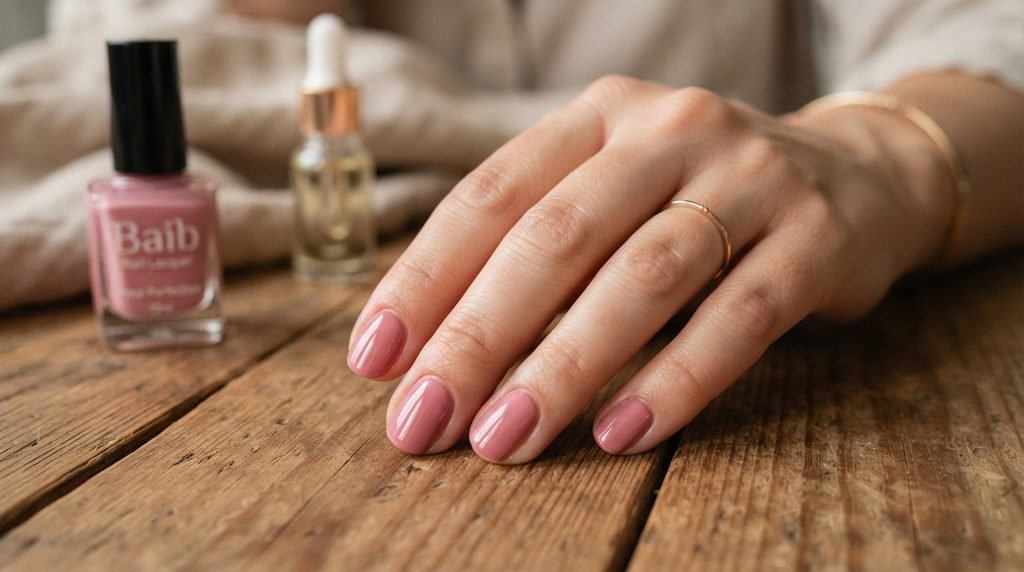
A well applied set typically lasts around three to four weeks before an infill is needed, though this varies depending on individual nail growth and daily activities. Clients who type frequently, do manual work, or spend a lot of time in water may need infills slightly sooner than others.
Regular infills help maintain both the appearance and structural integrity of the set, since new growth needs to be blended in and reshaped as it appears. Skipping infills for too long can lead to an uneven look, though it will not damage the nail itself as long as removal is eventually done properly rather than left to grow out and lift on its own.
Frequently Asked Questions
Is this treatment suitable for weak or damaged nails? Yes, it is often specifically recommended for clients with weak, bitten, or damaged nails, since the gel reinforces the natural nail plate as it grows.
Does it damage natural nails? When applied and removed correctly, it is considered gentle on the nail. Damage usually only occurs if the product is picked or peeled off rather than soaked away.
How is this different from gel polish? Gel polish adds colour and shine with little structural strength, while this treatment actively strengthens and can extend the nail itself.
Can it be applied to very short nails? Yes, it works well on short nails and is often chosen specifically to add strength without significant added length.
Do I need to visit a salon for removal? It is strongly recommended. A proper soak off removal protects the natural nail, while picking or peeling at home can cause thinning and damage.