BIAB Gel Extensions: A Complete Guide to Strong, Natural-Looking Nails
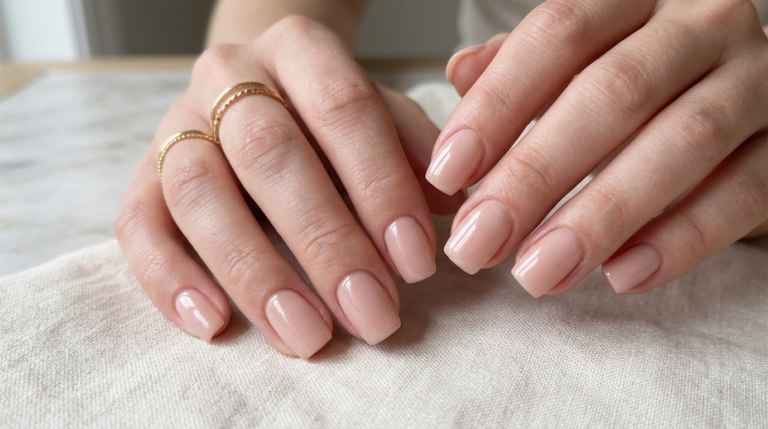
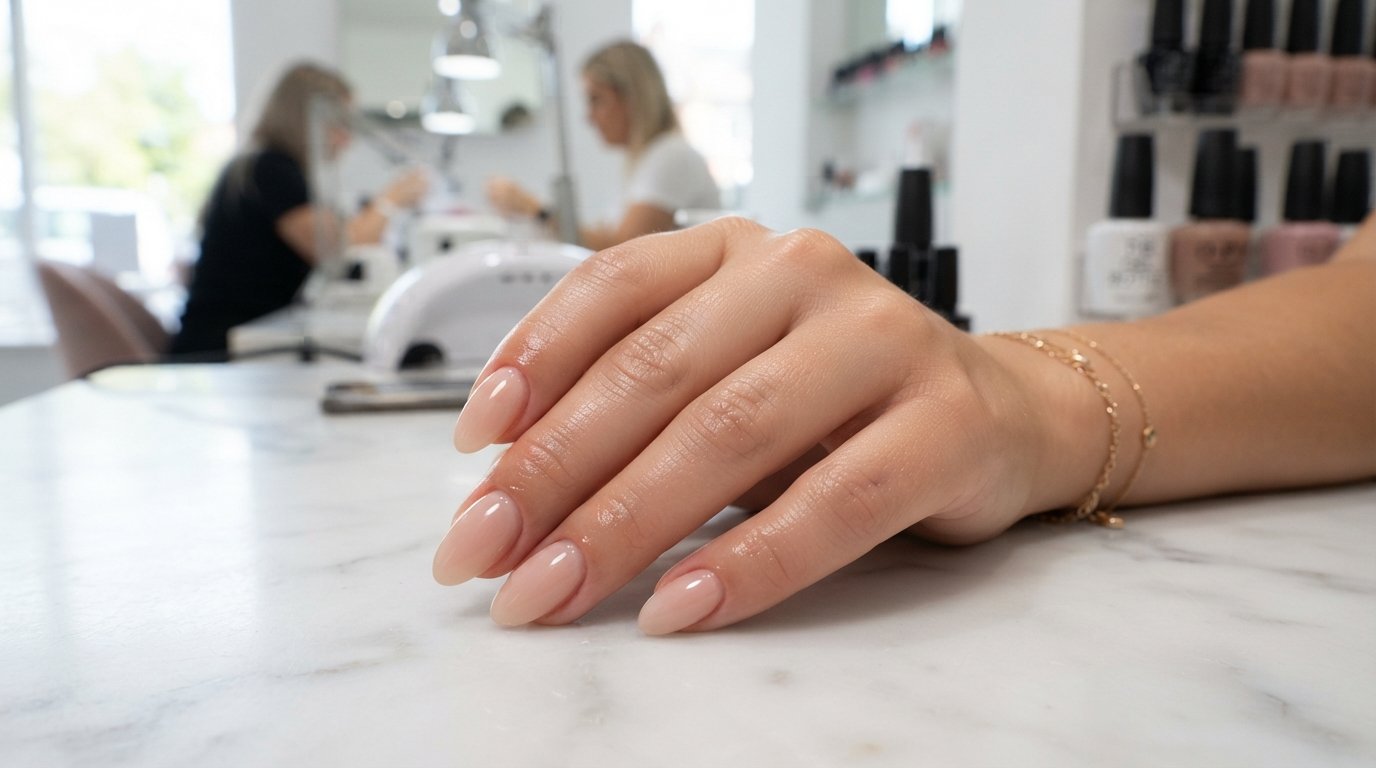
If you love the look of long, neat nails but do not want extensions that feel too thick or heavy, BIAB gel extensions may be worth trying. BIAB has become a popular choice for people who want extra length, strength, and a clean salon-style finish without giving up a natural-looking appearance.
But what exactly are BIAB gel extensions? How are they applied? Are they different from regular gel extensions? And, most importantly, are they suitable for your nails?
In this guide, we will cover everything you need to know about BIAB gel extensions, from the basics and benefits to application, maintenance, removal, and choosing the right product.
What Are BIAB Gel Extensions?
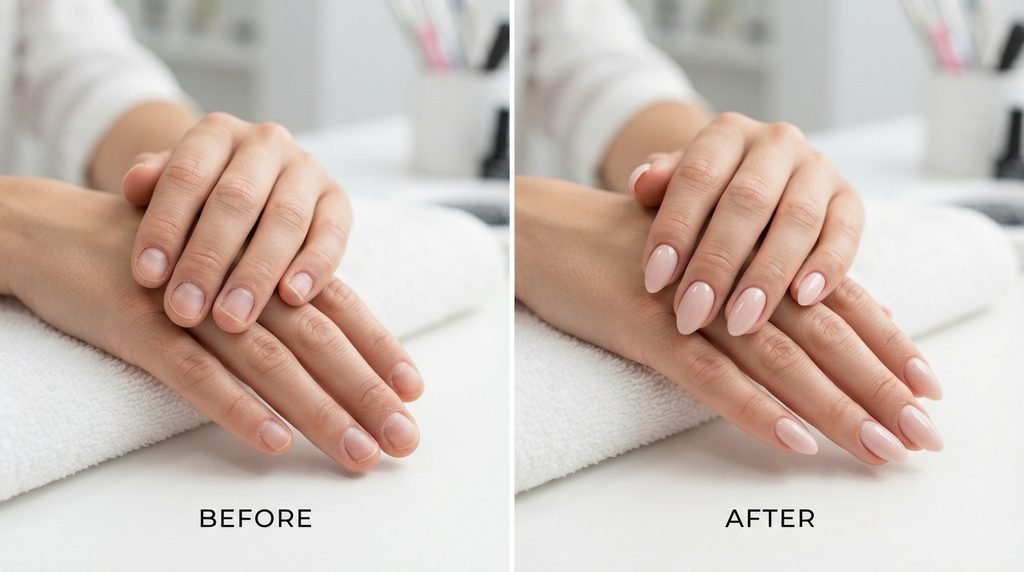
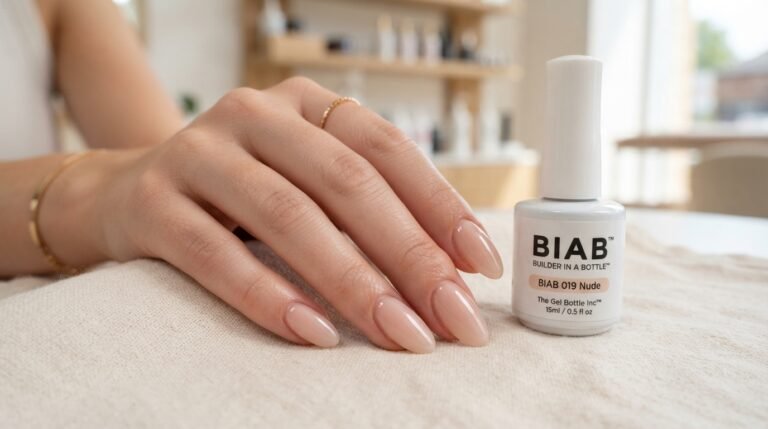
BIAB stands for Builder In A Bottle. It is a type of builder gel designed to add strength and structure to the natural nail. Unlike traditional builder gel that usually comes in a pot, BIAB is commonly supplied in a bottle with a brush, making application more convenient.
According to NailKnowledge’s BIAB glossary, BIAB is a soak-off builder gel that can be used for strengthening natural nails, creating structured overlays, supporting nail growth, and making small extensions.
BIAB gel extensions take this idea a step further. Instead of using BIAB only over the natural nail, a nail technician can use an appropriate BIAB system with forms or tips to create additional length.
The result is a nail that can look:
- Longer
- Stronger
- More structured
- Smooth and glossy
- More natural than some traditional extension systems
However, not every BIAB formula is designed for every type of extension. Some soft BIAB products are intended mainly for natural nail overlays and short-to-medium extensions, while harder builder systems are designed for longer or more structured extensions.
That distinction is important.
Why Are BIAB Gel Extensions So Popular?
There is a simple reason behind the popularity of BIAB nails: they can give you strength without making the nails look overly bulky.
Imagine you have naturally thin nails that bend easily. You want them to grow longer, but every time they reach a certain length, one breaks.
That is where a structured builder gel system can be useful.
Instead of simply adding colour, BIAB creates a stronger structure over the nail. When used correctly, this can help support the nail and reduce everyday breakage.
The GelBottle describes BIAB as a builder system designed to provide strength and flexibility, while different BIAB formulas are available for different nail types and service requirements.
You can also learn more about BIAB formulas through The GelBottle’s professional BIAB guide.
BIAB Gel Extensions vs Regular Gel Extensions
One of the most common questions is whether BIAB gel extensions are the same as regular gel extensions.
They are related, but they are not always the same thing.
Traditional gel extensions may use products such as hard gel to create a rigid extension over a nail form or tip.
BIAB is generally associated with builder gel systems, many of which are designed to be more flexible and, depending on the formula, removable by soaking.
The important thing is that the word “BIAB” does not automatically describe one identical chemical formula across every brand.
Different manufacturers can formulate their builder products differently.
For example, some products are:
- Soak-off
- File-off
- Soft builder gels
- Hard builder gels
- Fibre-reinforced builder gels
- HEMA-free or lower-sensitiser formulations
So, before buying a BIAB extension kit, always check the manufacturer’s instructions.
What Are the Benefits of BIAB Gel Extensions?
There are several reasons people choose BIAB gel extensions.
1. Natural-Looking Length
One of the biggest attractions is the appearance.
A well-applied BIAB extension can look clean and natural rather than extremely thick.
This makes BIAB particularly appealing if you want longer nails but still prefer a simple manicure.
You can finish your nails with:
- Nude gel polish
- French tips
- Milky white
- Soft pink
- Sheer colours
- Dark winter shades
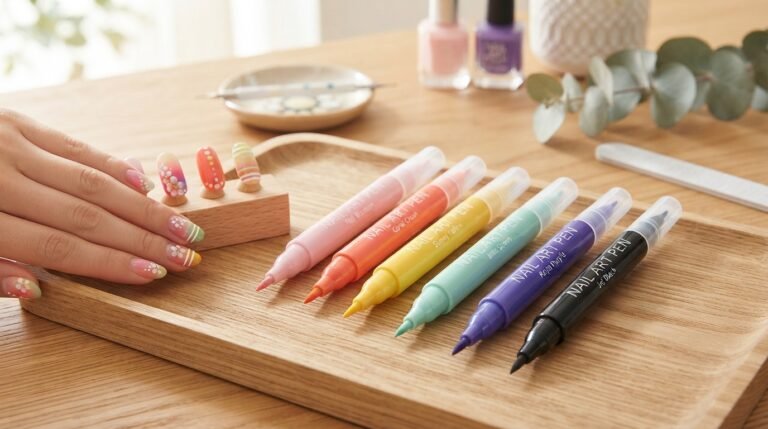
- Nail art
The builder layer provides the structure while your chosen colour creates the final look.
2. Added Strength
If your natural nails are weak or prone to splitting, a properly selected builder gel system can add structure.
BIAB is commonly used for strengthening natural nails and creating structured overlays.
That does not mean it magically repairs damaged nails. Instead, the enhancement creates a protective structure over the nail while the natural nail grows underneath.
3. Flexible Feel
Many BIAB systems offer a degree of flexibility compared with traditional rigid hard-gel systems.
This can make them comfortable for everyday wear, especially when the product is matched correctly to the natural nail and lifestyle.
However, flexibility varies between formulas, so do not assume every product labelled BIAB behaves exactly the same way.
4. Different Length Options
Depending on the product, BIAB nail extensions can be used for short or medium extensions, while specially formulated hard builder systems can be suitable for longer extensions.
For example, The GelBottle’s current guidance separates its softer BIAB formulas from Hard BIAB, which is designed for more structured applications and longer extensions.
You can read the Hard BIAB application information before choosing a system.
Can BIAB Be Used for Extensions?
Yes, but the exact answer depends on the specific BIAB formula.
Some builder-in-a-bottle products are suitable for short extensions created with forms. Other systems can be used with tips or are specifically designed for longer extensions.
For example, The GelBottle states that some of its BIAB formulas can be used for short-to-medium extensions, while its Hard BIAB system is designed for sculpting longer extensions.
This is why choosing the product based only on the word “BIAB” can be a mistake.
Instead, look for product information that specifically mentions:
extensions + length + tips/forms + curing instructions + removal method.
What Do You Need for BIAB Gel Extensions?
If you want to create BIAB gel extensions at home, you need the correct products and equipment.
A typical setup may include:
Nail Preparation
- Nail cleanser
- Lint-free wipes
- Cuticle pusher
- Nail file
- Nail buffer
- Dehydrator
- Appropriate primer, if required
Extension Products
- Suitable nail tips or nail forms
- Nail adhesive, if using tips
- BIAB or compatible builder gel
- Base coat, if required by the manufacturer
Finishing Products
- Gel polish
- Top coat
- Cuticle oil
Equipment
- Compatible UV/LED nail lamp
- Nail files
- Buffers
- Dust brush
- Cuticle tools
The most important item is not simply the lamp itself. The lamp must be compatible with the gel system you’re using, and the manufacturer’s curing instructions should always be followed.
Step-by-Step: How to Apply BIAB Gel Extensions
The exact process varies by brand, so always follow the instructions supplied with your product.
Here is a general overview of how a professional-style application works.
Step 1: Prepare the Natural Nails
Start with clean, dry hands and nails.
Remove any old polish or product.
Gently push back the cuticles and remove only loose dead tissue where appropriate.
Then shape the natural nail.
A light buff may be used to remove surface shine, depending on the manufacturer’s instructions.
Do not aggressively file the natural nail.
The goal is preparation, not thinning the nail plate.
Step 2: Clean and Dehydrate the Nail
Remove dust and surface oils using the appropriate nail cleanser or dehydrator.
Some systems also require a primer or base coat.
This step is important because contamination, oil, dust, or moisture can affect adhesion.
However, products differ, so do not automatically add extra primer or base products unless your system calls for them.
Step 3: Select the Correct Tip or Nail Form
If you are creating BIAB nail extensions, you need to establish the additional length.
Depending on your chosen system, this may involve:
- Full-cover tips
- Extension tips
- Sculpting forms
- A compatible extension system
If using a tip, make sure it fits the natural nail correctly.
A tip that is too narrow can create pressure on the nail.
A tip that is too wide can leave gaps.
Take your time here because the foundation affects the final shape.
Step 4: Apply the Extension
Attach the chosen tip or position the nail form according to the manufacturer’s instructions.
Avoid trapping air bubbles when applying tips.
Air gaps can contribute to lifting and poor retention.
The extension should also follow the natural direction of the nail rather than pointing sharply upward or downward.
Step 5: Apply the BIAB Builder Gel
Now comes the main part.
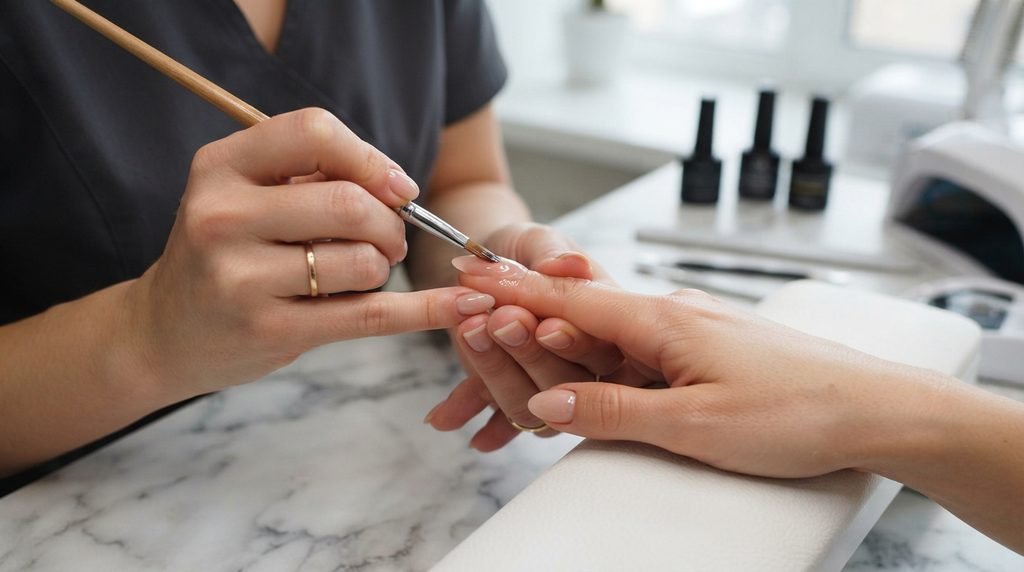
Apply a controlled layer of builder gel.
Do not flood the cuticle area.
Keep the product slightly away from the surrounding skin.
This is especially important with gel products because uncured gel contacting the skin can increase the risk of developing a sensitivity or allergy.
Use a controlled amount of product rather than trying to create the entire structure with one huge bead.
Step 6: Build the Structure and Apex
The apex is one of the most important parts of a structured nail.
It is the higher point of the nail structure that helps distribute stress.
A properly balanced apex can help the extension withstand everyday pressure.
The shape should not be completely flat.
At the same time, you do not want an extremely thick lump of builder gel.
The goal is a smooth, balanced structure.
NailKnowledge explains that applying builder gel too thickly can increase the risk of incomplete curing and heat spikes, which is why proper product thickness and curing are important.
You can read NailKnowledge’s guidance on BIAB application.
Step 7: Cure the Gel Correctly
Place the nail under the compatible UV/LED lamp.
Follow the exact curing time specified by the product manufacturer.
Do not guess.
Do not assume that leaving a nail under any lamp for longer automatically makes an incorrectly matched system safe.
Proper curing depends on factors such as:
- Product formula
- Layer thickness
- Lamp compatibility
- Wavelength
- Exposure time
- Application technique
The GelBottle, for example, provides specific curing instructions for its own systems rather than treating all builder gels as identical.
Step 8: Refine the Shape
After curing, inspect the extension.
If the product requires filing, carefully refine:
- Sidewalls
- Free edge
- Surface
- Apex
- Overall shape
Popular nail shapes include:
- Almond
- Square
- Soft square
- Oval
- Coffin
- Squoval
A clean shape can make even a simple nude manicure look polished.
A Small BIAB Story That Explains Why Structure Matters
Imagine someone who loves almond nails but has naturally thin nails.
She grows them out for two weeks.
Everything looks perfect.
Then one nail catches on a jacket zipper and snaps.
She tries again.
The same thing happens.
Instead of simply adding more length, a professional nail technician may look at the nail’s structure, lifestyle, flexibility, and desired length before selecting an appropriate enhancement system.
That is the real advantage of a professional approach.
The goal is not simply to make nails longer. The goal is to create a balanced nail that suits the person wearing it.
BIAB Gel Extensions Maintenance
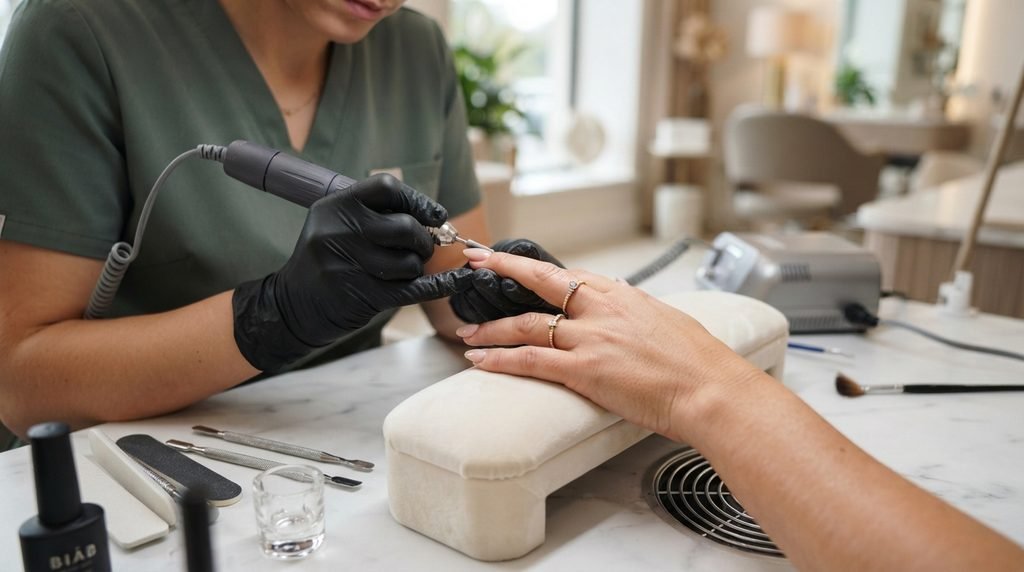
Even the best BIAB extensions need maintenance.
As your natural nail grows, the area near the cuticle becomes visible.
This changes the balance of the nail.
Most professional systems therefore require regular maintenance or infills according to the product and service plan.
During maintenance, the technician may:
- Inspect the nails.
- Remove lifted product.
- Reduce excess bulk.
- Rebalance the structure.
- Fill the grown-out area.
- Rebuild the apex if necessary.
- Refine the shape.
- Apply colour and top coat.
Never simply cover significant lifting with more gel.
If product has lifted, it should be dealt with correctly before new product is applied.
How Long Do BIAB Gel Extensions Last?
The wear time depends on several factors.
These include:
- Product formula
- Application quality
- Nail preparation
- Nail length
- Lifestyle
- Daily activities
- Natural nail condition
- Aftercare
- Maintenance schedule
Someone who spends a lot of time washing dishes, cleaning, gardening, or using their hands heavily may experience different wear compared with someone whose hands are exposed to less stress.
That is why there is no single guaranteed number of weeks for every person.
How to Make BIAB Extensions Last Longer
If you want your BIAB gel extensions to stay neat for longer, follow these simple habits.
Avoid Using Your Nails as Tools
Do not use your nails to:
- Open cans
- Scratch surfaces
- Remove stickers
- Pry objects open
Even strong extensions can break when used as tools.
Wear Gloves for Cleaning
Cleaning products and repeated exposure to water can be hard on nail enhancements.
Wear gloves when doing household cleaning or washing dishes for extended periods.
Keep Your Cuticles Moisturised
Use cuticle oil regularly.
Healthy-looking surrounding skin can make your manicure look fresh even between appointments.
Do Not Pick at Lifting
If you notice lifting, do not pull the product off.
Picking can remove layers of the natural nail.
Instead, have the product properly repaired or removed.
Are BIAB Gel Extensions Safe?
When used correctly, professional gel systems can be used as part of a nail enhancement service.
However, proper application and curing are extremely important.
Gel products contain ingredients that can cause skin sensitisation if uncured product repeatedly contacts the skin.
This is one reason professional training and following manufacturer instructions matter.
Another important point is curing.
A thick layer of gel may not cure properly throughout its depth.
NailKnowledge specifically warns about the possibility of under-curing and heat spikes when builder gel is applied too thickly.
Therefore:
Do not treat BIAB like ordinary nail polish.
Use the correct product, correct lamp, correct layer thickness, and correct curing process.
BIAB Gel Extensions vs Acrylic Nails
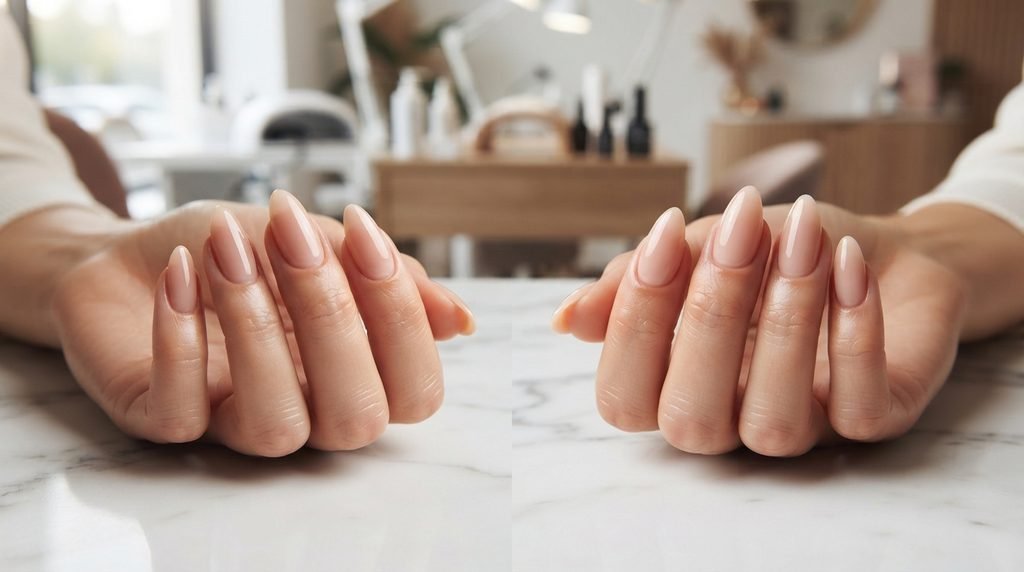
Both systems can create beautiful extensions, but the experience is different.
BIAB
BIAB is generally associated with:
- Builder gel technology
- A more natural appearance
- Flexible or semi-flexible structures depending on formula
- Bottle application for many products
- Some soak-off systems
- Natural nail overlays
- Short-to-medium extensions with suitable formulas
Acrylic
Acrylic systems are typically:
- Powder and liquid based
- Sculpted or applied over tips/forms
- Rigid once cured
- Filed for removal
- Popular for long and highly structured extensions
Neither system is automatically right for everyone.
Your natural nail, desired length, lifestyle, and technician’s technique all matter.
BIAB Gel Extensions vs Gel Polish
These products serve different purposes.
Gel polish mainly provides colour and shine.
BIAB builder gel provides structure and support.
Think of it this way:
Gel polish changes the appearance.
Builder gel helps create the structure.
You can often apply gel polish over a properly prepared BIAB base, provided the products are compatible.
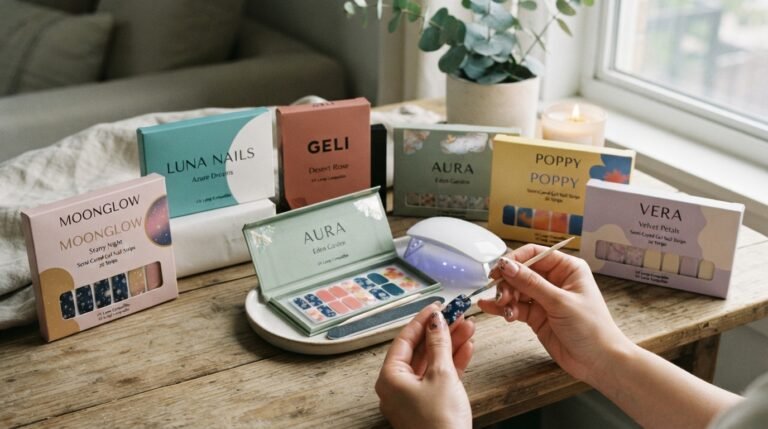
For another easy manicure option, you can also read our guide to gel sticker nails.
The GelBottle’s BIAB application guide explains how gel colour can be applied over its builder system.
How to Choose the Right BIAB Product
Do not choose a builder gel simply because the bottle looks attractive or because a social media video says it is “the best.”
Instead, look at what the product is designed to do.
Ask:
What length do I want?
Short overlays require different structural demands than long extensions.
Do I want soak-off removal?
Some BIAB systems can be soaked off, while harder systems may require filing.
Are my nails flexible?
Flexible nails may need a different builder formula from very rigid nails.
Do I need extra strength?
A fibre-reinforced or harder builder system may be considered depending on the nail and service.
Is the product suitable for my technique?
Always check the manufacturer’s application instructions.
For example, The GelBottle’s BIAB education resources provide guidance on different BIAB formulas, application, structure, and removal.
Can You Do BIAB Gel Extensions at Home?
Yes, it is possible to learn the technique, but there is a difference between owning the products and knowing how to use them correctly.
If you are completely new to gel nails, start by learning:
- Nail preparation
- Product control
- Application thickness
- Structure and apex
- Curing
- Skin safety
- Filing
- Removal
Practice on a nail trainer or suitable practice hand before working on other people.
If you are planning to offer BIAB gel extensions professionally, proper nail training is strongly recommended.
BIAB Extension Removal
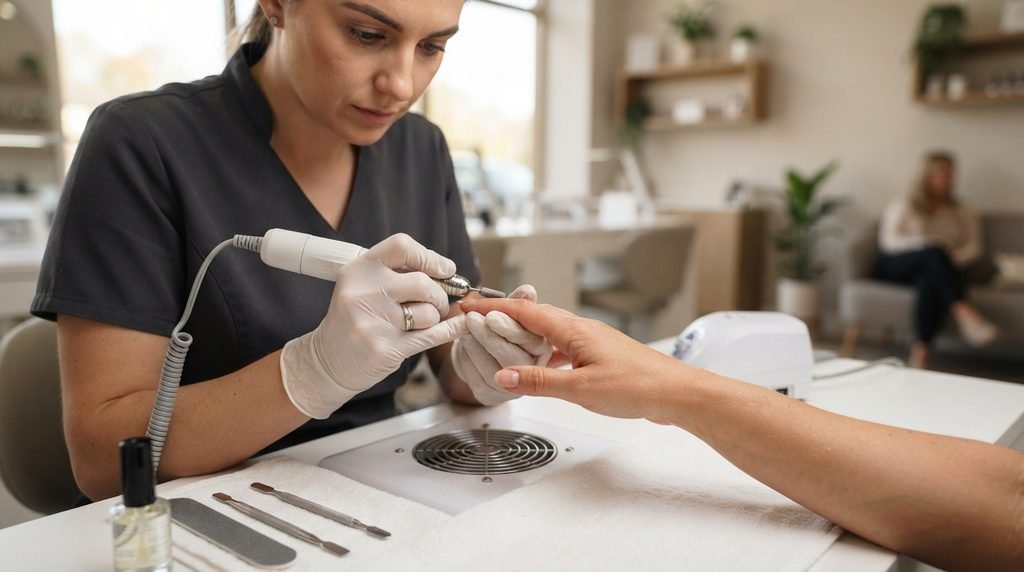
Never rip or peel off your builder gel extensions.
The correct removal process depends on the exact formula.
Some BIAB products are designed to soak off, while hard builder systems are file-off products.
This is why you should always check the manufacturer’s removal instructions before starting.
The general professional approach may involve:
- Reducing the bulk
- Filing carefully
- Using the correct removal method
- Avoiding unnecessary damage to the natural nail
- Leaving the nail surface healthy and intact
For example, The GelBottle provides separate education for BIAB removal and distinguishes between different formulas.
Common BIAB Mistakes to Avoid
Applying Too Much Product
More product does not automatically mean stronger nails.
Excess thickness can create structural problems and curing issues.
Getting Gel on the Skin
Avoid touching the cuticle and surrounding skin with uncured gel.
Clean any accidental contact according to the product’s safety instructions before curing.
Using the Wrong Lamp
A random UV/LED lamp may not be suitable for every gel system.
Use the lamp recommended or approved by the manufacturer whenever possible.
Ignoring Lifting
Do not simply paint over lifting.
Remove or repair the affected area properly.
Making Extensions Too Long
Longer nails require more structure and place greater stress on the enhancement.
If you are new to BIAB, start with a manageable length.
BIAB Gel Extensions: Are They Worth Trying?
If you like natural-looking nail extensions, want additional strength, and prefer a clean structured manicure, BIAB can be an appealing option.
The biggest advantage is its versatility.
Depending on the formula, BIAB can be used for:
- Natural nail overlays
- Nail strengthening
- Short extensions
- Medium extensions
- Nail repairs
- Nude manicures
- French manicures
- Gel polish bases
- Structured nail designs
However, the product should always be chosen according to its intended use.
A soft BIAB designed for overlays should not automatically be treated as a long-extension product.
If you want significant length, look specifically for a builder system designed for extensions, such as an appropriate hard BIAB or other compatible extension builder.
Final Thoughts on BIAB Gel Extensions
BIAB gel extensions offer a modern way to create beautiful, structured nails while maintaining a relatively natural appearance.
The key is not simply buying a bottle labelled “BIAB.”
Good results come from the combination of:
the right product + correct preparation + correct structure + proper curing + careful maintenance.
If you are buying BIAB for personal use, read the manufacturer’s instructions before applying it.
If you are a nail technician, choose your formula based on the client’s natural nail, lifestyle, desired length, and the type of service you are providing.
And if you are looking for a polished manicure that combines strength, structure, length, and a natural-looking finish, a correctly selected BIAB gel extension system can be a useful addition to your nail routine.
The important thing is to buy from a reputable nail brand, check whether the formula is intended for extensions, use a compatible lamp, and follow the complete application and removal instructions.
That way, you are not simply buying a trendy nail product—you are choosing a system that is designed for the result you actually want.