
How Long Does Nail Polish Take to Dry? Times, Tips & Tricks
You’ve just finished a perfect manicure, then you reach for your phone and smudge the lot. If you’ve ever wondered how long does nail polish take to dry, the honest answer has two parts: how quickly it feels dry, and how long it takes to harden properly underneath.
This guide explains typical drying times for regular varnish, quick-dry formulas and gel, what slows drying down, and simple ways to speed things up without ruining the finish. It’s for anyone who paints their own nails at home and is tired of dents, sheet marks and fingerprints.
Quick Answer
Regular nail polish usually feels touch dry in about 10–20 minutes, but it takes a few hours to harden fully, so dents and sheet marks are still possible that evening. Thin coats, a quick-dry top coat and cool air speed things up. Gel polish doesn’t air dry at all; it cures in seconds under a UV/LED lamp.
Key Takeaways
- Touch dry: roughly 10–20 minutes for a standard two-coat manicure.
- Fully hardened: a few hours; thick coats can take much longer.
- Two thin coats dry faster than one thick coat.
- Humidity and cold, damp rooms slow drying; most brands advise against using heat.
- Gel, shellac and BIAB need a lamp: they stay tacky until cured.
Why Does Nail Polish Take So Long to Dry?
Nail polish dries by evaporation, not by setting like glue. Each bottle contains film-forming resins (commonly nitrocellulose), plasticisers and pigments dissolved in fast-evaporating solvents such as ethyl acetate and butyl acetate.
The solvents at the surface escape quickly, which is why the top feels dry first. The solvent trapped in lower layers has to travel up through the film, so the varnish underneath stays soft for much longer. That’s why a manicure can feel dry after 15 minutes yet still pick up the pattern of your duvet overnight.
How Long Does Nail Polish Take to Dry? Times by Type
Drying time depends mostly on the formula and how thickly it’s applied. Use the table below as a rough guide, and always check the label of your own bottle.
| Polish type | Touch dry | Fully hardened | How it dries |
|---|---|---|---|
| Regular nail varnish (2 coats + top coat) | About 10–20 minutes | A few hours | Air (solvent evaporation) |
| Quick-dry polish | Often around 60 seconds per coat (check label) | Shorter, but still allow an hour or more | Air, faster-evaporating solvents |
| Quick-dry top coat over regular polish | Speeds up the layers beneath | Still a few hours | Air |
| Gel / shellac | Stays tacky until cured | After the lamp cure and wiping the sticky layer | UV/LED lamp |
| BIAB (builder gel) | Stays wet until cured | Straight after curing | UV/LED lamp |
If you’d rather skip the wait completely, gel and BIAB nails are fully set the moment they come out from under the lamp. You’ll need a proper UV or LED nail lamp, and you should follow the cure time on your gel brand’s instructions.
What Affects Drying Time?
- Coat thickness: a single heavy coat can take far longer than two thin, even ones.
- Number of layers: base, two colour coats and a top coat all add solvent that has to escape.
- Humidity: damp air slows evaporation, so a steamy bathroom is the worst place to paint.
- Old, gloopy polish: thickened varnish goes on heavy and dries unevenly.
- Oily nails: hand cream or cuticle oil underneath stops the film setting and bonding properly.
How to Make Nail Polish Dry Faster
The fastest way to dry nail polish is to apply thinner coats and finish with a quick-dry top coat. Follow these steps for your next manicure:
- Prep the nail. Wipe each nail with remover or alcohol to remove oils, then let it evaporate.
- Apply a thin base coat. It protects the nail and gives the colour something to grip.
- Wipe the brush. Remove excess on the neck of the bottle so you only load a small bead of polish.
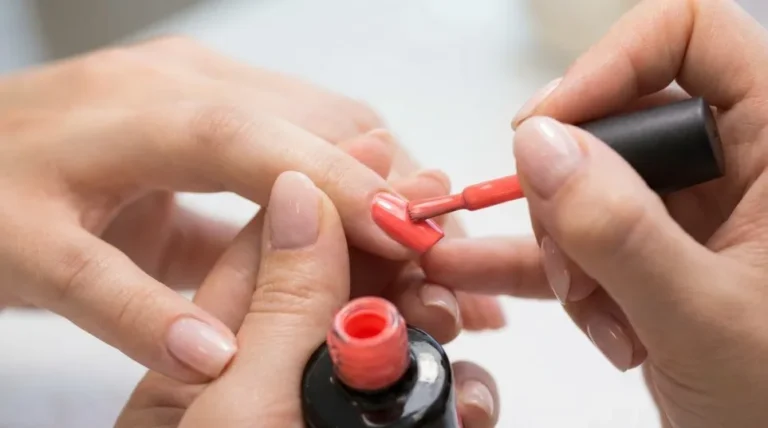
- Paint thin coats. Use three strokes: one down the centre, one on each side.
- Wait between coats. Give each layer about two minutes before the next so solvent can escape.
- Finish with a quick-dry top coat. These are designed to speed up and protect the layers underneath.
- Use cool air. A fan, or a hairdryer on the cool setting, helps; avoid hot air, which can cause bubbles.
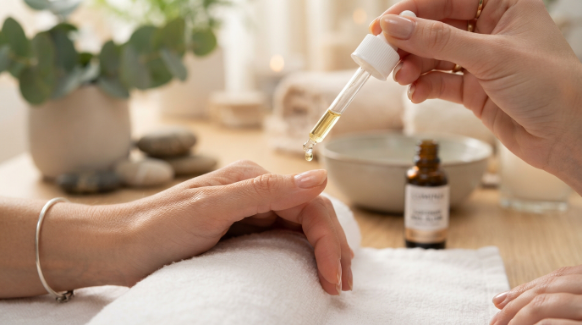
- Try drying drops. A drop of nail-drying oil on each nail adds a slip layer that helps prevent light smudges.
- Keep your hands still. Avoid pockets, zips, hair and washing up for at least the first hour.
Short on time every morning? A dedicated quick-dry nail polish is the easiest switch, and nail polish pens make thin, neat coats much easier on your non-dominant hand.
Does the Cold Water Trick Work?
Dipping freshly painted nails into a bowl of cold water is a popular hack, and many people find it firms the surface. It won’t dry the layers underneath any faster, though, so treat it as a surface fix rather than a shortcut to fully hardened nails.
Common Drying Mistakes
- Painting nails right before bed and waking up with sheet imprints.
- Blowing on your nails: warm, moist breath adds humidity.
- Using hot air or a radiator, which can cause bubbles.
- Shaking the bottle hard, which traps air; roll it between your palms instead.
- Having a bath or shower straight after painting, as hot water softens the film.
If you do end up with a smudge, a cotton bud dipped in remover can tidy the edges. Our guide on whether nail polish remover is acetone explains which type to use for touch-ups.
How Long Should You Wait Before Bed or Washing Up?
Wait at least two hours before bed and a few hours before washing up or doing anything that knocks your nails. In everyday life, the answer to how long does nail polish take to dry comes down to planning: paint in the early evening, keep your hands still for the first 20 minutes, and wear rubber gloves for chores until the next day. Ventilate the room while you paint and keep varnish away from flames, as the solvents are flammable; the HSE’s COSHH guidance covers safe use of solvent-based products for anyone working in a salon.
Frequently Asked Questions
How long does it take for nail polish to dry completely?
Regular nail polish usually feels touch dry in around 10 to 20 minutes, but it can take a few hours to harden completely. Thick coats, several layers and humid rooms make it take longer. To avoid dents and sheet marks, paint your nails early in the evening and keep your hands still for the first 20 minutes.
What is the fastest way to dry nail polish?
The fastest way is to paint thin coats, wait about two minutes between them and finish with a quick-dry top coat. Cool air from a fan or a hairdryer on the cool setting also helps. Avoid hot air and blowing on your nails, because heat and moisture can cause bubbles and slow drying.
Does putting your nails in cold water make them dry faster?
Cold water can help firm the surface of fresh nail polish, which is why the trick is popular. However, it does not dry the layers underneath any faster, so the varnish can still dent. Treat it as a quick surface fix and still keep your hands careful for the first hour.
Why is my nail polish still tacky after hours?
Nail polish usually stays tacky when coats are too thick, the bottle is old and gloopy, or there was oil on the nail before painting. Humid rooms also slow evaporation. Next time, wipe nails with remover first, apply thinner layers and use a fresh quick-dry top coat to seal everything properly.
How long should nail polish dry before bed?
Give your nail polish at least two hours to dry before bed, and longer if you used thick coats. Even when nails feel dry, the varnish underneath may still be soft enough to pick up sheet marks. Painting earlier in the evening and finishing with a quick-dry top coat helps prevent imprints.
Does gel nail polish air dry?
No, gel nail polish does not air dry. It stays wet and tacky until it is cured under a UV or LED nail lamp, usually for the time stated by the brand. After curing, some gels leave a sticky layer that you wipe away with a cleanser, and the nails are then fully set.
Final Thoughts
So, how long does nail polish take to dry? Around 10–20 minutes to the touch and a few hours to harden fully, depending on the formula and how thickly you paint. Thin coats, a quick-dry top coat and cool air make the biggest difference. If waiting simply isn’t your thing, a lamp-cured option like BIAB may suit you better.
Last updated: 5 November 2026
Related BIAB Guides
- How Long Does BIAB Nails Last? A Complete Guide to BIAB Wear, Maintenance & Aftercare
- Quick Dry Nail Polish: The Complete Guide to Faster, Easier Manicures
- White Gel Nail Polish: 10 Beautiful Ideas, Application Tips & Best Products for a Perfect Manicure
- Nail Art Polish: Turn Simple Nails into Stunning Art!
One Comment