Is BIAB Bad for Your Nails? What You Need to Know
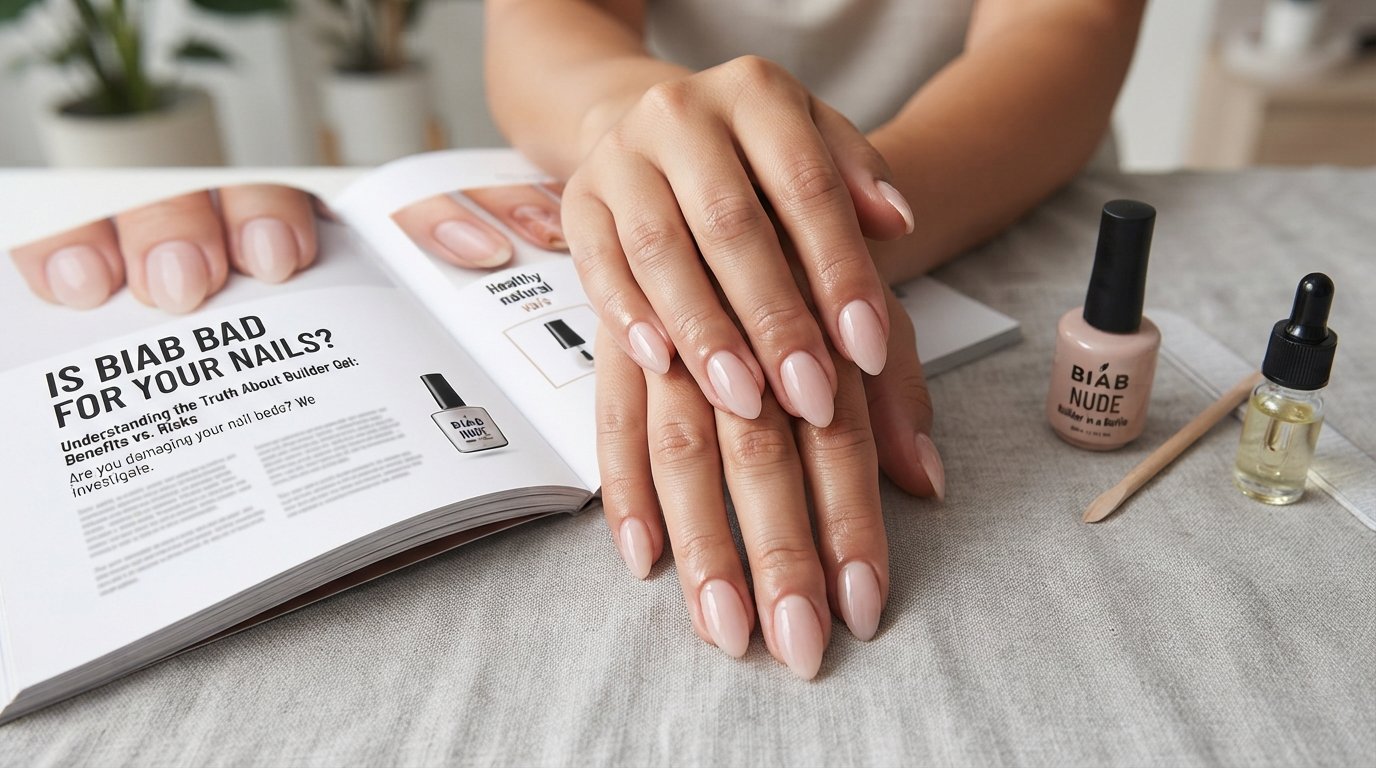
If you love having neat, strong, glossy nails but worry that gel products might damage your natural nails, you may have asked yourself: is BIAB bad for your nails?
BIAB, short for Builder in a Bottle, has become very popular because it can help create a strong, polished-looking manicure while allowing you to keep a more natural nail appearance. Unlike traditional nail extensions, BIAB is commonly used to add strength and structure to the natural nail.
But there is an important question behind the trend: Can BIAB damage your natural nails?
The short answer is that BIAB is not automatically bad for your nails, but the way it is applied, maintained, and removed matters a lot.
Poor preparation, aggressive filing, picking the product off, repeated damage during removal, or getting uncured gel on the surrounding skin can create problems. On the other hand, careful application, proper curing, gentle removal, and regular nail care can make a BIAB manicure much easier on your natural nails.
So, before you decide whether BIAB is right for you, let’s look at exactly how it works, the possible risks, the benefits, and how to use it more safely.
What Is BIAB?
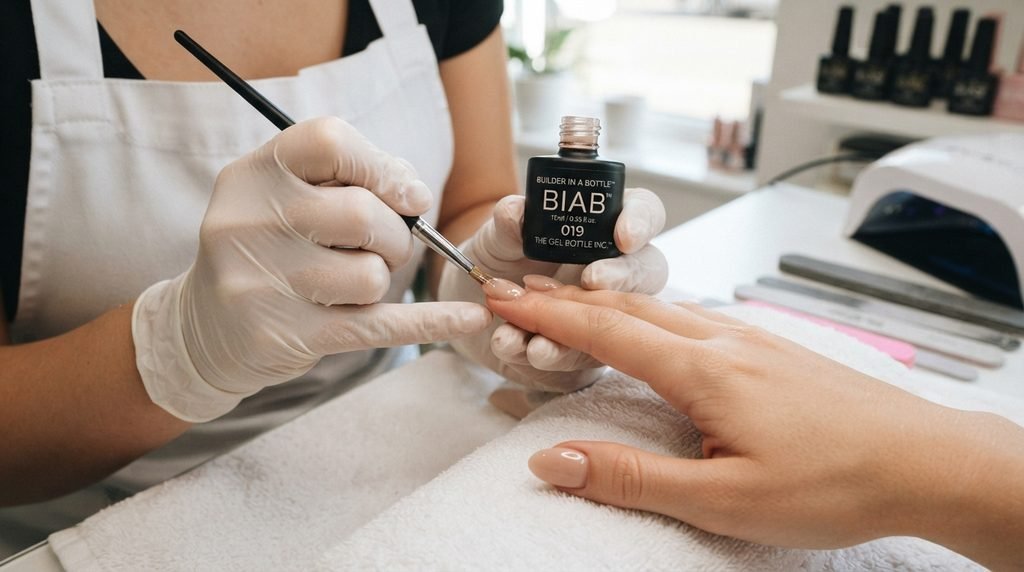
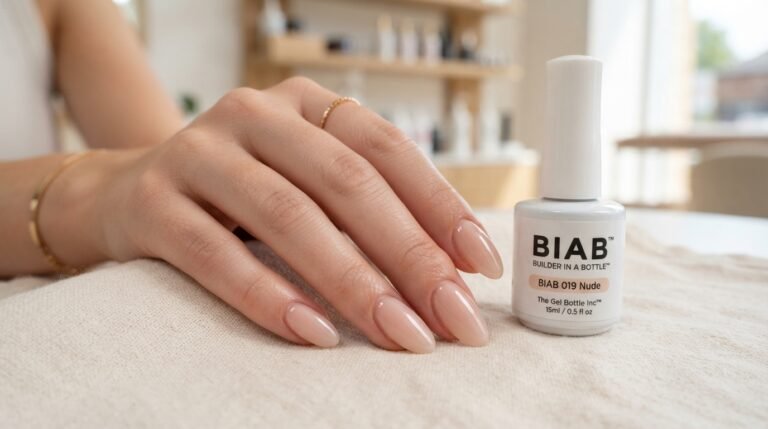
BIAB stands for Builder in a Bottle. It is a type of builder gel designed to give the natural nail additional strength and structure.
Instead of simply applying a thin layer of ordinary gel polish, a builder gel can be used to create a stronger layer over the natural nail.
This can be particularly useful if your nails are:
- Thin
- Weak
- Flexible
- Prone to breaking
- Difficult to grow
- Uneven in shape
A typical BIAB manicure involves preparing the natural nail, applying the builder gel, curing it under a suitable nail lamp, shaping it if necessary, and then adding colour or a top coat.
One reason people like BIAB is its natural appearance. When applied correctly, it can give the nails a smooth and clean finish without necessarily creating the very long appearance associated with some traditional extensions.
So, Is BIAB Bad for Your Nails?
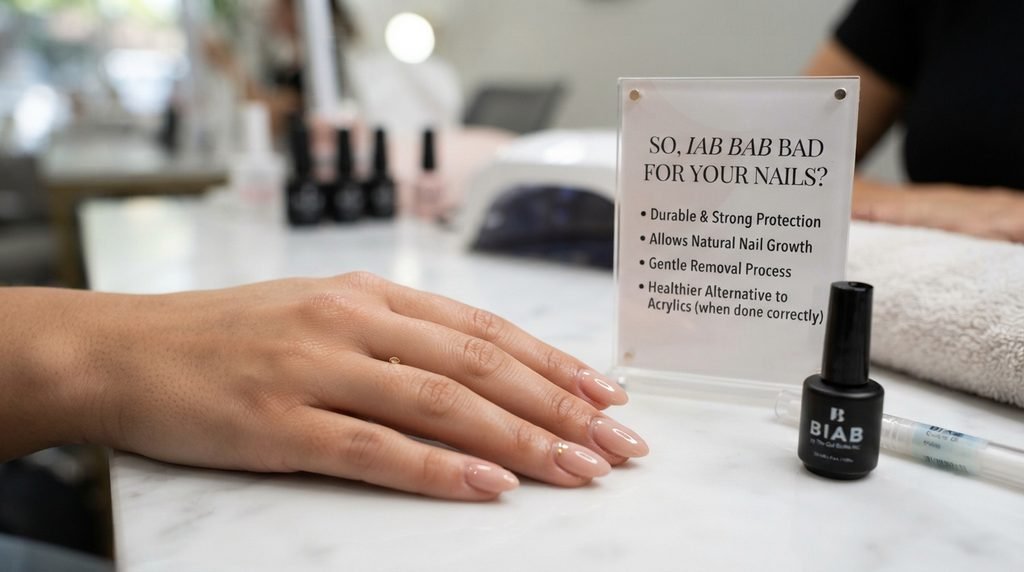
Not necessarily.
The bigger issue is how BIAB is used.
Dermatologists note that artificial and gel nail systems can contribute to nail brittleness, peeling and cracking, particularly with repeated use or damaging preparation and removal techniques.
That does not mean every person who wears BIAB will experience nail damage.
Think about it this way.
Imagine someone gets BIAB applied professionally. Their natural nail is prepared gently, the correct amount of product is used, the gel is fully cured, and the product is removed without scraping or aggressively filing the natural nail.
Now compare that with someone who repeatedly:
- Files the natural nail too aggressively.
- Applies product over irritated skin.
- Picks or peels the BIAB away.
- Removes it by scraping.
- Immediately applies another manicure without allowing damaged nails to recover.
These two routines may involve the same type of product, but the experience for the natural nail can be very different.
How Can BIAB Damage Your Natural Nails?
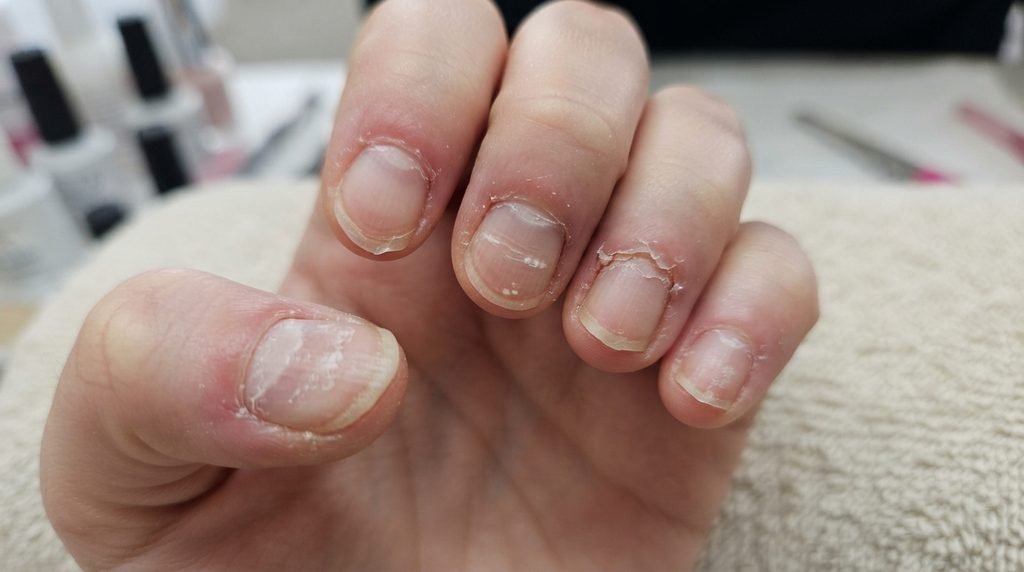
There are several ways a BIAB manicure can contribute to nail damage.
Understanding them can help you avoid many common mistakes.
1. Over-Filing the Natural Nail
One of the biggest concerns with artificial and gel nail services is excessive filing.
The natural nail should not need to be aggressively thinned just to make a product stick.
When too much of the natural nail plate is removed, the nail can become thinner and weaker.
This may lead to:
- Thin nails
- Sensitive nails
- Peeling
- Splitting
- Increased breakage
The American Academy of Dermatology explains that filing the natural nail surface too aggressively can contribute to thinning and weakening.
What should you do?
Tell your nail technician that you want your natural nail thickness preserved.
The goal should be preparation, not unnecessary removal of the nail plate.
2. Picking or Peeling BIAB Off
This is one of the easiest mistakes to make.
You notice that your BIAB has started lifting slightly.
You pick at the edge.
A tiny piece comes away.
So you pull a little more.
Before you know it, the entire layer has been peeled off.
The problem is that the product may take layers of your natural nail with it.
This can leave your nails rough, thin and uneven.
If your BIAB starts lifting, do not pick or peel it.
Instead, arrange proper removal or repair.
Dermatologists similarly advise against picking gel polish because doing so can damage the nail surface.
3. Incorrect BIAB Removal
BIAB removal is just as important as application.
A beautiful manicure can still cause problems if it is removed incorrectly.
Depending on the specific BIAB system, removal may involve soaking, filing, or a combination of techniques. Therefore, always follow the manufacturer’s removal instructions rather than assuming every builder gel should be removed in exactly the same way.
Never try to rip the product from your nail.
Never aggressively scrape the nail plate.
Never keep filing simply because you want every last trace of product removed.
The natural nail underneath is more important than getting every tiny piece of product off immediately.
4. Incomplete Curing
Gel products need the correct curing process.
This is an important part of BIAB nail safety.
The correct lamp, curing time and product combination should be used according to the manufacturer’s instructions.
If a gel system is not cured properly, the product may not perform as intended.
There is also another important concern: uncured or improperly handled acrylate-containing nail products can contribute to allergic reactions in some people.
DermNet notes that acrylates and methacrylates used in nail cosmetics can cause allergic contact dermatitis in susceptible individuals.
That is why professional application and following the product’s instructions matter.
5. Gel Touching the Skin
Another common mistake is allowing uncured gel to spread onto the surrounding skin.
The skin around your nails should be kept clean during application.
If product repeatedly contacts the skin, some people may develop irritation or an allergic reaction.
Possible symptoms can include:
- Itching
- Redness
- Burning
- Scaling
- Swelling
- Blistering
Acrylate allergy can sometimes affect areas beyond the immediate nail area, and patch testing can be used by healthcare professionals when an allergy is suspected.
If you develop a persistent rash or unusual reaction after using a gel product, stop using it and speak with a dermatologist or other qualified healthcare professional.
Is BIAB Better Than Acrylic?
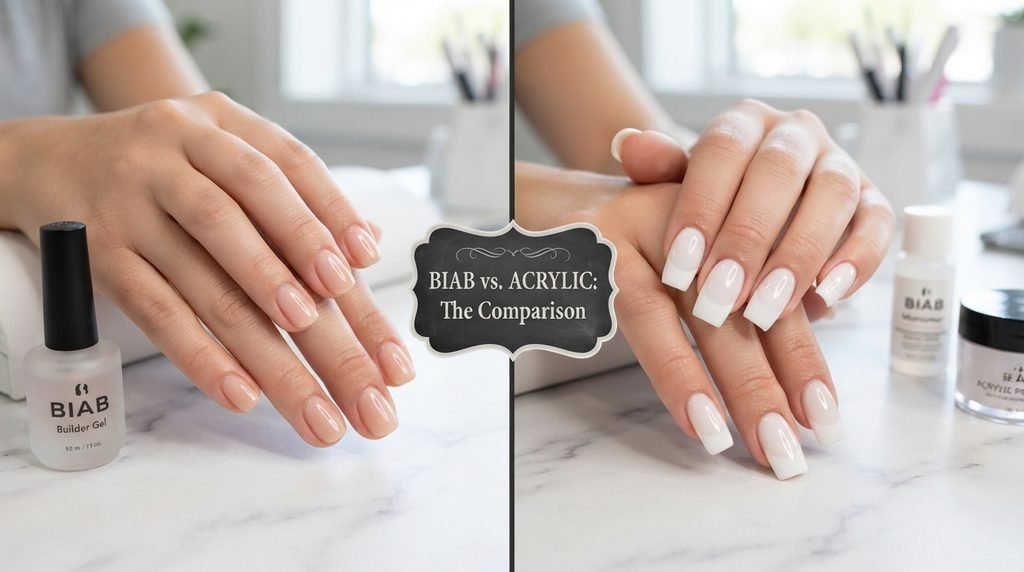
This is where things become a little more complicated.
There isn’t one universal answer because different products, application methods and removal techniques can produce different results.
However, BIAB is popular partly because it can be used to strengthen the natural nail without requiring the same type of extension process used for many acrylic enhancements.
The important thing is not simply choosing BIAB vs acrylic.
Instead, look at:
- How the natural nail is prepared
- How much filing is performed
- Which products are being used
- Whether the product is properly cured
- How often the manicure is maintained
- How the product is removed
The American Academy of Dermatology notes that gel systems can be more flexible than acrylic systems, although gel manicures can still contribute to brittleness, peeling and cracking.
Can BIAB Make Your Nails Stronger?
This depends on what you mean by “stronger.”
BIAB can create a protective, structured layer over the natural nail, which may make the manicure feel stronger and help reduce everyday bending or breakage.
However, that does not mean BIAB permanently changes the biological strength of your natural nail.
Think of BIAB as a protective coating.
Your natural nail is still underneath.
When the product is removed, the condition of the natural nail depends largely on its underlying health and how carefully the manicure was applied and removed.
So, if your nails seem stronger while wearing BIAB, that may be because the builder layer is providing additional structure.
BIAB Benefits for Natural Nails
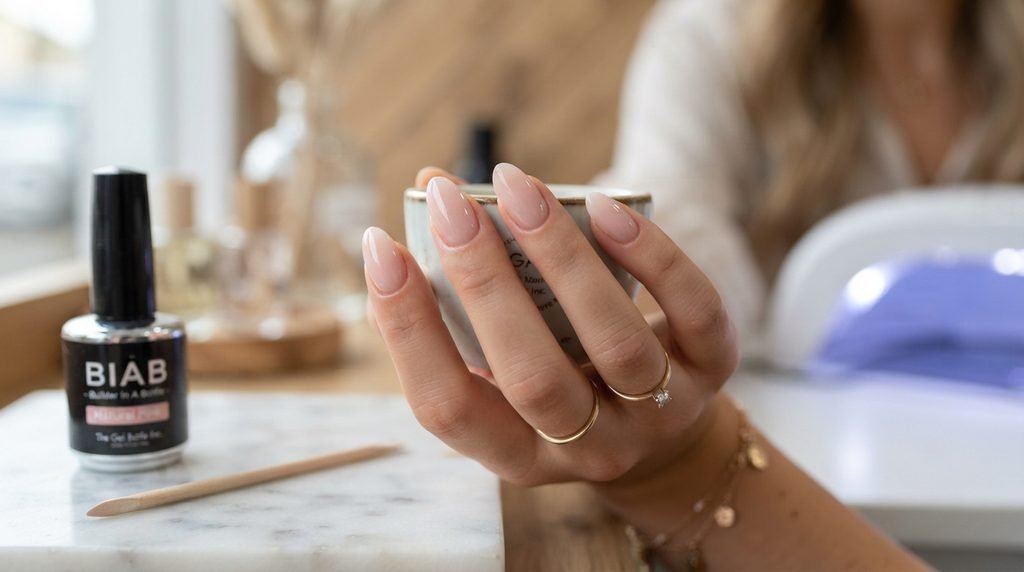
When used correctly, BIAB can have several practical advantages.
1. It Can Add Structure
One of the main reasons people choose BIAB for weak nails is the additional structure it provides.
If your nails bend easily, a builder layer may make everyday activities less likely to result in immediate breakage.
2. It Can Help You Grow Your Nails
Some people struggle to grow their nails because the free edge constantly breaks.
A properly maintained BIAB manicure can provide a protective layer that helps reduce this problem.
For example, imagine that your nails normally break whenever they reach a certain length.
You apply BIAB correctly and stop using your nails as tools.
Over time, you may be able to maintain more length simply because the nails are receiving additional protection.
3. It Gives a Clean, Natural Look
BIAB can create a smooth and neat appearance without requiring extremely long extensions.
This is one reason it has become popular among people who prefer natural-looking nails.
4. It Works Well With Nail Art
Once the builder layer has been properly prepared, you can add colour, French designs, chrome effects or other nail art depending on the system you are using.
That makes BIAB a useful base for people who want both strength and style.
How to Use BIAB Without Damaging Your Nails
If you’re considering buying BIAB products or getting a BIAB manicure, follow these steps.
Step 1: Start With Healthy Nails
Do not use BIAB simply to hide a serious nail problem.
If your nail is:
- Painful
- Severely damaged
- Discoloured
- Lifting
- Swollen
- Showing signs of infection
it is better to have the problem assessed before covering it.
The American Academy of Dermatology recommends seeking professional dermatological advice for persistent or unusual nail problems.
Step 2: Prepare the Nail Gently
Clean the nail and prepare it according to the instructions for your specific BIAB system.
Avoid aggressive filing.
Your goal is to prepare the nail surface, not make it paper-thin.
Step 3: Keep Product Off the Skin
Apply the product carefully.
Try to avoid getting uncured builder gel onto the surrounding skin.
If product touches the skin, follow the manufacturer’s instructions for correcting the application before curing.
This is especially important because repeated exposure to acrylates can cause sensitisation in some individuals.
Step 4: Cure According to the Manufacturer’s Instructions
Use the recommended lamp and curing time for your particular product.
Do not assume that any random lamp will work with every builder gel.
Correct curing is an important part of getting the intended performance from a gel system.
Step 5: Maintain Your BIAB Nails
As your natural nails grow, the manicure will grow out too.
Do not wait until the product is severely lifted or damaged.
A professional maintenance routine can help reduce the temptation to pick or peel the product.
Step 6: Remove BIAB Properly
This is one of the most important steps.
Follow the removal instructions provided for your particular product.
Never pull or rip the BIAB away.
Never use excessive force.
If you’re unsure how your particular product should be removed, ask a trained nail professional.
How to Keep Natural Nails Healthy After BIAB
Even if you love BIAB, your natural nails still need care.
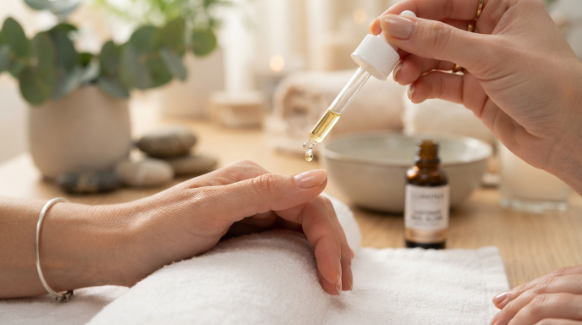
Keep Your Nails Moisturized
Regularly moisturize your hands, nails and surrounding skin.
The AAD recommends moisturizing nails and cuticles between gel manicures to help reduce brittleness.
A simple routine can be:
Morning: Apply hand cream.
During the day: Reapply whenever your hands feel dry.
Before bed: Apply a richer moisturizer or petroleum jelly around the nails and cuticles.
Should You Take a Break From BIAB?
A break can be useful if your nails are becoming thin, peeling, painful or unusually brittle.
The American Academy of Dermatology recommends taking periods without gel polish to give nails time to recover and suggests using moisturizer during those periods.
However, there isn’t a magic number of days that guarantees your nails will become healthy.
The more important question is:
What condition are your natural nails in?
If they look healthy and the manicure is being applied and removed properly, you may not experience the same problems as someone whose nails are repeatedly damaged by aggressive preparation or removal.
BIAB vs Regular Gel Polish
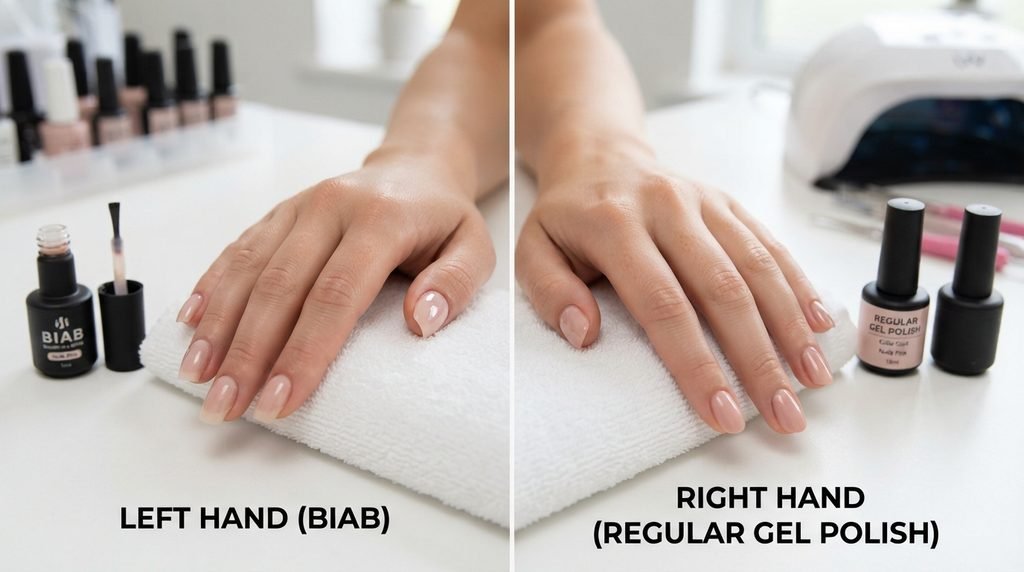
BIAB and gel polish are related but serve different purposes.
Regular gel polish is mainly designed to provide colour and a durable finish.
BIAB is a builder product intended to provide additional structure.
In simple terms:
| Feature | BIAB | Gel Polish |
|---|---|---|
| Main purpose | Strength and structure | Colour and finish |
| Adds structure | Yes | Limited |
| Natural-looking finish | Yes | Yes |
| Can be used for nail growth | Often | Less structural support |
| Requires curing | Yes | Yes |
| Removal care | Important | Important |
| Risk of nail damage if misused | Possible | Possible |
Neither option should be treated as completely risk-free.
The application and removal process matter greatly.
Is BIAB Safe for Weak Nails?
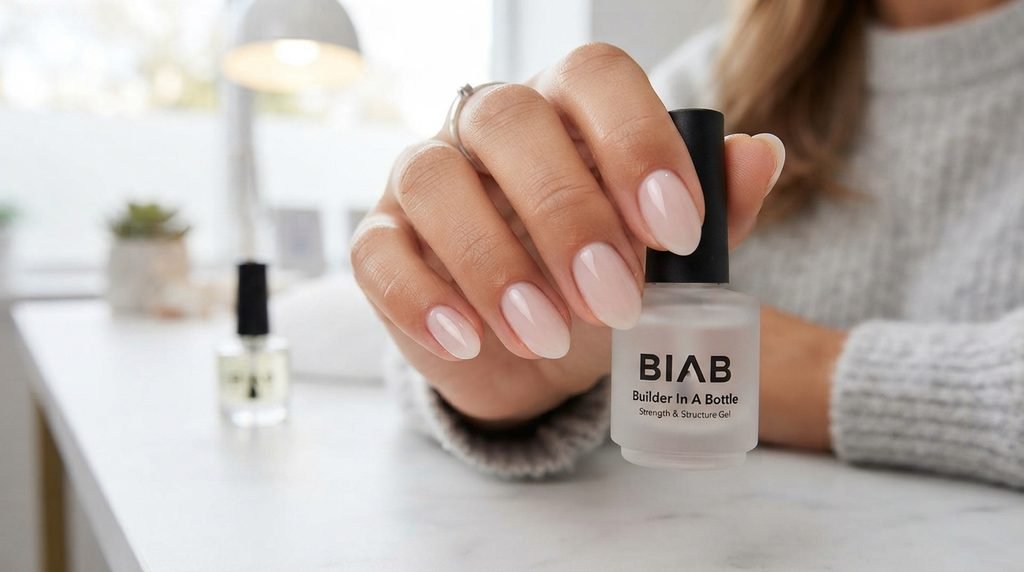
If your nails are naturally weak, you may be interested in BIAB for weak nails because the builder layer can provide additional support.
But weak nails are not always simply “weak.”
Sometimes peeling, splitting, colour changes or lifting can have other causes.
So, if your nails suddenly become weak or their appearance changes significantly, don’t automatically cover them with another manicure.
First find out why the change is happening.
Can BIAB Cause Nail Peeling?
Yes, nail peeling can happen after gel manicures, particularly when nails are repeatedly exposed to damaging preparation or removal.
Dermatologists specifically list brittleness, peeling and cracking among possible problems associated with gel manicures.
If you notice peeling after BIAB, consider whether you have recently:
- Peeled the product off
- Over-filed your nails
- Removed the product aggressively
- Repeated manicures without addressing nail damage
- Experienced irritation from the product
Instead of immediately applying another layer, give your nails some attention and consider professional advice if the problem continues.
What About BIAB and Nail Allergies?
This is an important topic that should not be ignored.
Many gel and artificial nail systems contain acrylate or methacrylate ingredients.
Some people can develop allergic contact dermatitis after exposure.
Symptoms may include itching, redness, burning, scaling or blistering around the fingers. In some cases, reactions can appear elsewhere on the body after contact with allergen residues.
If you suspect a BIAB allergy, don’t simply switch to another random gel product and hope for the best.
Speak with a dermatologist.
A healthcare professional can determine whether allergy testing, such as patch testing, is appropriate.
How to Choose a Good BIAB Product
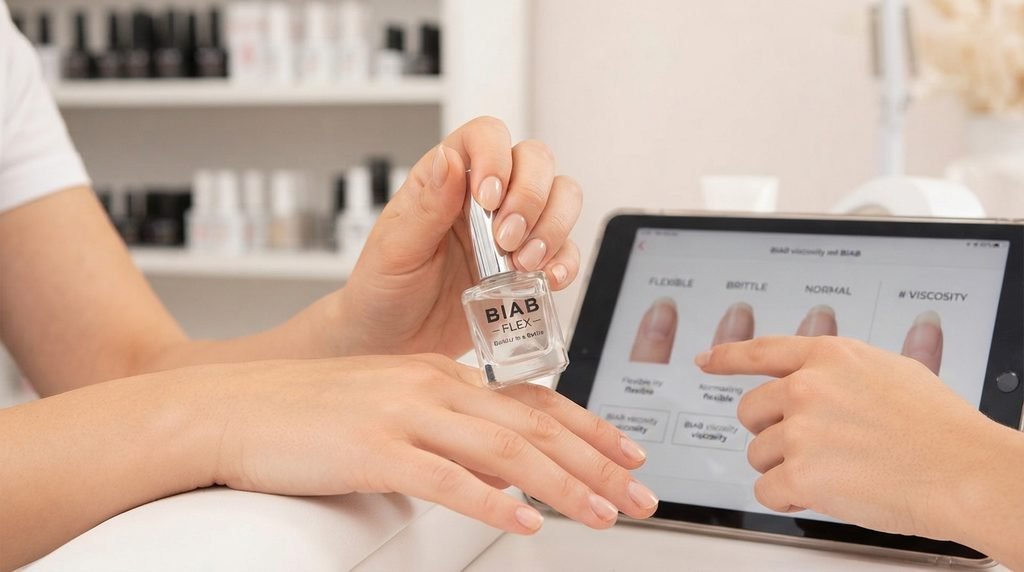
If you’re planning to buy a BIAB nail kit, don’t choose based only on the prettiest bottle or cheapest price.
Look for a reputable product with:
- Clear ingredient information
- Proper application instructions
- Specific curing instructions
- Clear removal instructions
- A compatible curing lamp
- Reliable manufacturer information
- Professional-quality documentation
A good product is only part of the equation.
You also need the correct technique.
Buying a high-quality BIAB product and then curing it incorrectly or removing it aggressively can still cause problems.
Is Buying a BIAB Nail Kit Worth It?
For someone who enjoys doing their nails regularly, a BIAB nail kit can be convenient because it can bring several manicure essentials together.
However, beginners should learn the correct application and curing process before experimenting with advanced techniques.
If you decide to buy one, focus on quality rather than simply looking for the cheapest kit.
A well-designed system with clear instructions can make the process much easier.
For beginners, a complete kit may also be convenient because compatible products are often included together rather than requiring you to guess which lamp, base or builder product works with which system.
A Simple BIAB Nail-Care Routine
If you want to enjoy BIAB while protecting your natural nails, use this simple routine.
Before application
- Check your natural nails.
- Make sure there are no obvious signs of infection or serious damage.
- Clean the nails.
- Prepare them gently.
- Avoid aggressive filing.
During application
- Use the correct product.
- Keep uncured gel away from the skin.
- Apply controlled layers.
- Follow the manufacturer’s curing instructions.
- Use a compatible lamp.
During wear
- Don’t use your nails as tools.
- Don’t pick at lifted product.
- Keep your hands and cuticles moisturized.
- Repair lifting rather than ignoring it.
During removal
- Follow the product-specific removal instructions.
- Never rip the product off.
- Avoid aggressive scraping.
- Stop if the natural nail becomes painful or damaged.
After removal
- Moisturize your nails and surrounding skin.
- Keep nails at a manageable length.
- Give damaged nails time to grow out.
- Seek professional advice if problems continue.
Common BIAB Mistakes to Avoid
Here are some of the most common mistakes that can turn a good BIAB manicure into a nail-damaging experience.
Mistake 1: Applying BIAB Over Damaged Nails
BIAB should not be used simply to hide an unexplained nail problem.
Mistake 2: Over-Filing
More filing does not automatically mean better adhesion.
Mistake 3: Getting Gel on the Skin
Try to keep uncured product away from surrounding skin.
Mistake 4: Using the Wrong Lamp
Follow the manufacturer’s recommended curing system.
Mistake 5: Picking the Product
Never treat lifting BIAB like a sticker.
Mistake 6: Removing It Aggressively
Your natural nail should not be sacrificed just to remove every trace of product.
Mistake 7: Ignoring an Allergic Reaction
Persistent itching, redness, swelling or blistering deserves attention.
Is BIAB Bad for Your Nails? The Final Answer
So, is BIAB bad for your nails?
Not necessarily.
BIAB can be a useful way to add structure and create a beautiful, natural-looking manicure. However, like other gel and artificial nail systems, it can contribute to nail problems when preparation, curing, maintenance or removal is done poorly.
The biggest lesson is simple:
The product matters, but the technique matters just as much.
If you choose a reputable BIAB nail product, follow the manufacturer’s instructions, use the correct curing system, avoid excessive filing, keep uncured product away from your skin and remove the product carefully, you can greatly reduce avoidable problems.
And remember that beautiful nails are not just about the manicure you can see.
Healthy natural nails underneath are what really matter.
If your nails are currently healthy and you love the neat, strong appearance of builder gel, a quality BIAB system can be a practical addition to your nail routine. Just treat it as a professional nail product rather than something that can be applied and removed casually.
Finally, if you experience persistent pain, swelling, severe peeling, nail lifting, discoloration, or a suspected allergic reaction, stop using the product and seek advice from a qualified healthcare professional.
Healthy nails first, beautiful nails second.